 Miya Bholat
Nov 18, 2026
Fleet Incident Reporting Policy: What Should It Include?

A fleet incident reporting policy is a written document that defines what qualifies as an incident, who must report it, how quickly it must be reported, what evidence must be collected, and what happens afterward.
As part of a broader fleet safety and compliance strategy, the policy establishes consistent procedures for handling collisions, injuries, property damage, near misses, theft, and other events that expose the fleet to operational, financial, or legal risks.
Key Takeaways
- Define reportable incidents: Include collisions, near misses, property damage, theft, cargo incidents, and safety hazards.
- Establish reporting deadlines: Require immediate notification for serious incidents and written documentation within 24 hours whenever reasonably possible.
- Standardize evidence collection: Specify the information, photographs, statements, and supporting records drivers must collect.
- Assign clear responsibilities: Identify who receives reports, investigates incidents, and manages corrective actions.
- Maintain accessible records: Retain incident documentation according to regulatory, insurance, and legal requirements.
What Counts as an Incident? Definitions and Severity Tiers
A fleet incident is any event involving a fleet vehicle, driver, or equipment that causes or could potentially cause injury, damage, financial loss, or operational disruption.
Policies that only address road collisions leave significant reporting gaps. For example, managers overseeing construction fleet operations must also account for equipment strikes, loading incidents, and property damage at job sites.
The following severity tiers provide a practical starting point for an internal reporting policy.
| Severity tier | Example incidents | Reporting deadline and recipient |
|---|---|---|
| Tier 1: Critical | Injury, fatality, crash requiring towing | Immediately to fleet and safety managers |
| Tier 2: Major | Collision without injury, third party property damage, theft | Immediately to fleet manager |
| Tier 3: Minor | Cosmetic damage, minor backing incident | Before the end of the shift to supervisor |
| Tier 4: Near miss or hazard | Almost hitting a pedestrian, unsecured cargo, unsafe conditions | Before the end of the shift to supervisor |
Require a written report within 24 hours for every tier when reasonably possible, without delaying medical treatment or emergency response.
Why Near Misses Belong in the Policy
Near misses expose weaknesses before they result in actual damage or injuries. A driver who narrowly avoids hitting a pedestrian while reversing may reveal the same operational problem that eventually causes a serious collision.
Establishing a consistent process for responding to driver near misses helps managers identify recurring hazards and introduce preventive measures without waiting for an accident.
Why a Written Policy Protects Your Fleet
A written incident reporting policy helps fleets preserve evidence, demonstrate consistent safety practices, manage insurance claims, and identify operational problems before they become recurring liabilities.
The American Transportation Research Institute's 2025 litigation research highlighted that the median nuclear verdict across tort litigation reached $36 million in 2022, approximately 50% higher than in 2013.

The 2026 employer crash cost report from the Network of Employers for Traffic Safety found that motor vehicle crashes cost US employers $61.7 billion in 2023. Additionally, the National Safety Council estimated the economic cost of a workplace death at $1,540,000 and a medically consulted workplace injury at $48,000 in 2024.
During litigation, missing incident records, inconsistent investigations, and undocumented corrective actions can undermine a fleet's defense. A written policy helps demonstrate accountability, provided employees and managers consistently follow it.
The 9 Core Elements Every Fleet Incident Reporting Policy Should Include
An effective incident reporting policy establishes clear responsibilities throughout the incident lifecycle, from initial notification to investigation and final closure.
1. Purpose and Scope
Specify which vehicles, equipment, employees, contractors, and operating conditions the policy covers. Include rented vehicles, authorized personal use of company vehicles, and incidents occurring outside regular working hours.
2. Definitions and Severity Tiers
Define reportable events using the severity tiers outlined earlier. Drivers should report incidents based on what happened or could have happened, rather than deciding whether an event is serious enough to concern management.
3. Who Reports and To Whom
Make reporting the responsibility of the driver or employee involved in the incident. Establish a single reporting channel and designate an alternative contact when the primary manager is unavailable.
4. Reporting Deadlines
Require immediate verbal notification for critical and major incidents once the driver is safe. Establish a written reporting deadline of 24 hours for all severity tiers, allowing reasonable exceptions when injuries or emergencies prevent timely submission.
5. Required Information and Evidence
Every fleet incident report form should collect enough information to support an investigation without relying on the driver's memory later.
Required information should include:
- Driver name and vehicle identification
- Incident date, time, and location
- Factual description of what occurred
- Photographs of the scene and damage
- Witness names and contact information
- Third party insurance details
- Police report number, when available
Managers should also establish procedures for preserving fleet camera evidence after a crash before automatic recording systems overwrite relevant footage.
6. Escalation and Notification Chain
Define who informs insurers, legal representatives, senior management, and regulatory authorities when required. Include alternative contacts for incidents that occur outside business hours.
Document specific fleet incident escalation rules so that serious events do not remain unresolved because a manager is unavailable or responsibilities are unclear.
7. Investigation and Preventability Review
Investigate underlying causes before assigning blame. Review vehicle condition, driver behavior, environmental factors, maintenance history, and operational pressures.
Distinguishing between preventable and nonpreventable fleet accidents allows managers to determine which operational changes could reduce the likelihood of similar incidents.
8. Corrective Action
Translate investigation findings into measurable actions. Depending on the incident, these may include:
- Additional driver training
- Vehicle repairs or component replacement
- Changes to operating procedures
- Route or scheduling adjustments
- Improved supervision and safety controls
Assign an owner and completion deadline to every corrective action.
9. Record Retention and Review Cycle
Establish retention periods based on regulatory obligations, insurance requirements, and legal advice. A centralized vehicle document management system can help organize supporting records and maintain access to historical documentation.
Review the policy annually and whenever significant incidents or regulatory changes expose weaknesses in existing procedures.
Regulatory Requirements That Shape Your Policy
Fleet incident reporting policies must account for applicable federal and state regulations, particularly when commercial vehicles or employee injuries are involved.
Under FMCSA accident recordkeeping requirements, applicable motor carriers must maintain an accident register for three years following an accident that meets the federal definition.
A DOT recordable accident generally involves a commercial motor vehicle operating on a highway and results in any of the following:
- A fatality
- An injury requiring immediate medical treatment away from the accident scene
- Disabling vehicle damage requiring transportation away from the scene
The accident register must include the accident date, location, driver's name, number of injuries and fatalities, and whether qualifying hazardous materials were released.
Employers must also follow applicable OSHA injury recordkeeping requirements when employees sustain recordable workplace injuries.
| Record type | Retention period | Applicability |
|---|---|---|
| DOT accident register | 3 years | Applicable motor carriers |
| OSHA injury and illness records | 5 years after the relevant calendar year | Employers subject to recordkeeping requirements |
| Internal incident reports | According to company retention policy | All fleets |
| Records related to active claims | Until legally authorized for disposal | Fleets with active claims or litigation |
OSHA generally exempts public highway accidents outside construction work zones from its immediate severe injury reporting requirement. However, applicable injury recordkeeping obligations may still apply.
Occupational Safety and Health Administration+1
Fleets outside FMCSA jurisdiction can voluntarily adopt similar documentation standards to improve insurance readiness and incident accountability.
Reporting Deadlines: Why Speed Is a Policy Decision
Incident reporting deadlines are a financial risk control because delays can complicate medical intervention, evidence collection, investigations, and insurance claims.
Research published by the National Council on Compensation Insurance in 2015 found that median incurred claim costs reached $19,936 for injuries reported during the fourth week, compared with $13,210 during the second week.
Similarly, an Integrated Benefits Institute study examining claims from 2010 to 2017 associated each additional day of reporting delay with approximately $98 in additional indemnity claim payments.
These findings demonstrate the financial risks associated with reporting delays, although they do not establish that delays alone cause higher claim costs.
Fleet Incident Reporting Workflow
Check for injuries, contact emergency services when necessary, and prevent further damage.
Report the incident verbally as soon as it is safe.
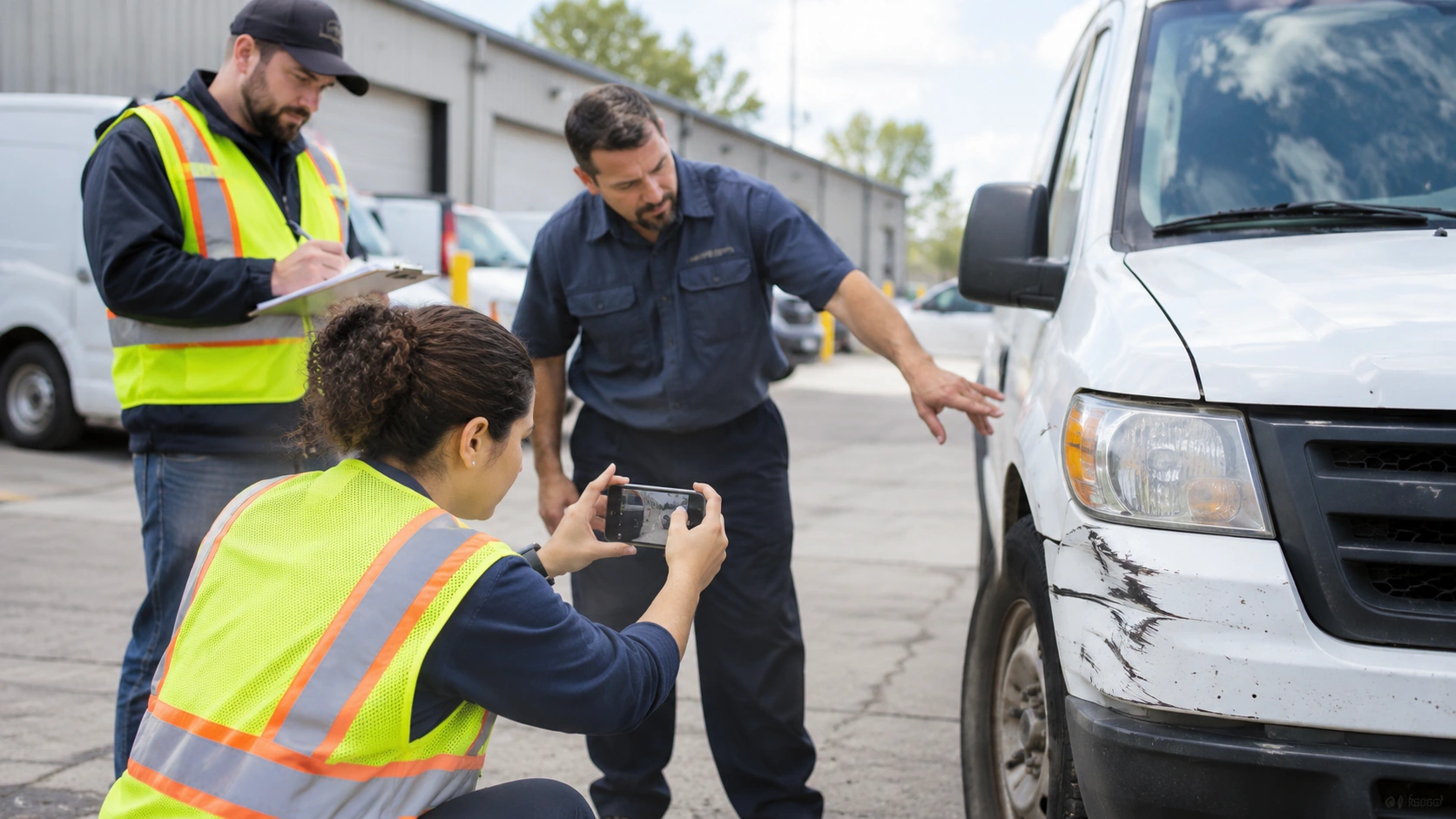
Capture photographs, witness details, and other relevant information safely.
Complete the incident report within 24 hours when reasonably possible.
Classify the incident and notify relevant stakeholders.
Identify root causes, complete corrective actions, and retain documentation.
Rolling Out the Policy So Drivers Actually Use It
A fleet incident reporting policy only works when drivers understand their responsibilities and feel comfortable reporting incidents without fear of unfair punishment.
Fleet managers should establish the following implementation practices:
- Obtain signed policy acknowledgments during onboarding and after revisions.
- Conduct training using realistic incident scenarios.
- Place emergency reporting instructions inside vehicles.
- Encourage reporting without fear of retaliation.
- Inform drivers about improvements resulting from their reports.
Integrate these practices into your fleet driver safety program rather than treating incident reporting as an isolated administrative requirement.
Common Mistakes That Quietly Kill Reporting
Even well documented policies can fail when reporting becomes inconvenient or employees believe management ignores their concerns.
The most common mistakes include:
- Punishing employees simply for reporting incidents
- Relying on paper forms that frequently disappear
- Providing no feedback after reports
- Establishing deadlines that managers never enforce
- Closing incidents without completing corrective actions
Separate the act of reporting from decisions about misconduct or disciplinary action. Drivers should never feel that concealing an incident is safer than reporting it.
Putting Your Policy Into Practice with Digital Tools
Digital incident reporting helps fleets standardize documentation, reduce missing information, and connect incident evidence with vehicle and driver records.
An effective digital reporting process should support mobile forms, photographic evidence, submission timestamps, notification routing, and accessible historical records.
AUTOsist supports this process through its customizable digital vehicle inspection app, allowing drivers to submit inspection details, comments, and photographs while notifying managers of submissions.
Managers should also maintain supporting maintenance documents, investigation findings, and corrective action records alongside incident reports.
Maintaining the necessary fleet safety records before a claim helps ensure that critical evidence is available when insurers, auditors, or legal representatives request it.
Frequently Asked Questions
-
Do fleet drivers need to report accidents with no visible damage?
Yes. Even accidents without visible damage should be reported internally because hidden vehicle damage, delayed injuries, or third party claims may arise later. -
What is the difference between an accident report and an incident report?
An accident report documents an event involving actual injury, damage, or loss. An incident report covers a broader range of events, including accidents, near misses, theft, and safety hazards. -
What makes a fleet accident DOT recordable?
A qualifying commercial motor vehicle accident is DOT recordable if it results in a fatality, immediate medical treatment away from the scene, or disabling vehicle damage requiring transportation away from the scene. -
Should drivers report accidents even if they are not at fault?
Yes. Drivers must follow their fleet's reporting policy regardless of fault. Documentation helps protect the fleet during insurance claims, investigations, and liability disputes. -
Can a fleet incident report be filed without a police report?
Yes. Drivers should document the incident using photographs, witness statements, and other available evidence. However, they must still obtain or file a police report when required by law or company policy.