 Miya Bholat
Nov 17, 2026
Multi-Driver Fleet Controls: Who Used Which Vehicle?
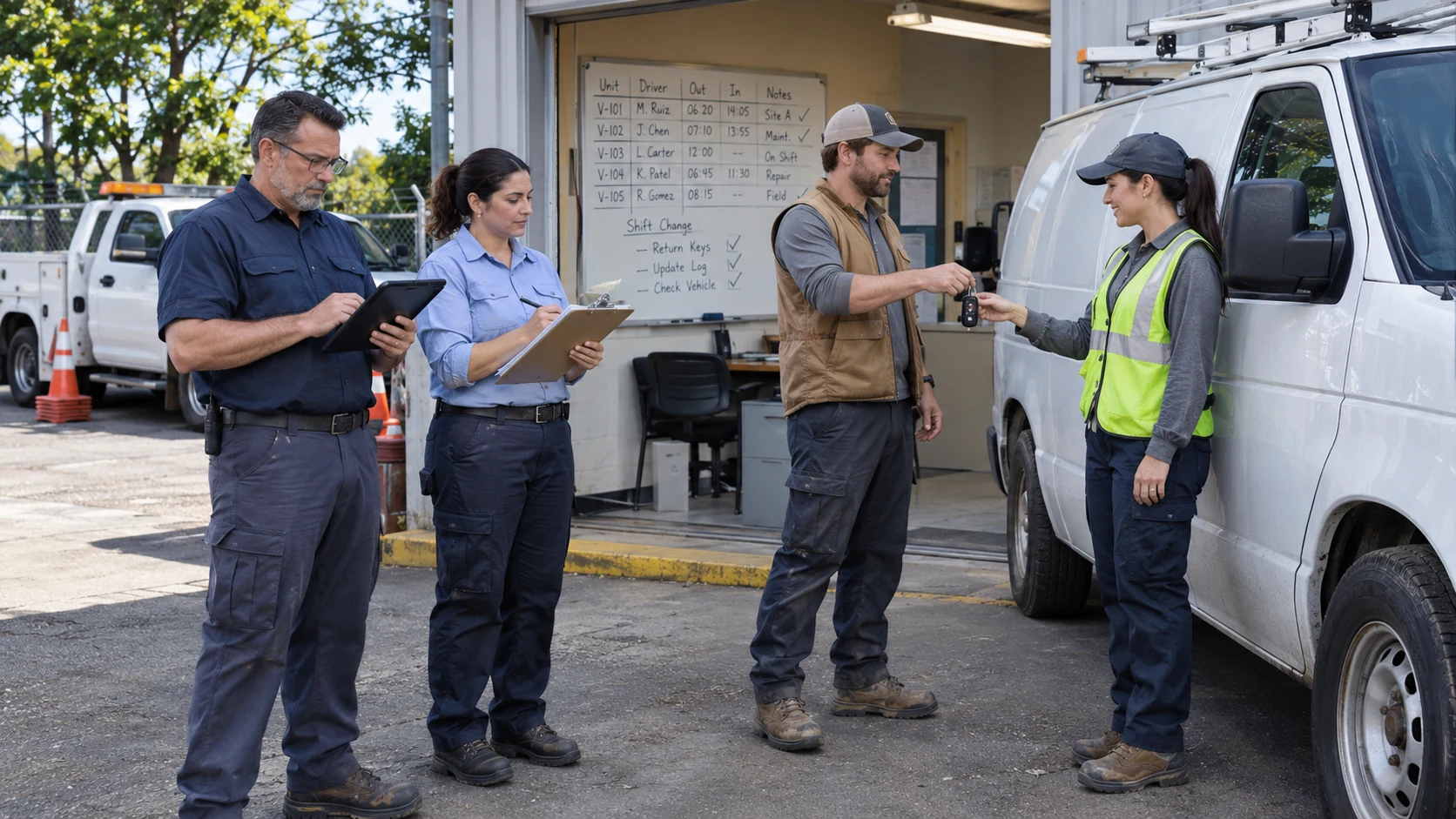
Fleet managers can determine who used which vehicle by recording every vehicle handover with a driver name, vehicle ID, start time, return time, and inspection record. Unlike vehicle assignments, which show who should be driving, custody records show who actually had the vehicle. Using fleet management software to centralize these records helps fleets investigate traffic violations, vehicle damage, fuel discrepancies, and insurance claims.
Imagine receiving a $90 toll violation and discovering a bumper scrape on a service van that three drivers used last week. Without reliable custody records, the fleet may absorb both costs without knowing who was responsible.
Key Takeaways
- Vehicle assignment is not vehicle custody. A dispatch schedule records intended vehicle usage, while a custody record documents actual possession.
- Every vehicle incident needs reliable attribution. Traffic violations, damage, fuel transactions, and insurance claims require evidence connecting the event to a driver.
- Driver identification does not always require hardware. Smaller fleets can use digital inspections and mobile check ins to document vehicle usage.
- Vehicle inspections can establish custody. Signed inspection records help identify who accepted a vehicle and document its condition at that time.
- Multiple records strengthen incident investigations. Comparing inspections, GPS history, mileage, and fuel transactions helps reconstruct vehicle usage.
Why "Who Had the Truck?" Gets Expensive in Shared Fleets
When multiple drivers operate the same vehicle, responsibility becomes difficult to establish without a reliable usage history. Even a minor incident can consume hours of administrative time when managers must contact several drivers, review dispatch schedules, and investigate conflicting information.
The Events That Need a Driver's Name Attached
Fleet managers should establish driver attribution for six common events:
- Parking and traffic violations: Identify who operated or parked the vehicle when the violation occurred.
- Toll violations: Match the transaction time and location to the recorded driver.
- Vehicle body damage: Narrow down when new damage appeared.
- Unreported defects: Determine when a driver first noticed or should have reported an issue.
- Fuel card transactions: Investigate unauthorized purchases and inconsistent fuel activity.
- Crashes and insurance claims: Establish who operated the vehicle when the incident occurred.
What an Unattributed Incident Really Costs
According to the July 2026 employer crash cost report from the Network of Employers for Traffic Safety, motor vehicle crashes cost US employers approximately $61.7 billion, with an average cost of $55,772 per highway crash occurring during work.
For example, if a fleet of 40 vehicles experiences three such crashes annually, applying that benchmark produces an estimated cost of $167,316.
Understanding how fleet safety practices influence driver behavior becomes even more important when incomplete records make incident investigations difficult.
Vehicle Assignment vs Vehicle Custody: The Record Most Fleets Skip
Vehicle assignment identifies who should operate a vehicle. Vehicle custody identifies who actually possessed it during a specific period.
While choosing between assigned and pool vehicle models determines how a fleet distributes vehicles, neither model eliminates the need to document actual usage.
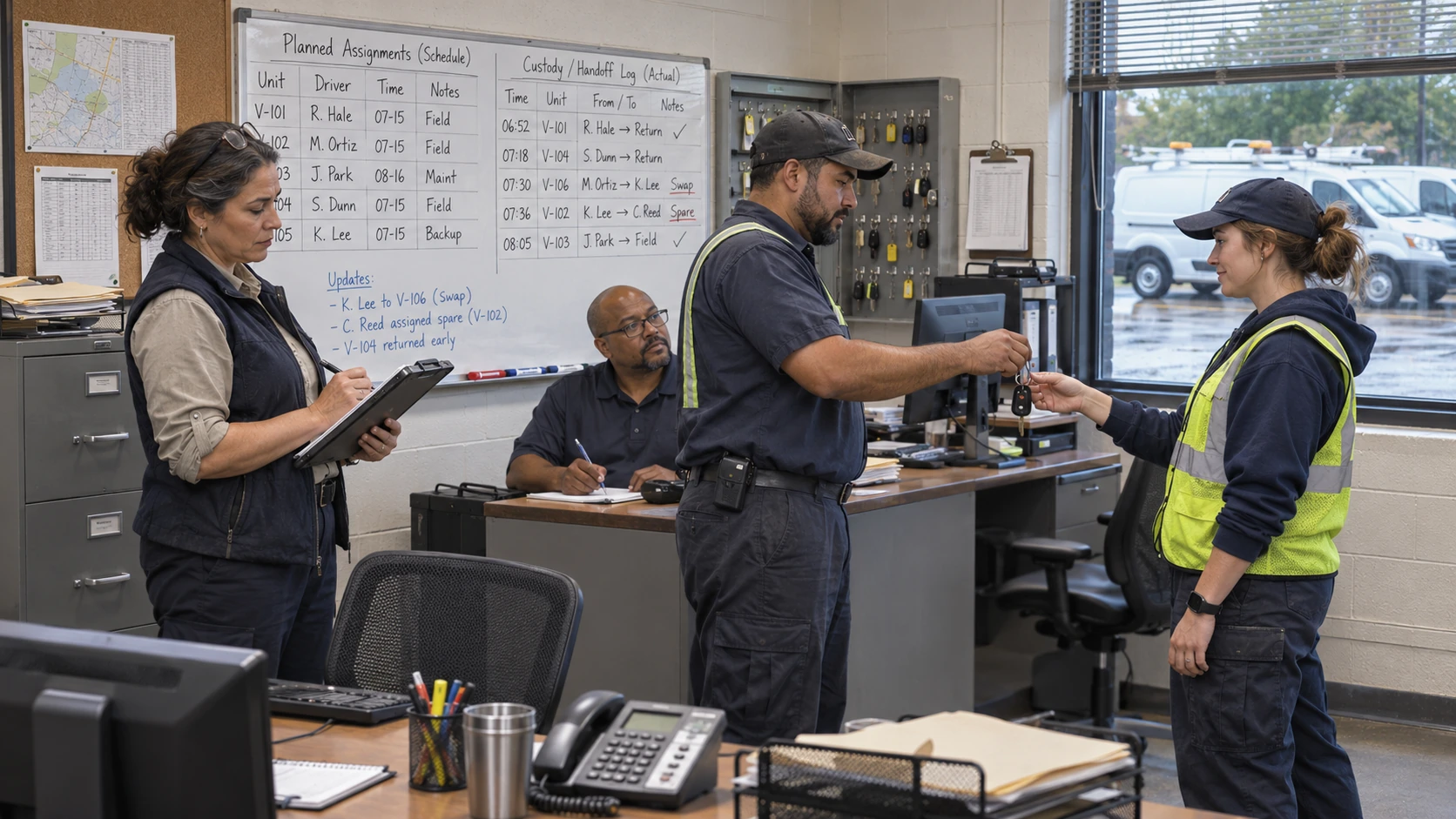
Consider Unit 214, which dispatch assigns to Michael for Tuesday morning. Michael calls in sick, David takes the van, and another employee uses it after lunch. Unless someone records these changes, the system continues to associate Michael with the vehicle.
These discrepancies contribute to fleet asset misassignment, particularly when other operational records depend on outdated driver information.
A complete custody record should capture:
- Vehicle ID and driver name
- Vehicle acceptance date and time
- Starting and ending odometer readings
- Vehicle condition at acceptance and return
- Return date and time
- Driver signature or authenticated confirmation
Driver Identification Methods Compared: Paper Logs to Telematics Driver ID
The right identification method depends on how frequently vehicles change hands, the available budget, and the level of evidence a fleet needs during investigations. Expensive hardware is not always necessary.
| Identification Method | Hardware Needed | Accuracy and Limitations |
|---|---|---|
| Paper sign out sheet | None | Low accuracy if drivers skip entries |
| Key cabinet log | Physical or electronic cabinet | Moderate accuracy, does not confirm driving |
| Mobile app check in | Smartphone | Good accuracy with individual accounts |
| QR code scanning | Smartphone and QR label | Good accuracy, scans can be missed |
| Digital inspection | Smartphone or tablet | Good accuracy with condition evidence |
| Telematics driver ID | RFID reader or key fob | High potential accuracy, credentials can be shared |
| Camera based identification | Driver facing camera | High potential accuracy, privacy and recognition limitations |
How to Choose a Method for Your Fleet
Fleet size provides a useful starting point, but vehicle turnover and incident frequency should ultimately determine the identification method.
Consider these practical recommendations:
- Fewer than 15 shared vehicles: Digital inspections or mobile check ins.
- Vehicles shared across multiple shifts: Digital inspections combined with automated driver identification.
- Fleets with frequent attribution disputes: Telematics identification with additional supporting evidence.
- Fleets with existing GPS systems: Connect vehicle movement records with individual driver identification.
GPS tracking establishes where a vehicle traveled. Driver identification establishes who likely operated it. Neither should replace the other.
Building a Custody Chain That Holds Up
Make the Pre-Trip Inspection Your Check-In
Instead of introducing another administrative task, use the existing vehicle inspection process to establish custody. Require each driver to complete an authenticated inspection before accepting a shared vehicle.
Under 49 CFR 396.11, drivers must sign required Driver Vehicle Inspection Reports (DVIRs). Federal rules generally do not require a report when drivers discover or receive notice of no qualifying defects.
On March 23, 2026, the FMCSA electronic DVIR final rule took effect, explicitly clarifying that fleets can create and maintain electronic inspection reports. Paper reports remain acceptable.
Fleets can establish a separate internal policy requiring an inspection at every vehicle handover, regardless of whether the federal reporting requirement applies.
A digital vehicle inspection app supports this process through customized checklists, inspection submissions, photographs, and defect documentation.
Control Who Can Take Which Vehicle
Drivers should only access vehicles they have authorization to operate. A driver covering another employee's shift should receive appropriate access rather than borrow their account credentials.
Establishing clear fleet app access rules for drivers and mechanics helps prevent unauthorized changes and records associated with the wrong employee.
Individual accounts also give managers a better understanding of who submitted operational information.
With fleet user and driver management, managers can configure individual permissions and review user specific reports.
Close the Gaps: Swaps, Spares, and After Hours Use
Custody records often become incomplete when employees deviate from their normal schedules. Establish consistent controls for these situations:
- Record every temporary vehicle swap.
- Require drivers to sign out spare vehicles.
- Investigate trips outside authorized shift hours.
- Require an inspection or confirmation when returning vehicles.
- Record odometer readings at acceptance and return.
- Investigate vehicle movements without an identified driver.
While structured fleet shift handoffs communicate vehicle condition and outstanding operational tasks, custody records establish who accepted responsibility during each period.
Managers should also reconcile unexplained mileage differences between vehicle handovers.
Using trip logs and mileage tracking provides additional evidence when recorded vehicle usage appears inconsistent.
How to Trace Who Used a Vehicle After an Incident
Return to the $90 toll violation and damaged bumper example. Instead of questioning every employee who used the van, reconstruct its custody history and compare the available evidence.
Follow these seven steps:
- Establish the incident window. Identify the date, time, and location from the violation notice, photographs, or damage report.
- Retrieve vehicle custody records. Review driver check ins, inspection submissions, and vehicle return times.
- Verify vehicle movement. Compare the incident window with available GPS history.
- Review surrounding inspections. Identify the last documented inspection without damage and the first inspection showing damage.
- Check fuel transactions. Compare purchase timestamps, locations, and driver credentials.
- Document the findings. Identify the driver when evidence supports attribution and route the incident for appropriate action.
- Investigate missing records. Document any gaps and correct the process that allowed them.
Integrated GPS tracking and telematics can help corroborate vehicle movements during the investigation.
However, establishing who possessed a vehicle does not automatically establish fault. Managers should review contradictory evidence and allow drivers to explain discrepancies before taking action.
The Legal and Privacy Side of Driver Attribution
Driver identification also affects vehicle owner liability.
Under New York Vehicle and Traffic Law Section 388, vehicle owners can face liability for negligence committed by drivers operating with their permission.

The 2019 court decision in Williams v. J. Luke Construction Co. illustrates how clear restrictions on authorized vehicle usage and supporting evidence can influence liability disputes.
Written vehicle usage policies and reliable custody records support investigations but do not automatically eliminate liability. Consult legal counsel regarding applicable state laws.
Fleet managers should also establish a transparent driver identification policy explaining:
- When drivers must identify themselves.
- Which vehicles require identification.
- What information the fleet collects.
- Who can access driver records.
- How long the fleet retains records.
- How managers use the information.
Transparency helps drivers understand the difference between operational accountability and unnecessary surveillance.
Multi-Driver Control Mistakes That Break the Record
Even fleets with sophisticated tracking systems can struggle with driver attribution when daily operating practices undermine their records.
Avoid these common mistakes:
- Treating dispatch schedules as proof of actual vehicle usage.
- Allowing multiple drivers to share login credentials.
- Excluding spare vehicles from identification requirements.
- Allowing one employee to complete inspections for the entire crew.
- Reviewing custody records only after an incident occurs.
Conduct monthly audits to identify missing check ins, overlapping custody periods, and unexplained vehicle movements.
The objective of improving fleet driver accountability should be to establish reliable records that protect both the business and its employees.
Bottom Line for Multi-Driver Fleets
Every shared vehicle should have a continuous custody history showing who accepted it, when they used it, and when they returned it.
Fleet managers do not necessarily need additional hardware to establish this control. Individual driver accounts, digital inspections, mileage records, and consistent handover procedures can provide a practical starting point.
Start this week by making digital inspections mandatory whenever a driver accepts a shared vehicle. AUTOsist can help centralize the inspection, mileage, and driver records that support this process.
Reliable accountability begins with evidence, not assumptions.
Frequently Asked Questions
-
How can fleet managers track who drives a shared vehicle?
Fleet managers can use digital vehicle inspections, individual driver accounts, electronic vehicle sign out logs, and telematics driver identification to record who used a vehicle and when. -
Can GPS tracking identify who was driving a fleet vehicle?
GPS tracking alone identifies vehicle location and movement, not the driver. Fleets must connect GPS records with individual driver identification or vehicle custody records. -
Who is responsible for damage to a shared fleet vehicle?
Responsibility depends on the available evidence. Fleet managers should compare inspection reports, damage photographs, custody records, and incident details before assigning fault. -
Who pays for traffic tickets issued to shared fleet vehicles?
Responsibility depends on the type of violation, applicable state laws, and company vehicle usage policies. Reliable custody records help identify the driver responsible. -
What happens if a fleet driver forgets to log vehicle usage?
Fleet managers should review GPS history, inspection records, dispatch schedules, and fuel transactions to reconstruct vehicle usage. If the evidence remains inconclusive, record the incident as unattributed.