 Miya Bholat
Nov 04, 2026
Does Fleet Safety Software Change Driver Behavior?
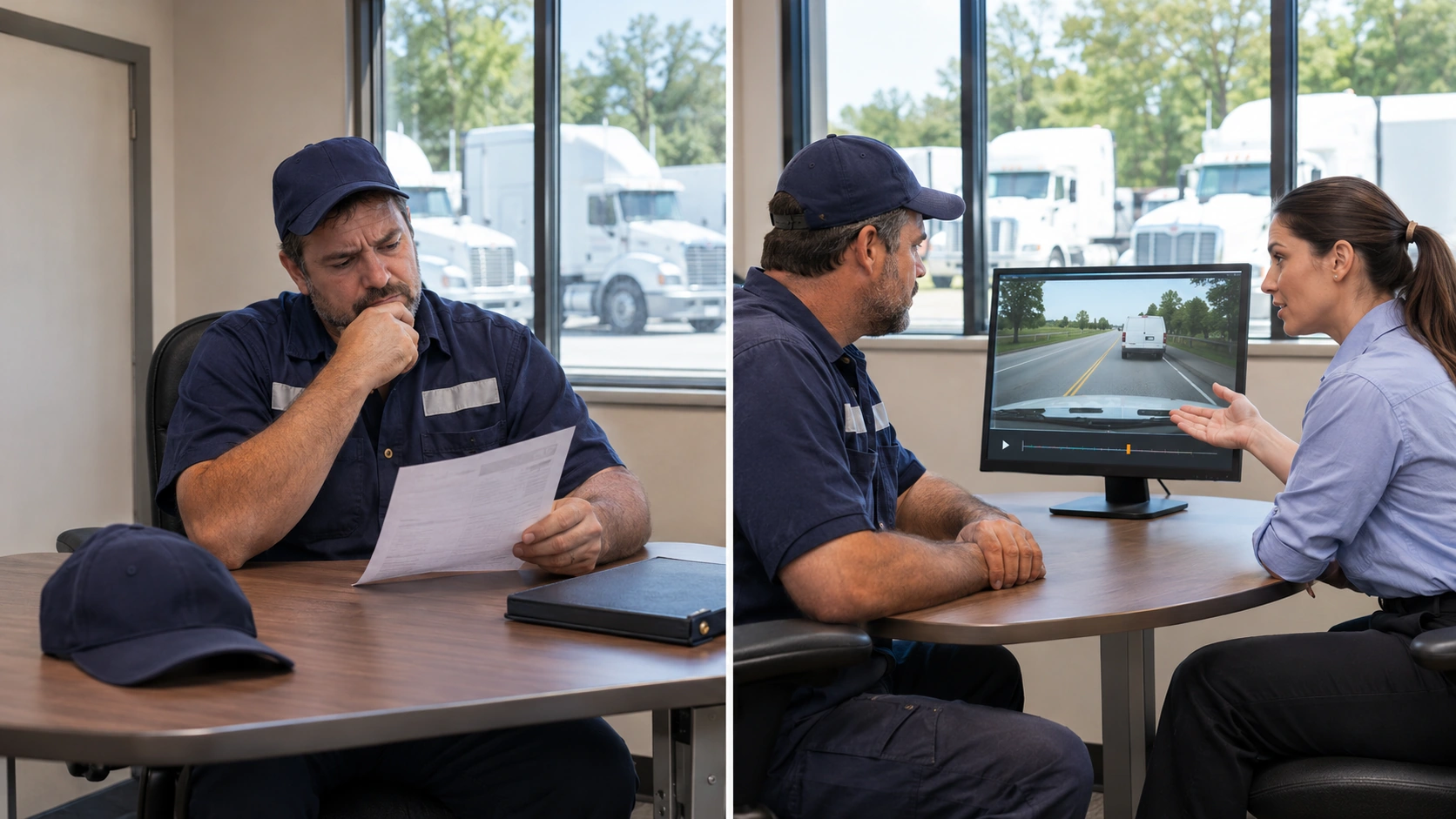
Yes, fleet safety software can change driver behavior, but installing it alone does far less than vendors suggest. The improvement comes when managers coach promptly and follow up. A fleet safety compliance program uses monitoring to identify risks and assigns someone to correct them. A camera cannot have that conversation.
An August 2026 industry analysis noted a paradox: telematics adoption grew while large truck fatal crash involvement rose roughly 31% between 2014 and 2022. NHTSA estimated 17,140 traffic deaths in the first half of 2025, down 8.2%, at 1.06 per 100 million miles. Neither trend isolates the effect of fleet software. Measure what changes in your fleet.
Key Takeaways
- Recording alone is not enough. Monitoring without feedback may produce little change.
- Coaching strengthens results. Follow up beats passive monitoring, but claimed doubling of collision reductions needs scrutiny.
- Some habits resist feedback. Speeding responds more readily than handheld phone use or schedule driven fatigue.
- Timing matters. Improvements may stall when coaching arrives late, alerts pile up, or managers stop following through.
- Measure exposure, not just events. Compare incidents per mile against a baseline and recheck driver trends over time.
What Research Says About Fleet Safety Software and Driver Behavior
The evidence separates monitoring without feedback from monitoring that triggers coaching or another meaningful response.
Monitoring Without Feedback Barely Moves the Needle
A 2015 CDC and NIOSH truck driver study equipped intervention and control sites with cameras. Without feedback, risky behavior showed no statistically significant change (rate ratio 0.93). Devices recorded events, but nobody addressed them.
In an FMCSA funded evaluation, the Virginia Tech Transportation Institute (VTTI) recorded a baseline with feedback disabled and managers unable to view events. A device measures behavior. It does not correct it.
Monitoring Plus Coaching Is Where the Big Numbers Come From
In the FMCSA and VTTI evaluation published in 2010, feedback plus coaching reduced safety events per 10,000 miles by 38.1% and 52.2% at two carriers. The 2015 CDC and NIOSH study found that immediate feedback plus coaching cut risky behaviors by more than half (rate ratio 0.47). Neither result directly measures crashes.
The AAA Foundation randomized trial published in April 2025 found app feedback and incentives reduced speeding by 11% to 13%, hard braking by 16% to 21%, and rapid acceleration by 16% to 25% versus monitored controls. It studied everyday motorists, not commercial fleets.
How to Read Vendor Claims Without Getting Burned
A 2026 industry article contrasted vendor reported collision reductions of 37% and 73%. Yet the underlying figures compare six and 30 months, not comparable fleets with and without coaching. Those numbers cannot prove that coaching doubled the benefit.

A 2026 vendor driver risk report cited 77% fewer violations with monitoring and training, plus 22% fewer claims in an example fleet. Combined programs cannot isolate software effects.
Before accepting a dramatic reduction claim, ask:
- Was there a control group?
- Did the researchers adjust for miles driven?
- Who funded the analysis?
- How long did the follow up last?
- Were coaching and training included with the software?
Compare the designs before comparing the results.
| Study and year | Study design | Main finding | Evidence type |
|---|---|---|---|
| AAA Foundation, 2025 | Randomized app feedback trial | Speeding down 11% to 13%; no improvement in handheld phone use | Independent |
| CDC and NIOSH, 2015 | Camera sites with and without feedback | Rate ratio 0.47 with feedback and coaching; 0.93 without | Independent |
| FMCSA and VTTI, 2010 | Baseline followed by feedback and coaching | Event rates down 38.1% and 52.2% | Government funded |
| VTTI findings presented in 2022 | Seven fleets, coaching and withdrawal observation | Earlier coaching worked better; some gains lasted after removal | Research presentation |
| UC San Diego, 2025 | Review of coaching methods | Manager led coaching and short, regular sessions favored | Vendor sponsored review |
| Vendor figures discussed in 2026 | Self reported outcomes at different follow up periods | 37% at six months; 73% at 30 months | Vendor reported, not controlled |
Which Driver Behaviors Change and Which Ones Resist
Software works best on behavior drivers can correct. In trucking and logistics fleet operations, schedules and road conditions add context.
Commonly coachable signals include:
- Speeding: A driver can compare speed events across similar routes.
- Hard braking: Video helps separate avoidable late reactions from traffic hazards.
- Rapid acceleration: Repeated events can reveal driving patterns.
- Following distance: Road facing video supplies context that a score alone misses.
- Seat belt use: Verified camera events support specific coaching.
The AAA trial found no significant improvement in handheld phone use. Fatigue and rushing may reflect dispatch pressure. Coaching someone to slow down while assigning an impossible route sends conflicting messages. Review driver safety warning signals in context.
Why Driver Behavior Gains Fade After the First Few Months
Early improvement can plateau, but fading is not inevitable. AAA and VTTI observed some gains persisting after interventions.
The Watched Driver Effect Wears Off
Drivers may pay closer attention when monitoring is new. Once alerts become routine, lasting improvement depends on clear expectations and fair follow through. A supervisor who reviews events only at rollout should not expect that initial attention to last.
Alerts Pile Up and Nobody Acts
Drivers tune out repetitive in cab warnings; managers stop investigating crowded dashboards. Prioritize serious, repeatable patterns, and explain which alerts warrant action. Otherwise, the system becomes an archive of unresolved risk.
Coaching Arrives Too Late or Too Rarely
VTTI findings presented in November 2022 covered seven fleets, 354 drivers, and 3.8 million miles. Coaching within one week worked better than sporadic coaching. One fleet reduced high severity events by 64%, and some gains persisted for two months after equipment removal.
Too Much Praise for the Wrong Drivers
A June 2025 vendor sponsored UC San Diego review favored manager led coaching and cautioned that excessive praise may backfire with the riskiest drivers. The sponsor publicized a 24% improvement compared with passive methods, but this was a research review, not a new randomized fleet trial. Reward sustained improvement, not mere participation.
The Feedback Loop That Makes Safety Software Actually Work
Stronger interventions collect evidence, verify context, coach one behavior, and check results. The complete guide to fleet driver monitoring covers setup and reviews.
Use this seven step workflow for a flagged driving event:
First decide whether the event reflects driver choice, road conditions, a vehicle defect, or a false alert. That prevents unfair coaching.
Rule Out the Vehicle Before You Coach the Driver
A harsh braking spike may indicate a driver issue, worn tires, faulty brakes, or sensor errors. Review the digital vehicle inspection records filed before the event before blaming the driver.
If different drivers trigger unusual alerts in one truck, check its condition. Recent repairs and recurring defects provide useful context.
AUTOsist's vehicle service history connects repairs and defects with the coaching conversation, keeping reviews fair.
Blend Manager Led, In Cab, and Self Coaching
The UC San Diego review recommends manager coaching, immediate in cab feedback, and driver self review. For a small fleet, prioritize the riskiest 10% to 20% for short, regular face to face sessions.
For a fairer assessment, use GPS tracking and telematics information to spot trends, not pronounce guilt. Steady drivers may self review; repeated serious events deserve a conversation.
Set coaching thresholds before incidents occur, then apply them fairly. A driver with repeated high severity events needs a different response from someone with a single disputed alert.
Keep each session specific: review one event, agree on a correction, and set the next review date. The driver behaviour monitoring guide covers policy thresholds and cadence.
How to Measure Whether Your Software Is Changing Driver Behavior
Measure against a baseline and actual miles driven, then check whether fewer events lead to fewer crashes.
Start with these checks:
- Baseline: Record four to six weeks of events before introducing coaching.
- Exposure: Use events per 1,000 miles or per 100 engine hours, never raw counts alone.
- Follow up: Review each driver at 30, 60, 90, and 180 days.
- Comparison: Where practical, compare coached drivers with similar drivers not yet coached.
- Outcomes: Pair leading signals such as events with crashes, claims, and violations.
Formula: (Verified events ÷ miles driven) × 1,000 = events per 1,000 miles. Keep definitions consistent; raw counts fall when mileage falls.
To catch a temporary improvement that later fades, use a monthly fleet safety trend review that compares serious incidents with routine alerts.
The Network of Employers for Traffic Safety estimated in its 2026 employer crash cost report that crashes cost U.S. employers $61.7 billion based on 2023 data in 2024 dollars. Average employer costs were $55,772 per on the job highway crash and $180,199 per injury.
Illustrative calculation: A 40 vehicle fleet with six on the job crashes annually has an estimated cost of 6 × $55,772 = $334,632. A 20% reduction means 1.2 fewer crashes, or approximately $66,926 saved per year. This is not a guarantee; one crash free month proves little.
For reviews, a fleet reports dashboard can connect inspection records and safety metrics. Watch for recurring risks.
The Bottom Line: Software Changes Behavior When Managers Do
Fleet safety software can change behavior when accurate alerts trigger fair coaching. It cannot fix impossible schedules, worn brakes, or absent follow up.

Start with a baseline and one 30 minute weekly coaching block. After an incident, use a driver near miss review process to find the cause. Then track the same behavior per mile.
Frequently Asked Questions
-
How long does fleet safety software take to improve driver behavior?
Some changes may appear within weeks when monitoring includes consistent coaching. Compare results against a baseline at 30, 60, and 90 days rather than expecting immediate improvement. -
Can automated alerts replace manager coaching?
Alerts can prompt immediate corrections, but repeated or serious events need a conversation. Managers should verify the cause, agree on one change, and review progress. -
What should drivers do if a safety alert is wrong?
Request a review of the footage and event details. Managers should consider traffic, road conditions, and vehicle defects, then correct inaccurate records before using them in performance decisions. -
How can fleets introduce monitoring without losing driver trust?
Explain what is recorded, who can access it, and how it affects coaching and scores. Let drivers review disputed events and recognize safe driving alongside identifying risks. -
Does a better driver safety score mean fewer crashes?
Not necessarily. Check verified events per mile alongside crashes, claims, and violations. A higher score alone does not prove the fleet is safer.