 Miya Bholat
Jun 25, 2026
What Should Fleets Do After a Driver Near Miss?
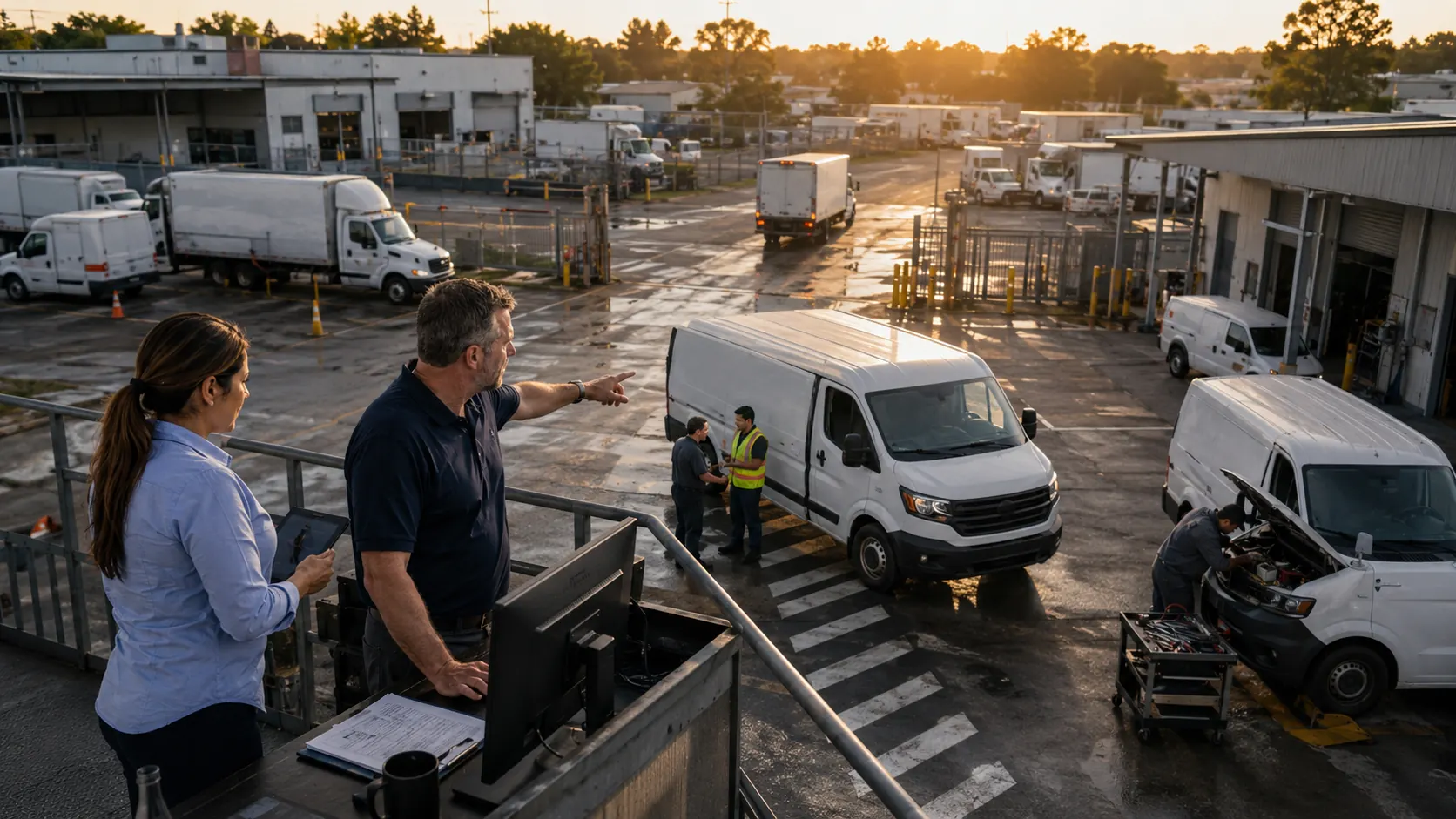
After a driver near miss, the fleet should first confirm that the driver is safe, document the event within 24 hours, inspect the vehicle, review available evidence, identify the root cause, and assign corrective action. Managing the event through a structured fleet safety and compliance program helps turn a close call into a practical opportunity to prevent a collision, injury, service delay, or expensive repair.
Key Takeaways
-
Check on the driver before starting the investigation.
A near miss can unsettle even an experienced driver. Confirm that the driver is safe and able to continue before requesting reports or reviewing data. -
Document the event within 24 hours.
Record the location, conditions, vehicle, driver account, video, and telematics information while the details remain fresh. -
Inspect the vehicle before returning it to normal service.
Brakes, tires, mirrors, steering, lights, or cargo restraints may have contributed even when no contact occurred. -
Investigate the underlying cause rather than blaming the driver.
Consider driver behavior, route design, vehicle condition, weather, traffic, and scheduling pressure before deciding what corrective action is appropriate. -
Make near miss reporting quick and blame free.
Drivers are more likely to report close calls when the process is simple and an honest report does not automatically result in punishment. -
Tell drivers what changed after their report.
Closing the loop shows that reports lead to repairs, coaching, route changes, or policy improvements instead of disappearing into a file.
Why a Near Miss Should Never Be Ignored
A delivery driver approaches an intersection when another vehicle suddenly turns across the lane. The driver brakes hard, narrowly avoids contact, and completes the route without visible damage. In busy last mile delivery fleet operations, that event can easily be treated as a successful save rather than a warning.
Near misses are not situations where nothing happened. A historical safety model commonly called the safety triangle suggests that hundreds of close calls can occur beneath a much smaller number of property damage events and serious injuries. The exact ratio will differ between fleets, but the principle is valuable because every close call provides information that may help prevent a more serious event.
What Counts as a Near Miss in Fleet Operations
A fleet near miss is an unplanned event that did not cause an injury or measurable property damage but could have done so with a small change in timing, speed, distance, or position. The event may involve a driver, vehicle, pedestrian, cyclist, piece of equipment, or roadside hazard.
Common fleet near misses include:
- A driver braking hard to avoid hitting the vehicle ahead
- A vehicle swerving to avoid a pedestrian or cyclist
- Equipment shifting during transport without striking anyone
- A driver entering an intersection against a red light without a collision
A near miss differs from an accident because an accident results in actual injury, contact, damage, or loss. It also differs from an isolated equipment malfunction or security breach, although either issue may contribute to a close call.
Federal OSHA rules do not generally require an ordinary near miss to be reported directly to OSHA. However, OSHA strongly encourages employers to investigate close calls and address the hazards behind them. Fleets can incorporate that process into a documented fleet safety program rather than waiting for a reportable injury.
Why Most Fleets Ignore Near Misses (and Why That's Costly)
The "No Harm, No Foul" Mindset
When nobody was injured and the vehicle remains operational, managers may see little reason to investigate. Drivers may also think reporting the event will create unnecessary paperwork or draw unwanted attention to their performance.
That mindset removes an early warning from the fleet safety record. A driver may encounter the same unsafe intersection tomorrow, another vehicle may have the same braking problem, or another employee may face the same schedule pressure.
Near miss reporting also remains inconsistent because drivers often fear blame. A fair process should protect honest reporting while still allowing the fleet to address impairment, intentional misconduct, or repeated reckless behavior.
The Real Financial Risk of Doing Nothing
The cost of a fleet accident extends well beyond bodywork. Employers may face medical expenses, liability, vehicle downtime, towing, replacement rentals, missed service, administrative work, and higher insurance costs.
A commonly cited NHTSA related estimate placed the average employer cost of an injury crash at about $74,000. The Network of Employers for Traffic Safety estimated that United States traffic crashes cost employers $72.2 billion during 2019 through medical care, liability, lost productivity, and property damage.
The classic safety triangle is often summarized as approximately 600 near misses, 30 property damage events, and one major injury. It should not be treated as a precise prediction for every fleet, but it illustrates why close calls deserve attention.
Ignoring a near miss means ignoring information that could improve fleet safety best practices before the organization faces a larger loss.
Immediate Steps After a Driver Near Miss
Step 1: Check on the Driver
Begin with the driver rather than the paperwork. Ask whether the driver is physically safe, emotionally settled, and able to continue operating the vehicle.
Use open questions such as:
- What happened from your perspective?
- What did you see before the event?
- Was anything blocking your view?
- Did the vehicle respond as expected?
- Do you feel comfortable continuing the route?
This approach produces better information than starting with an accusation. It also strengthens driver safety management by showing that the investigation focuses on understanding risk rather than finding a convenient person to blame.
Step 2: Document the Event Within 24 Hours
Record the near miss while memories remain clear and electronic evidence is still available. The completed record should allow another manager to understand the event without relying on a second interview.
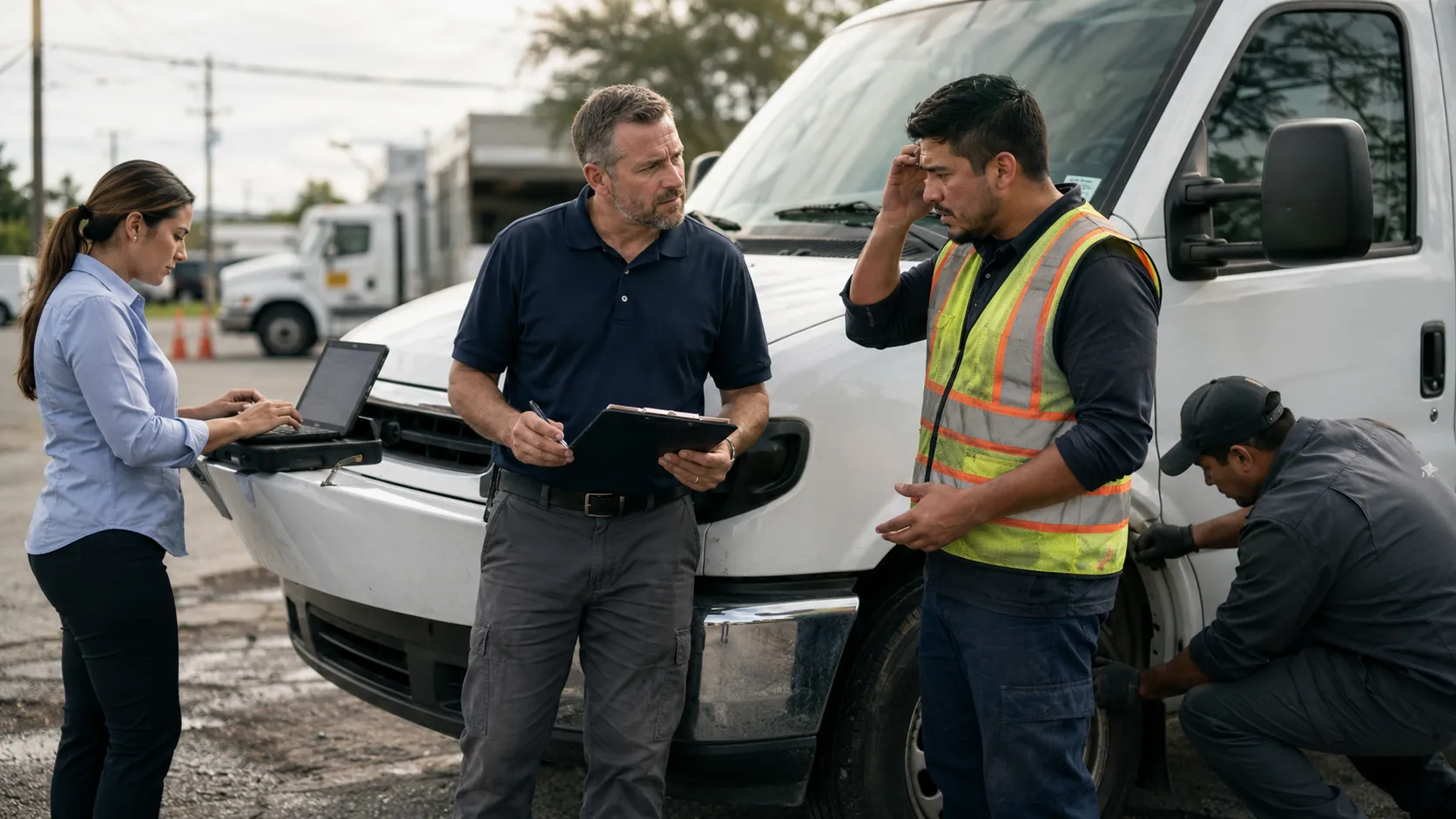
Capture the following information:
- Date, time, location, route, and assignment
- Weather, lighting, traffic, and road conditions
- Vehicle ID, cargo, and attached equipment
- Driver account and witness information
- Photos and available fleet dash camera footage
- Speed, location, braking, and movement from GPS tracking and telematics
Data should support the driver's account rather than replace it. A hard braking alert shows what the vehicle did, but the driver may explain that a pedestrian stepped from behind a parked truck or another motorist entered the lane.
Step 3: Inspect the Vehicle
A near miss may expose a maintenance problem even when the driver avoids a collision. Inspect the vehicle when brakes, tires, mirrors, steering, lights, warning indicators, or cargo restraints may have contributed.
The inspection should happen before the vehicle returns to normal service when safety is uncertain. A digital vehicle inspection app can attach findings, photos, and repair needs to the correct asset.
Managers should also compare the inspection with the vehicle's service and maintenance history. Previous complaints about braking distance, tire wear, visibility, or steering may reveal that the near miss was part of a larger pattern.
Step 4: Conduct a Root Cause Analysis
Do not stop at conclusions such as driver error or bad weather. Use the 5 Whys method to ask why the event occurred until the fleet reaches a cause it can address.
For example:
The fleet should review five potential cause groups:
- Driver attention, fatigue, judgment, or skill
- Route design, intersection layout, or site access
- Vehicle condition, load security, or visibility
- Weather, lighting, traffic, or road surface
- Dispatch pressure, delivery timing, or unclear procedures
Each cause requires a different response. Coaching will not repair worn brakes, and a brake repair will not correct an unsafe route or unrealistic delivery schedule.
The complete response workflow should be:
| Response Stage | Responsible Person | Recommended Timing | Required Output |
|---|---|---|---|
| Driver safety check | Supervisor or dispatcher | Immediately | Driver condition and initial account |
| Event documentation | Driver and supervisor | Within 24 hours | Complete near miss report |
| Vehicle inspection | Maintenance team | Before normal service | Inspection findings and repair decision |
| Root cause review | Safety and operations team | Within two business days | Identified causes and actions |
| Event closeout | Assigned manager | After action completion | Resolution and driver update |
How to Build a Near Miss Reporting System That Drivers Actually Use
Make Reporting Fast and Blame Free
Drivers should be able to complete an initial report from a phone or tablet in a few minutes. The form should ask only for information that helps the fleet understand the event, possible causes, and required response.
A blame free process does not mean ignoring dangerous behavior. It means an honest report does not automatically produce discipline before the evidence is reviewed.
The policy should clearly distinguish between an understandable mistake, a training need, repeated unsafe behavior, and intentional misconduct. That distinction builds trust while preserving accountability.
Use Digital Tools Instead of Paper Forms
Paper forms are difficult to search, compare, and connect with individual vehicle records. They may also remain in a supervisor's desk or maintenance office without reaching the safety team.
Digital reporting creates timestamped records with required fields, photos, and consistent event categories. AUTOsist can help centralize this information alongside driver and user records, inspections, maintenance history, and other fleet documents.
A centralized record also makes it easier to determine whether the same vehicle, route, driver, or operating condition appears in multiple events.
Close the Loop: Show Drivers Their Reports Matter
A driver who submits a near miss report and sees no response may not report the next event. Managers should explain whether the fleet repaired the vehicle, changed the route, adjusted a schedule, provided coaching, or decided that no additional action was necessary.
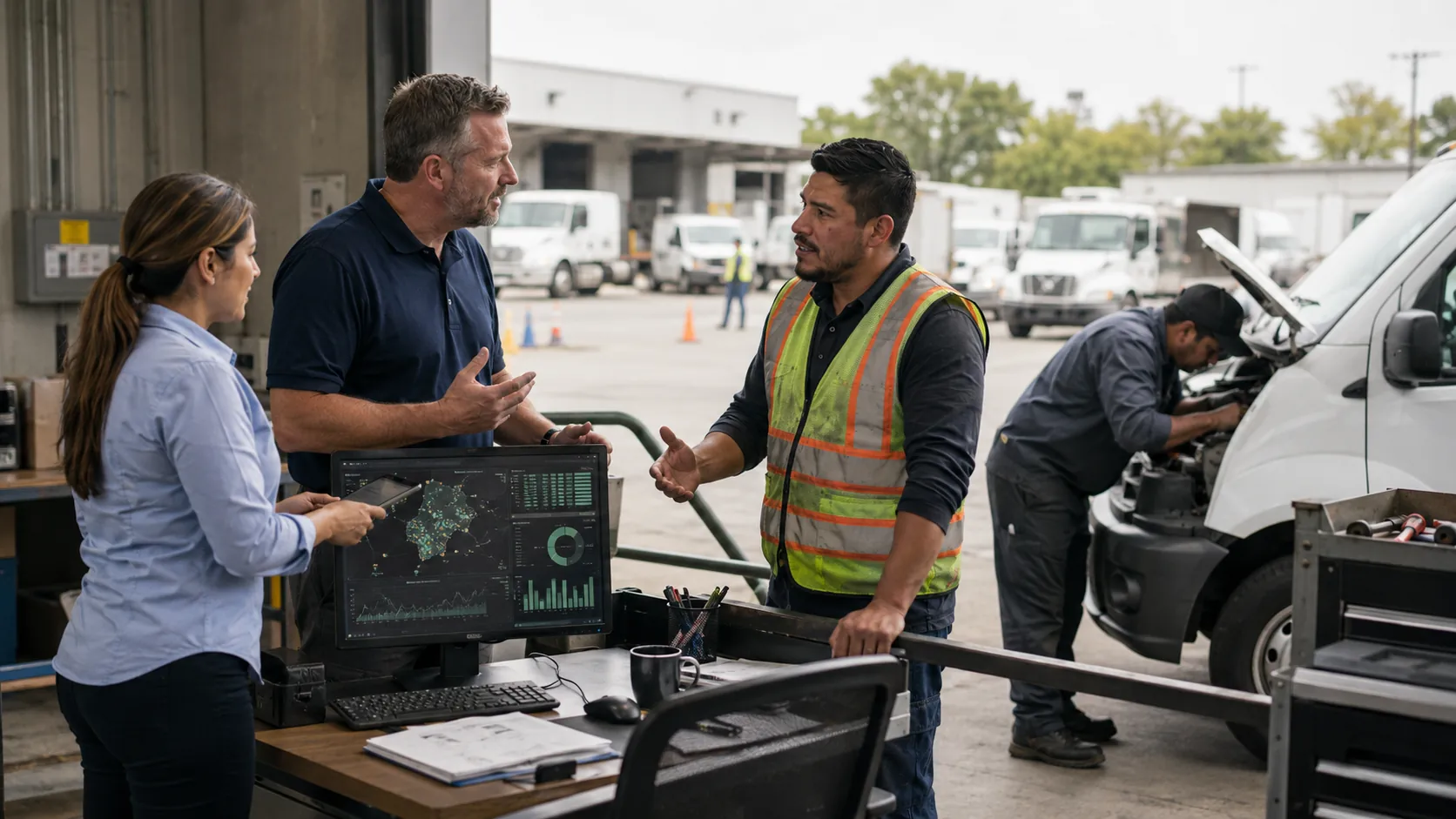
Share useful lessons during safety meetings without embarrassing the reporting driver. Recognize the act of identifying risk and providing complete information rather than rewarding the number of reports submitted.
Closing the loop demonstrates that reporting creates practical change.
Turning Near Miss Data into Preventive Action
Spot Patterns Before They Become Accidents
A single event may appear random. Several events grouped together can reveal a preventable pattern.
Organize reports by:
- Event type and driving behavior
- Location, route, or customer site
- Time of day and work shift
- Driver, supervisor, or operating team
- Vehicle, model, age, and maintenance history
For example, repeated evening lane departure events may indicate fatigue or poor visibility. Several close calls at one intersection may point to a route problem. Hard braking reports concentrated around one vehicle may justify a mechanical inspection.
Review these patterns weekly or monthly depending on fleet size and activity.
Target Training Where It's Needed Most
Near miss data allows managers to replace generic fleetwide training with focused coaching. A driver with following distance events needs different support from a driver experiencing repeated backing problems at crowded job sites.
Review the driver account, video, telematics data, and operating conditions together. This helps the coach discuss one specific decision or behavior rather than making broad assumptions.
Training may also be appropriate for dispatchers and supervisors. Schedule pressure, unclear instructions, and unrealistic routing can contribute to near misses even when the driver performs the final maneuver.
Adjust Maintenance Schedules Based on Trends
Repeated hard braking does not automatically prove that a brake system is failing. However, repeated braking complaints combined with wear, warning signs, or longer stopping distances may justify an earlier inspection.
Connect the event to preventive maintenance schedules so the reason for changing an inspection or service interval remains documented. AUTOsist can help teams compare the near miss record with previous services, inspections, and maintenance activity for the same vehicle.
This connection helps prevent a safety finding from being forgotten after the investigation closes.
Building a Fleet Safety Culture Around Near Misses
A reactive fleet corrects problems after a crash. A proactive fleet treats a close call as enough evidence to investigate, learn, and improve.
Management behavior determines whether this culture succeeds. Drivers must see that leaders listen to reports, examine operational causes, complete corrective actions, and avoid public blame.
Review recent near misses during regular safety meetings. Discuss what made the event possible, what action was taken, and whether that action reduced the risk. Keep the discussion focused on lessons that other drivers can use.
Recognition programs can reward thoughtful reporting, hazard identification, and safe driving behavior. Avoid creating quotas or competitions based on report volume because they may encourage low quality submissions or discourage teams that appear to have higher numbers.
Leaders should also question a complete absence of reports. Zero near misses may indicate strong controls, but it may also mean drivers do not trust the reporting process. Compare reports with telematics alerts, minor vehicle damage, complaints, and supervisor observations.
Near Miss Response Checklist for Fleet Managers
Use the following checklist whenever a driver reports a close call:
- Confirm that the driver and everyone nearby are safe.
- Decide whether the vehicle can continue operating safely.
- Record the event within 24 hours.
- Preserve photos, video, telematics data, and witness details.
- Inspect brakes, tires, lights, mirrors, steering, and cargo restraints.
- Review driver, route, vehicle, environmental, and scheduling factors.
- Identify the root cause rather than stopping at driver error.
- Assign an owner and completion date for every corrective action.
- Provide coaching, repairs, route changes, or policy updates as needed.
- Tell the reporting driver what action was completed.
- Add the event to the next fleet safety trend review.
Frequently Asked Questions
-
What should a fleet manager do immediately after a driver near miss?
The fleet manager should confirm that the driver and others are safe, determine whether the vehicle can continue operating, and collect a calm initial account. The manager should then preserve video and telematics data and arrange a vehicle inspection when mechanical condition may have contributed. -
How do you get drivers to report near misses without fear of punishment?
Create a clear blame free policy for honest reporting, make the form quick to complete, and investigate the evidence before deciding whether discipline is appropriate. Drivers also need to see that their reports lead to repairs, coaching, route changes, or other meaningful actions. -
What is the difference between a near miss and a fleet accident?
A near miss could have caused an injury, collision, or property damage but did not. A fleet accident involves actual contact, injury, damage, or another measurable loss that may trigger insurance, legal, or regulatory procedures. -
How can near miss data reduce fleet maintenance costs?
Near miss reports can reveal early signs of brake wear, tire problems, poor visibility, steering concerns, or failed cargo restraints. Correcting those issues early may prevent emergency repairs, towing, additional vehicle damage, and unplanned downtime. -
Do fleets have to report near misses to OSHA or DOT?
Ordinary near misses generally do not need to be reported directly to federal OSHA or DOT. However, serious injuries, fatalities, and certain work related events may have separate reporting requirements. Fleets should also review applicable state rules, contracts, insurance terms, and internal policies.