 Miya Bholat
Jun 23, 2026
Why Average Fleet Costs Hide Expensive Vehicles?
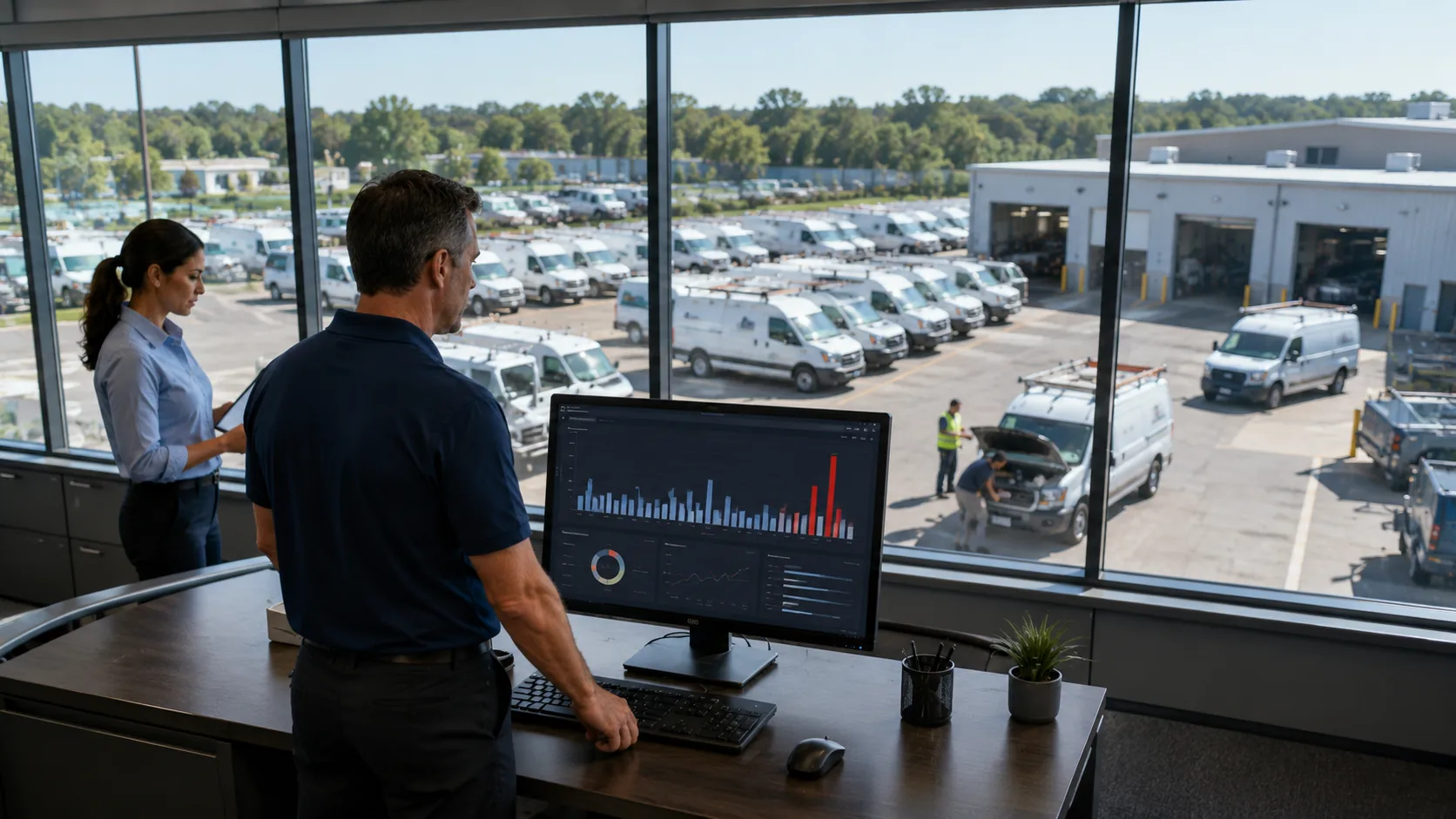
Average fleet costs can make an operation look financially healthy even when a few vehicles are consuming far more than their share of the budget. The solution is to move beyond one blended number and use fleet cost management to compare maintenance, fuel, downtime, and ownership costs at the individual vehicle level.
Key Takeaways
- Averages hide costly outliers. One or two expensive vehicles can be diluted by lower cost assets, leaving the fleet average within budget while individual losses continue.
- The median and per vehicle records provide better context. Comparing each asset with the fleet median reveals vehicles that sit far outside normal spending patterns.
- Direct repair costs tell only part of the story. Downtime, overtime, missed work, administrative effort, and lost capacity can make a problem vehicle more expensive than its invoices suggest.
- Clear thresholds turn reports into action. A vehicle that exceeds a defined cost, downtime, or repair frequency limit should trigger a documented review.
- Replacement decisions should consider future cost. Market value matters, but age, mileage, recurring failures, utilization, and expected operating cost should also shape the decision.
Your Fleet Average Is Lying to You
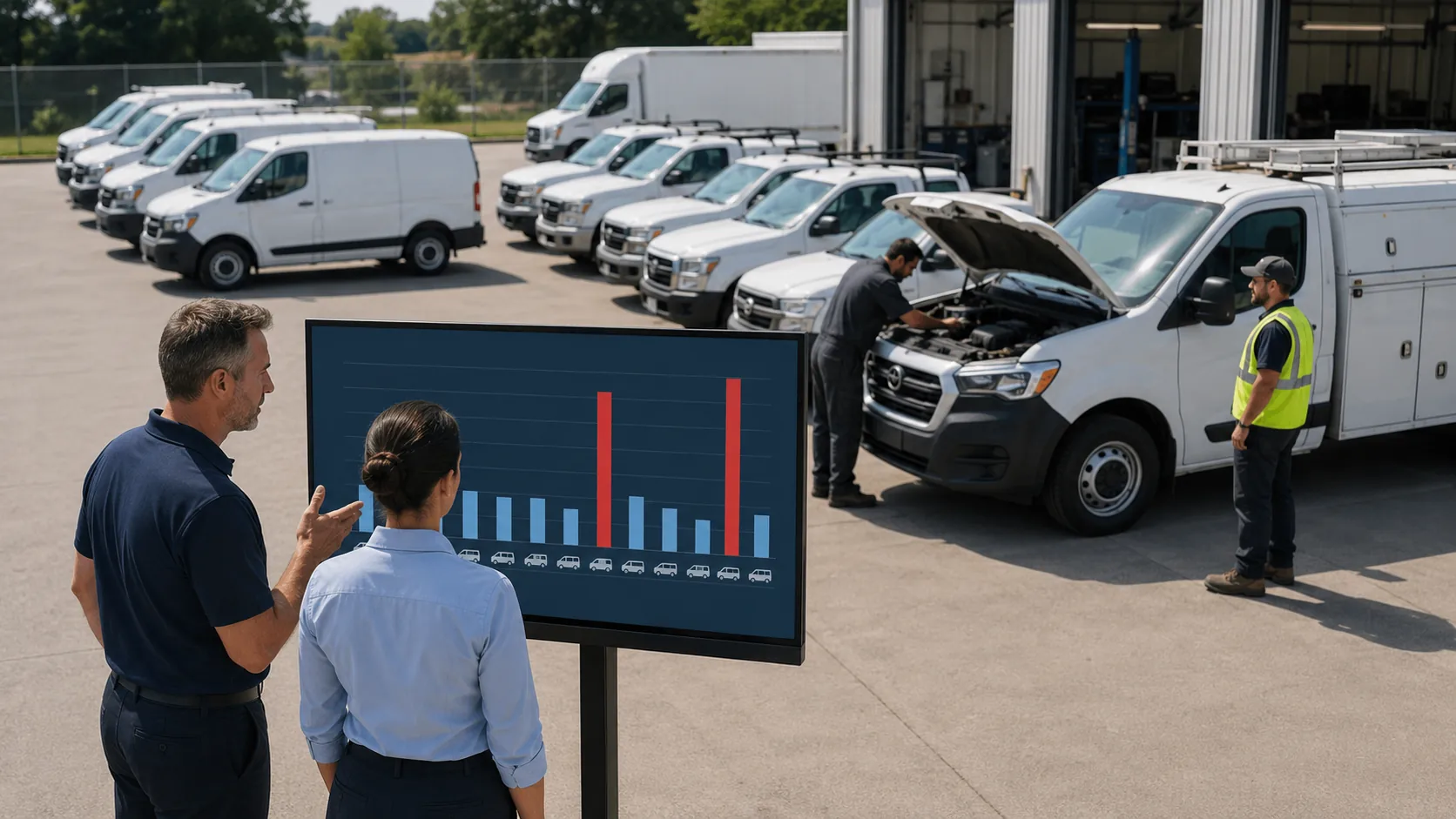
A fleet manager reviews the monthly report and sees an average operating cost of $7,800 per vehicle. The number is close to budget, so the fleet appears stable. However, three vehicles have each consumed $18,000 while the other 17 average only $6,000. Those three assets represent 15 percent of the fleet but more than one third of the total spend.
The average is mathematically correct but operationally incomplete. It shows group spending, not which vehicles caused it. This is why fleet cost reports can miss the real problem even when the totals are accurate.
How Fleet Cost Averaging Works And Where It Breaks Down
The Math Behind Average Cost Per Vehicle
Average cost per vehicle uses a simple formula:
Average cost per vehicle = Total fleet spend ÷ Number of vehicles
Consider five vehicles with the following annual maintenance costs:
| Vehicle | Annual maintenance cost |
|---|---|
| Vehicle 1 | $4,800 |
| Vehicle 2 | $5,100 |
| Vehicle 3 | $5,400 |
| Vehicle 4 | $5,700 |
| Vehicle 5 | $19,000 |
| Fleet total | $40,000 |
| Fleet average | $8,000 |
| Fleet median | $5,400 |
The $8,000 average implies similar costs across the fleet. In reality, four vehicles remain below $6,000 while one costs $19,000. The $5,400 median gives a clearer picture of normal performance.
Why Averages Flatten the Data That Matters
Averages compress different outcomes into one figure. A strong vehicle can offset a weak one, just as one profitable branch can hide losses elsewhere. The risk grows when managers use the blended result to approve budgets or postpone replacement.
A useful report should show the total, average, median, highest cost assets, and the gap between them. Strong fleet cost visibility makes that variation visible instead of burying it in a summary.
The Real Cost Distribution in Most Fleets
Fleet spending rarely spreads evenly. A smaller group often absorbs a disproportionate amount because of age, mileage, duty cycle, fuel use, repeat failures, or delayed maintenance.
Consider a hypothetical fleet of 20 service vehicles:
| Vehicle group | Vehicle count | Average cost per vehicle | Group cost | Share of total cost |
|---|---|---|---|---|
| High cost vehicles | 3 | $18,000 | $54,000 | 34.6% |
| Remaining vehicles | 17 | $6,000 | $102,000 | 65.4% |
| Total fleet | 20 | $7,800 overall average | $156,000 | 100% |
The $7,800 average does not reveal the $12,000 gap between the two groups. Finding that gap early lets the manager investigate before another budget cycle passes.
What Expensive Vehicles Are Actually Costing You
Direct Costs That Get Buried in the Average
Direct costs appear on invoices and fuel statements, but grouped totals weaken their meaning. A per vehicle record should separate these expenses:
- Frequent repairs: Repeated shop visits can turn small invoices into a major annual cost.
- Unplanned downtime: Emergency failures add towing, rush labor, rentals, and schedule disruption.
- Parts replacement: Recurring replacement of the same component may point to a deeper mechanical issue.
- Higher fuel consumption: Poor efficiency can steadily increase an asset's cost even when repair spending looks normal.
Connect every repair to the asset record. A complete vehicle service history reveals patterns that isolated invoices cannot show.
Indirect Costs Fleet Managers Rarely Track
Indirect costs may sit outside the maintenance budget while still affecting labor, service, and capacity. Common examples include:
- Driver overtime created by vehicle swaps, delayed departures, or longer routes.
- Missed deliveries or service calls when the assigned vehicle is unavailable.
- Administrative time spent requesting estimates, rescheduling work, and reconciling invoices.
- Lost productive capacity when capital remains tied to an unreliable asset.
- Temporary replacement costs such as rentals or subcontracted work.
Combine the repair invoice with operational loss. The fleet downtime cost calculation helps translate unavailable hours into a comparable financial amount.
How to Identify Your High Cost Vehicles Before They Drain Your Budget
Moving from Fleet Averages to Per Vehicle Cost Tracking
Create one cost profile for every vehicle. Collect all spending and operating data under the same asset identification number rather than across separate spreadsheets.
Track these core data points for each vehicle:
- Maintenance and repair spend
- Fuel cost and fuel consumption
- Downtime days or unavailable hours
- Repair count and repeat failure types
- Mileage, engine hours, and utilization
- Rental, towing, and outside vendor costs
A fleet reports dashboard can bring those measures into one view, while structured fleet maintenance work orders connect each repair with labor, parts, dates, and completion records.
Cost Per Mile and Total Cost of Ownership as Better Benchmarks
Cost per mile makes vehicles with different usage easier to compare:
Cost per mile = Total operating cost ÷ Miles driven
Suppose Vehicle A costs $12,000 and travels 30,000 miles. Its cost per mile is $0.40. Vehicle B costs only $9,000 but travels 12,000 miles, producing a cost per mile of $0.75. The lower total spend hides the fact that Vehicle B is less efficient.
Total cost of ownership adds acquisition, financing, depreciation, maintenance, fuel, insurance, downtime, and resale value. A fleet vehicle total cost of ownership calculation compares past spending with likely future cost.
Setting Thresholds That Trigger Review
A threshold defines when a vehicle requires attention. One practical rule is to flag any asset exceeding 1.5 times the fleet median during a rolling 90 day period.
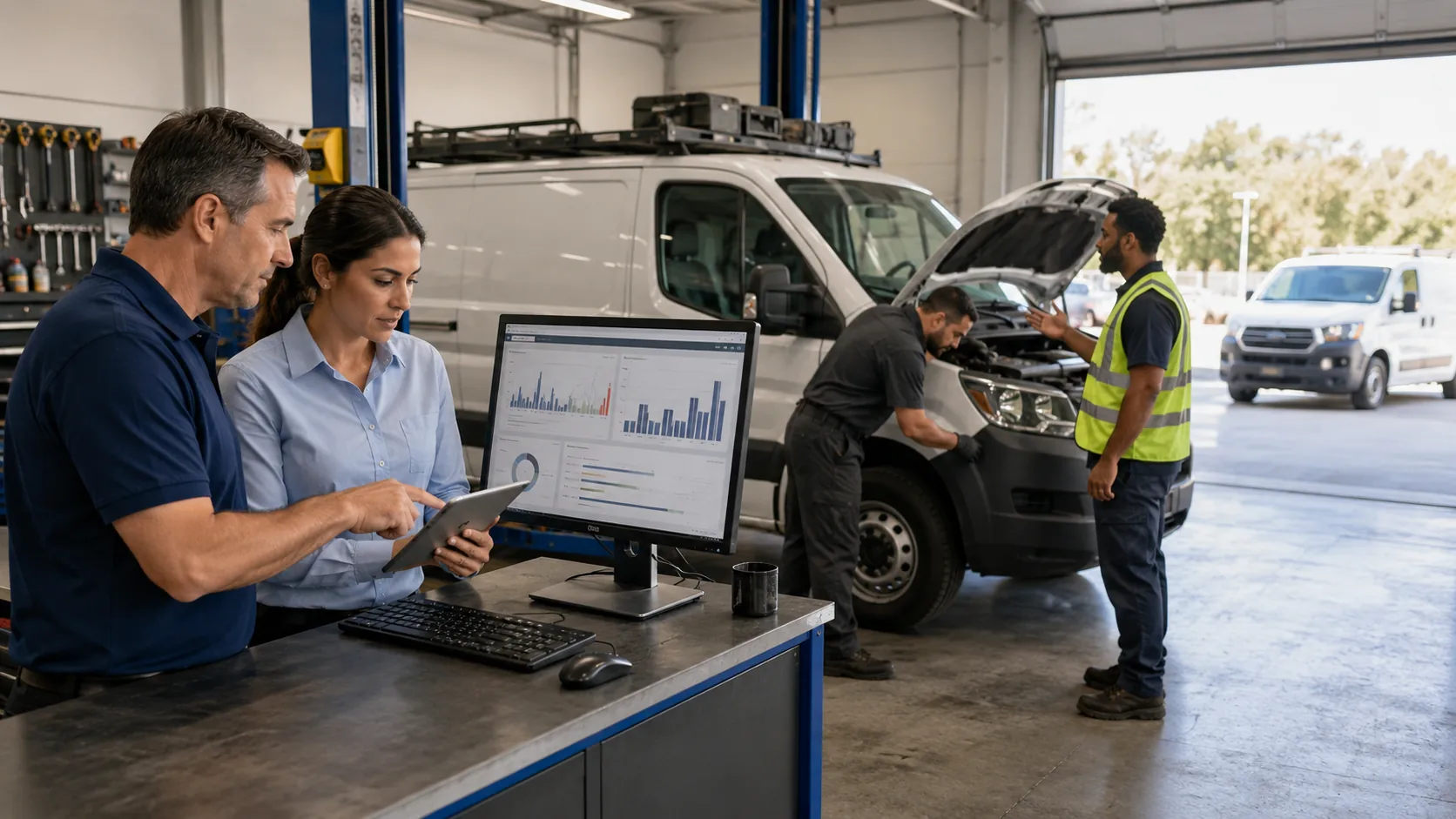
A review can also begin after three unplanned repairs in 90 days, excessive downtime, worsening fuel use, or a repeated failure. Thresholds should start an investigation, not force replacement.
Use the following workflow to keep the review consistent:
When Keeping an Expensive Vehicle Stops Making Financial Sense
The repair versus replace decision should compare the proposed repair with current market value and expected future cost. A common screening rule questions repairs exceeding 50 percent of market value.
For example, a van worth $14,000 needs a $7,500 engine repair. The repair equals 53.6 percent of its current value. If the van also has high mileage, repeated transmission issues, and poor utilization, replacement may offer the stronger financial outcome.
The 50 percent test is only a screen. Also review age, mileage, safety risk, resale value, parts availability, failure history, and replacement lead time. The signs that a delivery fleet vehicle should be replaced add context beyond the invoice.
How Fleet Management Software Closes the Visibility Gap
Spreadsheets often separate maintenance, fuel, mileage, downtime, and vendor activity. That makes it hard to see when moderate repair spending combines with excessive fuel use and repeated downtime.
AUTOsist can organize maintenance history and operating costs around each asset, helping managers compare vehicles instead of relying only on fleet totals. Preventive maintenance schedules also help teams address recurring service needs before they become expensive emergency repairs.
The goal is to connect repair frequency, spending, utilization, and downtime so costly vehicles become visible early.
Building a Cost Accountability System for Your Fleet
A practical accountability system requires consistent records, agreed thresholds, and a review cadence that leads to documented decisions.
Use this five step framework:
- Audit current reporting. Confirm whether every cost can be traced to an individual vehicle.
- Establish vehicle baselines. Record the median maintenance cost, cost per mile, downtime, and repair frequency for comparable assets.
- Set review thresholds. Define the cost or performance level that triggers investigation.
- Hold a monthly vehicle cost review. Focus first on the highest cost assets and the vehicles with the fastest cost increases.
- Document each decision. Record whether the vehicle will be repaired, monitored, reassigned, sold, or replaced, along with the next review date.
This process turns fleet cost analysis into a habit and prevents a reasonable average from hiding vehicles that drain the budget.
Frequently Asked Questions
-
How do I calculate cost per vehicle in a fleet?
Add fleet costs for a defined period and divide by the number of vehicles. Then assign maintenance, fuel, downtime, and vendor costs to each asset so the average can be compared with actual performance. -
What percentage of fleet vehicles usually drives most of the costs?
The percentage depends on fleet type, age, and duty cycle. Start by examining the highest cost 10 to 20 percent of vehicles and calculate their share of total spending. -
When should I replace a fleet vehicle instead of repairing it?
Review replacement when a major repair approaches 50 percent of market value, especially with high mileage, repeated failures, long downtime, or weak utilization. -
What is total cost of ownership for a fleet vehicle?
Total cost of ownership combines acquisition, financing, depreciation, fuel, maintenance, insurance, downtime, and disposal value. It shows the full cost of keeping and operating a vehicle. -
How can fleet software help find high cost vehicles?
Fleet software can assign repairs, fuel, mileage, downtime, work orders, and service history to individual assets. Managers can compare vehicles, set thresholds, and identify outliers before they distort the budget.