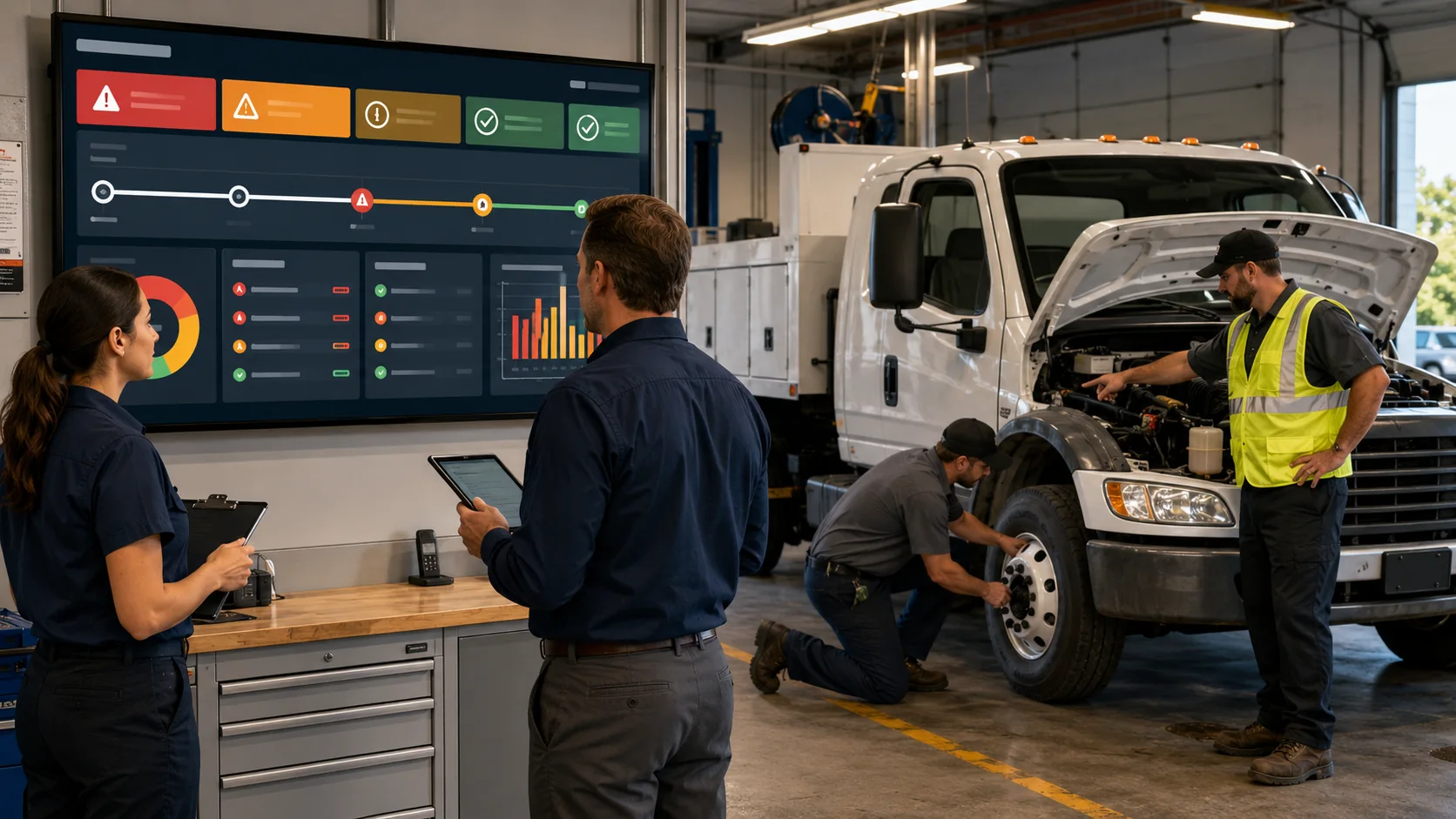
 Miya Bholat
Jun 22, 2026
Why Maintenance Approvals Slow Down Repairs?

Maintenance approvals slow down repairs when a request has no clear route, cost threshold, backup approver, or shared record. The vehicle may already be diagnosed and the technician may be ready, yet work cannot begin because authorization is sitting in an inbox or waiting for a phone call. A structured fleet maintenance software process solves this by routing requests, applying written approval rules, and recording each decision before avoidable downtime grows.
Key Takeaways
- Approval delays are administrative, not mechanical. Many vehicles remain off the road because authorization is pending, not because the repair is difficult.
- Idle time becomes expensive quickly. Unplanned downtime can cost an estimated $448 to $760 per vehicle per day.
- Informal routing creates invisible queues. Email, phone calls, and paper work orders make ownership and request age difficult to see.
- Preapprovals remove routine friction. Cost thresholds allow standard preventive maintenance to proceed without repeated manager review.
- Digital routing speeds decisions. Automated workflows can compress repair turnaround time by 25 to 40 percent.
- Fleet Maintenance Software creates one approval record. Work orders, costs, service history, and status stay connected to the vehicle.
The Real Reason Repairs Get Delayed Isn't the Shop
A large part of repair delay happens before a technician turns a wrench. The vehicle is reported, inspected, and diagnosed, but the team still needs someone to approve the estimate. During that gap, a shop bay may remain occupied, a driver may need another vehicle, and dispatch may reshuffle work.
Effective fleet downtime management must examine the decision process as closely as technician productivity. Research cited in the brief estimates that 60 to 70 percent of total off road time can come from administrative delay rather than repair activity. It also reports that technicians spend only 32 percent of the day on actual repair work, with the remaining time affected by waiting, record searches, coordination, and paperwork.
How Approval Bottlenecks Actually Work
A technician identifies worn brakes, creates an estimate, and sends it to a supervisor. The supervisor is in the field, the message receives no response, and nobody else knows the vehicle is waiting. A day later, operations asks why the repair has not started.

The Email Chain Problem
Email chains, calls, and paper forms do not create dependable routing. A request at one branch can sit unseen for two days because no system assigns it, tracks its age, or alerts a backup approver. The vehicle remains unavailable, work moves to other units, and operational costs may exceed the repair estimate.
Centralized fleet maintenance work order software keeps the request, estimate, notes, approval status, and technician action in one record.
No Routing Rules = No Accountability
Without cost thresholds, locations create their own habits. One technician may approve routine work, another may wait for a manager, and another may proceed during an emergency. Finance then discovers overages weeks later, with no reliable audit trail.
The Fleetio benchmark supplied in the brief reports a median 31 minute gap between work order creation and action start. That gap grows quickly across many vehicles, handoffs, and requests that wait far longer than the median.
The Hidden Cost of One Idle Vehicle
One idle vehicle can create several related costs:
- Lost productive hours for the vehicle and driver
- Rental, subcontractor, or replacement vehicle expense
- Overtime caused by route or workload reassignment
- Delayed customer service or field response
- Additional damage when a defect worsens while approval is pending
At an estimated $448 to $760 per day, repeated administrative delay becomes a major operating cost. A fleet averaging eight unplanned work orders each month can lose more than $215,000 annually under the assumptions supplied in the brief. Repair and maintenance cost per mile has also risen 34 percent since 2020 according to the cited ATRI figure.
Where Fleet Repair Time Gets Lost
| Repair stage | Common source of delay | Operational impact | Process improvement |
|---|---|---|---|
| Defect reporting | The driver reports the issue through a call, text message, or paper form | The maintenance team may not receive the request immediately | Use one digital inspection and defect reporting process |
| Initial diagnosis | The technician cannot access previous service or repair records | Diagnosis takes longer and previous work may be repeated | Attach service history to the vehicle record |
| Estimate approval | The repair request waits in a manager's inbox | The vehicle remains idle even when the shop is ready | Route requests automatically based on cost and repair type |
| Parts confirmation | Parts availability is checked only after approval | The approved repair cannot begin because a part is unavailable | Confirm inventory and vendor availability before authorization |
| Repair authorization | The assigned approver is unavailable and no backup is defined | The request may remain untouched for hours or days | Set response timers and automatic escalation rules |
| Return to service | Repair completion and vehicle availability are updated in separate systems | Dispatch may not know that the vehicle is ready | Update repair status and availability in one shared system |
Why Manual Approval Processes Fail at Scale
Manual approval may appear manageable for one location and a small vehicle count. It becomes fragile when the fleet adds branches, vendors, supervisors, and asset types. Managers lose a consolidated view and start calling locations for updates.
A written fleet maintenance standard operating procedure can define responsibility, but the workflow must enforce it.
Inconsistency Across Locations
When each location handles approvals differently, leadership cannot compare spending fairly or identify recurring asset, vendor, and component problems. This is especially disruptive for trucking and logistics fleet operations, where one unavailable unit can affect dispatch capacity and delivery commitments.
When the Approver Is Unavailable
The designated approver may be traveling, off duty, or handling another urgent issue. Without a timer and backup route, the request waits.
A reliable process defines who receives the request first, how long that person has to respond, who receives the next alert, and how emergency repairs move forward.
What a Smarter Approval Process Looks Like
A smarter workflow changes the approval route according to cost, repair type, risk, and location. Routine work moves immediately. Unusual or expensive repairs receive focused review. Approvers can act from a phone instead of waiting to return to a desktop.
Preapprovals for Routine Work
Oil changes, inspections, tire rotations, and planned services should not repeatedly compete for management attention. Connecting approvals to fleet preventive maintenance schedules allows expected work to proceed within established policy and cost limits.
Escalation Rules That Keep Work Moving
If a supervisor does not respond within 90 minutes, the system can route the request to a regional manager. Emergency safety repairs can trigger an immediate mobile alert while still requiring documentation. This preserves control without letting one person's availability stop the process.
Full Audit Trails Without the Paperwork
A digital record should capture the approver, timestamp, estimate, final amount, parts, labor, vendor, notes, and documents. It should connect this information to the vehicle service history.
Automated parts inventory management can also confirm availability before approval. The brief estimates that automated parts checks can reduce procurement related delays by 60 to 70 percent and recover one to two days for affected work orders.
How to Set Up Approval Thresholds That Work for Your Fleet
The right thresholds depend on fleet size, vehicle value, branch structure, repair history, and risk. The key is to define them in writing and enforce them through the system.
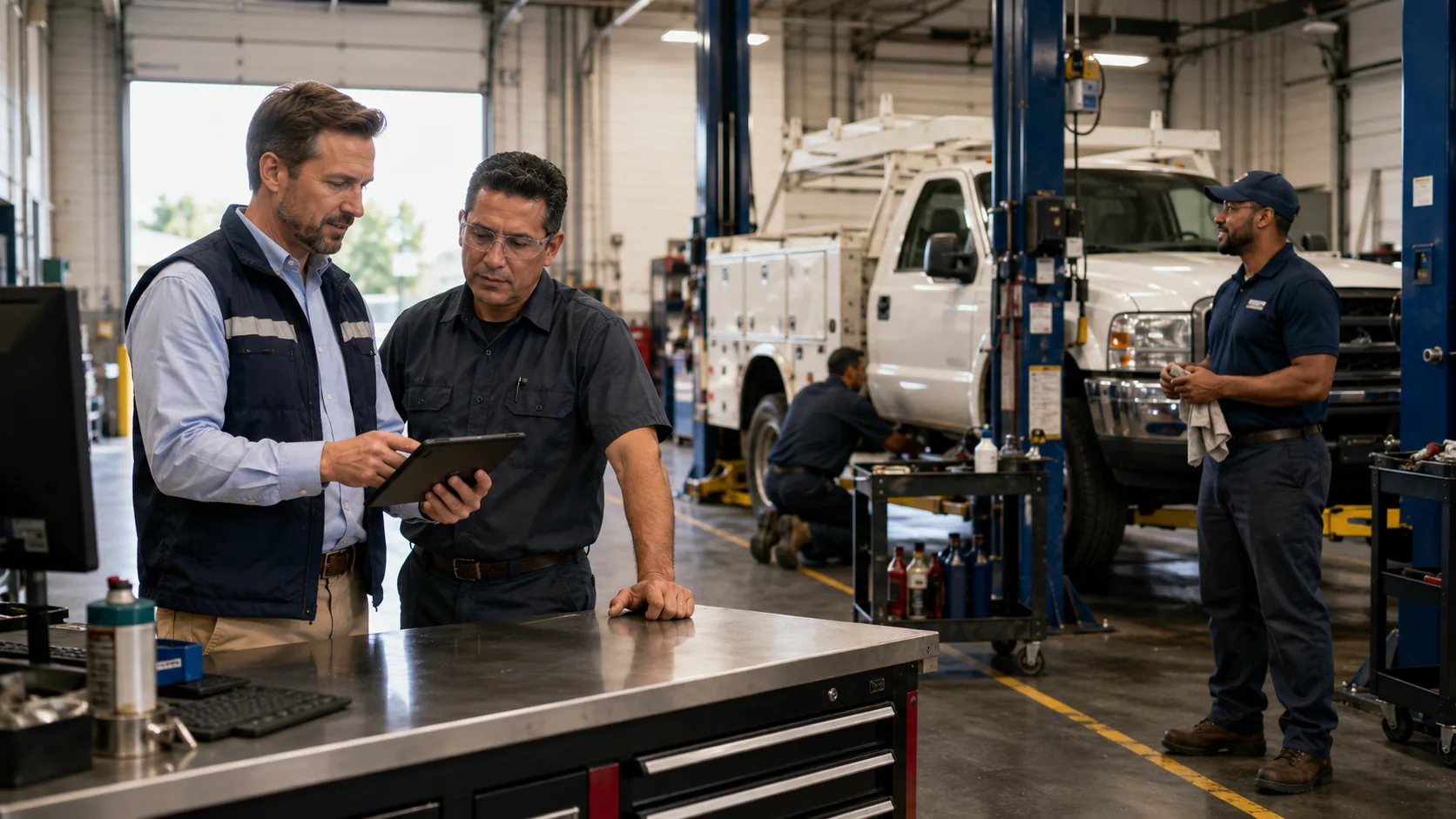
Example Fleet Maintenance Approval Matrix
| Repair type | Example cost range | Approval route | Response target | Required documentation |
|---|---|---|---|---|
| Scheduled preventive maintenance | Within the approved maintenance budget | Automatic approval | Immediate | Work order, scheduled service, labor, and parts used |
| Minor corrective repair | Up to $500 | Branch supervisor | Within 60 minutes | Technician notes, estimate, and defect details |
| Moderate repair | $501 to $2,500 | Fleet manager | Within 90 minutes | Estimate, service history, parts, labor, and repair justification |
| Major component repair | More than $2,500 | Regional manager or finance lead | Within two hours | Detailed estimate, replacement comparison, vehicle value, and downtime impact |
| Emergency safety repair | Any amount needed to correct an immediate safety risk | Primary approver or designated backup | Immediate | Safety defect record, technician recommendation, approval timestamp, and final invoice |
| Outside vendor repair | Based on the approved vendor policy | Central fleet or purchasing team | Before vendor authorization | Vendor estimate, labor rate, parts cost, warranty status, and expected completion date |
Review thresholds quarterly. If managers approve nearly every request without changes, the threshold may be too low. If locations regularly face unsafe waits, the route may be too restrictive.
How Fleet Maintenance Software Removes Approval Friction for Fleet Teams
AUTOsist can connect repair requests, work orders, service records, costs, documents, and status updates in one maintenance process. Managers can review current activity through a fleet reports dashboard, while technicians and supervisors use the vehicle record to understand prior work.
A consistent system also helps teams track fleet maintenance across locations without repeated calls for updates. Fleets that automate work order routing can reduce total maintenance costs by 15 to 30 percent and compress repair turnaround by 25 to 40 percent, according to the benchmarks supplied in the brief. Results vary, but the process remains the same: assign ownership, show status, escalate delays, and preserve the decision.
Signs Your Approval Process Is the Problem (Not Your Shop)
Use this checklist to identify an approval bottleneck:
- Vehicles regularly wait one or two days before repair work begins
- Managers discover major repair costs on monthly reports instead of receiving current alerts
- No single view shows pending approvals across vehicles, branches, and vendors
- Approvers can act only from a desktop
- Routine oil changes and inspections require manual authorization
- Requests have no backup route when the primary approver is unavailable
- Teams cannot explain who approved a repair or when the decision occurred
Several of these signs usually mean the shop is waiting on the process. Correct the routing rules before assuming the fleet needs more technicians or vendor capacity.
Final Thoughts: Approvals Are a Controllable Cost
Maintenance approvals slow repairs when authorization depends on inboxes, memory, and one person's availability. The resulting downtime can cost more than the repair, especially when idle vehicles disrupt drivers, routes, and customers.
Fleets can regain control by setting thresholds, preapproving routine work, routing exceptions automatically, and recording every decision. This also reduces the chance that delayed work becomes reactive fleet maintenance with a larger invoice and longer outage.
AUTOsist helps bring these steps into one maintenance record so teams can see what is waiting, who owns the decision, and what action comes next.
Frequently Asked Questions
-
Why do fleet maintenance approvals take so long?
Fleet maintenance approvals usually take too long because requests rely on email, phone calls, or one designated manager. The repair may already be diagnosed, but work cannot begin until someone reviews the estimate and gives authorization. Clear routing rules, mobile alerts, and backup approvers prevent requests from sitting unattended. -
How can a fleet tell whether approvals are delaying repairs?
Compare the time when a work order is created with the time when repair work actually begins. If vehicles regularly wait for hours or days after diagnosis, while technicians and parts are available, the approval process is likely the bottleneck. Pending requests with no assigned owner are another clear warning sign. -
What is a fleet maintenance approval threshold?
A fleet maintenance approval threshold is a spending limit that determines who can authorize a repair. Routine work below a defined amount may proceed automatically, while more expensive repairs route to a supervisor, fleet manager, or finance lead. This keeps minor work moving while maintaining control over major expenses. -
Which fleet repairs should be preapproved?
Scheduled oil changes, inspections, tire rotations, fluid services, and other predictable preventive maintenance tasks are strong candidates for preapproval. Fleets should define acceptable cost limits and documentation requirements in advance. Unusual repairs, safety defects, and major component replacements should still receive additional review. -
What should happen when the primary repair approver is unavailable?
The request should automatically route to a named backup approver after a defined response period. Emergency safety repairs should trigger immediate mobile notifications and follow a documented exception process. A vehicle should never remain idle simply because one manager is unavailable.