 Miya Bholat
Sep 07, 2026
Fleet Shift Handoffs That Prevent Daily Confusion

A fleet shift handoff transfers a vehicle, its condition, and its operating status from one driver or operator to the next. To prevent confusion, require a small set of facts, assign one of three readiness statuses, and keep a timestamped confirmation from both people. Using fleet management software gives those details one shared home instead of leaving the next driver to reconstruct them from texts, paper notes, or memory. This is an operational vehicle transfer, not a repair handoff inside the shop.
Key Takeaways
- Handoffs fail for structural reasons. Without required fields, timing, and ownership, each person transfers different information.
- Communication gaps are a major barrier. The 2026 Fleet Benchmark Report found that 31.5% of fleets cited them as the top barrier to maintenance happening on time.
- A small required data set prevents most confusion. Fuel, mileage, condition, defects, keys, equipment, cleanliness, and pending work cover common disputes.
- Every vehicle needs a Ready, Flagged, or Hold status. The status tells the next driver what can happen next.
- Digital records protect both drivers. Photos, timestamps, and acknowledgments establish what each person reported.
What Counts as a Fleet Shift Handoff and What It Is Not
A handoff happens when one driver stops using a vehicle and another takes responsibility during operations. Examples include a tractor assigned to a night driver, a utility truck changing crews, a service van moved to another route, and a government pool vehicle returned for another reservation.
It does not include a repair transferred between technicians. Fleets dealing with that problem need a separate repair handoff process for delayed maintenance, because shop ownership and parts status require a different workflow.
Vehicle handoffs also exclude permanent reassignment. That process needs asset custody and access updates rather than a quick status exchange.
It also is not a police specific review of emergency equipment or pursuit damage. Those fleets need a dedicated police fleet review after each shift alongside the general transfer process.
Why Shift Handoffs Create Confusion Fleets Do Not See Coming
Problems begin with omissions. The outgoing driver assumes low fuel is obvious. The incoming driver sees a dent but cannot tell whether it is new. A warning light gets mentioned verbally, then disappears when personnel change.
These are the most common sources of handoff friction.
- Fuel or charge level disputes
- Undocumented exterior or interior damage
- Mileage or engine hour discrepancies
- Open defects and warning lights that never reach the next person
- Missing keys, fobs, tools, cards, or assigned equipment
- Cleanliness complaints that delay departure
The 2026 Fleet Benchmark Report found 31.5% of fleets cited communication gaps as the leading barrier to maintenance happening on time. It also showed a 31 minute median time to start a work order but a 6.7 day average. Some tasks clearly wait far longer, and a missed handoff note can place a defect among them.
The Hidden Cost of I Thought the Last Driver Knew
One missing update can trigger another inspection, a call to the previous driver, and a dispatch change. If three people each spend 15 minutes resolving it, the fleet loses 45 minutes before counting downtime. Clear ownership matters because fleet updates get lost between teams when information travels through people instead of a shared record.
Managers may then dispute damage without evidence, drivers may feel blamed for inherited conditions, and dispatchers may send a vehicle that should stay parked.
The Core Information Every Shift Handoff Should Transfer
Keep the record brief but specific. Every handoff should transfer the following information.
- Fuel level or battery charge
- Odometer reading or engine hours
- Exterior and interior condition, including existing damage photos
- Open defects, warning lights, unusual sounds, or handling concerns
- Keys, fobs, fuel cards, tools, and assigned equipment count
- Cleanliness and anything that needs removal or restocking
- Pending work order status and any operating restriction
This record reduces the chasing described in fleet teams losing track of daily work. A driver should finish it in a few minutes, and the next driver should understand it without calling for an explanation.
Data Fields vs. Judgment Calls
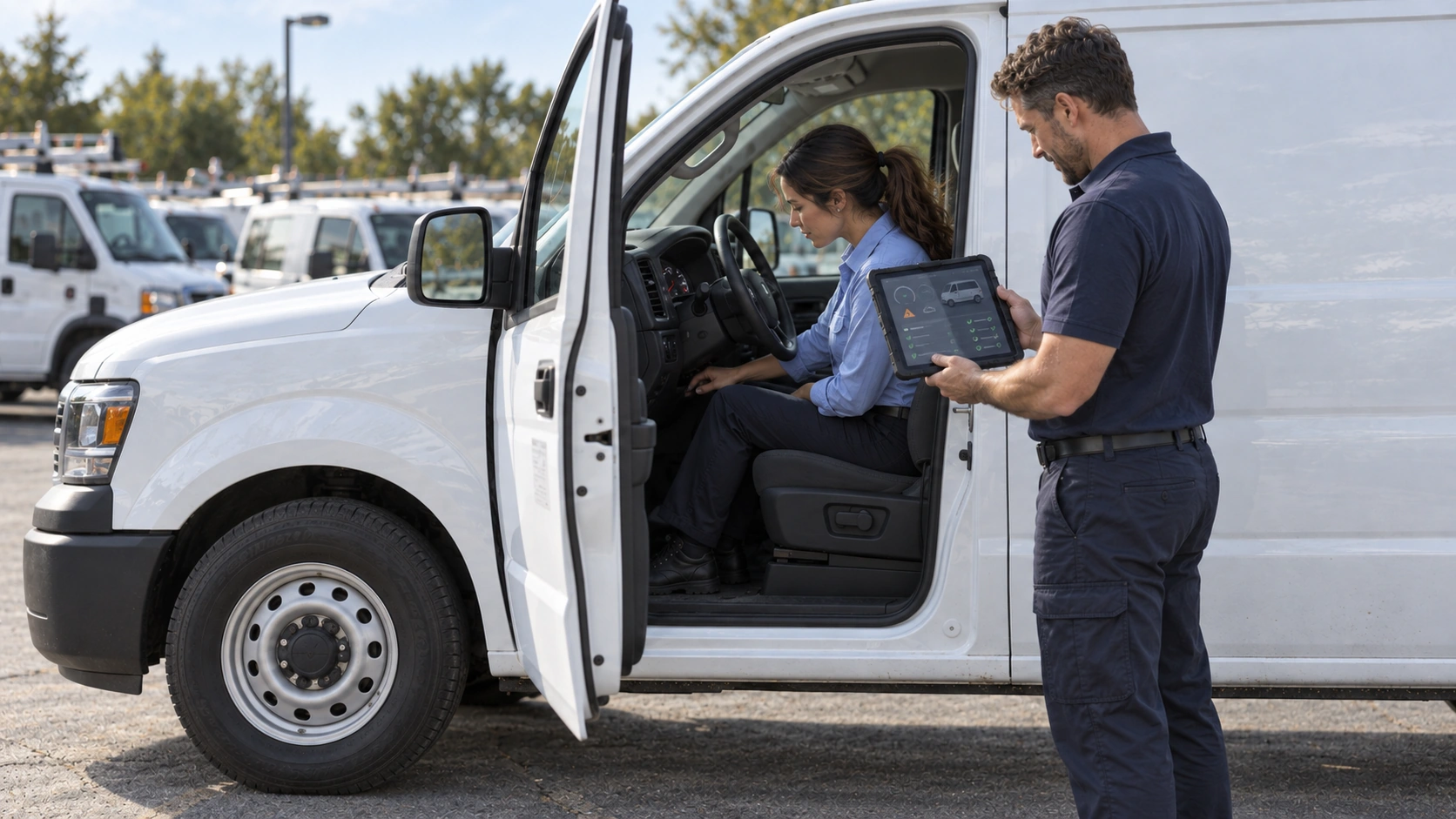
Objective fields need one format. Mileage needs a number, fuel needs a defined scale, and missing items need a count. Required photo angles also make records comparable.
Subjective observations still need a place. A rattle, unusual smell, or steering concern may not fit a defect code. Store the note with the vehicle, then define who decides whether it becomes a defect or work order. Clear fleet record ownership rules prevent notes from sitting without action.
A Simple Framework for Handoff Confidence: Ready, Flagged, or Hold
Every handoff should end with one status answering whether the next person can use the vehicle. Base it on evidence, not confidence alone.
| Status | Trigger | Required Action |
|---|---|---|
| Ready | Required fields are complete, no unresolved safety concern exists, and keys and equipment are present | Incoming driver confirms the record and departs |
| Flagged | A noncritical defect, low fuel, cleanliness issue, missing nonessential item, or pending work exists | Add a note, name the owner, set a due time, and allow use only within the stated condition |
| Hold | A safety concern, serious warning light, required key or equipment loss, or unclear damage needs review | Keep the vehicle out of service until an authorized person reviews and releases it |
Use the same definitions everywhere. Local labels create ambiguity, while consistent fleet status codes that teams can trust give drivers, dispatchers, and managers the same signal.
Building a Shift Handoff Workflow That Actually Gets Followed
Place the workflow inside the normal return and departure routine. Use these six steps.
- The outgoing driver records fuel, mileage, condition, defects, cleanliness, and assigned items before release.
- The driver adds photos for new damage, unresolved concerns, and required condition views.
- The record assigns Ready, Flagged, or Hold based on defined triggers.
- The incoming driver reviews the record, checks the vehicle, and accepts it before departure.
- Every defect or missing item receives an owner and next action. A digital vehicle inspection process removes paper friction and captures evidence at the vehicle.
- A dispatcher or fleet manager reviews exceptions and releases any vehicle placed on Hold.
Drivers follow the process when they know when it happens, what to enter, and who responds to exceptions.
Extra Steps for Round the Clock and Multi Shift Operations
Vehicles changing hands several times daily leave less time to resolve uncertainty. Add these rules.
- Set a completion window before every scheduled change
- Require the incoming driver to acknowledge unresolved flags
- Route Hold statuses to an active person, not a general inbox
- Track repeated flags across shifts to reveal an issue that never receives closure
How Digital Handoff Records Prevent Disputes and Protect Drivers
A timestamped record shows who released and accepted the vehicle, its documented condition, and the photos captured. When damage or missing equipment is questioned, managers can review evidence instead of memories. A complete vehicle service history also connects an operating concern to later inspection and repair.
Digital evidence should support fairness. Let drivers correct an unclear photo or a condition that changes before departure.

Named profiles make the record defensible. With fleet user and driver management, each acknowledgment stays connected to the correct person. The 2026 Fleet Technology Trends Report found average cost decreases of 11% to 19% across fuel, accidents, labor, and maintenance among fleets using connected technology. Handoff records turn information into action.
Shift Handoffs Look Different Across Fleet Types
The required fields stay stable, but the operating emphasis changes by fleet type.
- Multi shift trucking should emphasize fuel, mileage, trailer or equipment assignment, cab condition, warning lights, and route critical restrictions.
- HVAC and plumbing service vans should emphasize fuel, keys, tools, stocked items, cleanliness, and defects that could interrupt the next appointment.
- Government and municipal pool vehicles should emphasize reservation times, department accountability, mileage, fuel, damage photos, and return condition.
Small and midmarket fleets need one record, required fields, visible exception ownership, and consistent follow through.
Pointer for a Handoff Process That Sticks
A durable process standardizes disputed facts, gives each vehicle one readiness status, and records acceptance before departure. Keep the form brief, but never make safety, defect ownership, or missing equipment optional.
Review exceptions weekly. Simplify fields that are repeatedly skipped. Resolve vehicles repeatedly marked Flagged. Improve photo requirements when conditions remain disputed. The goal is a reliable transfer of responsibility that keeps the next shift moving.
Frequently Asked Questions
-
Does a fleet shift handoff replace a required vehicle inspection?
No. A shift handoff transfers information and responsibility between drivers, but it does not replace any required vehicle inspection or defect report. The incoming driver should still complete the checks required by company policy and applicable regulations before operating the vehicle. -
What should an incoming driver do if they find damage that was not documented?
The incoming driver should stop the handoff, photograph the damage, record where it appears, and notify the assigned supervisor or dispatcher. The driver should not accept responsibility for the vehicle until the record has been updated and its Ready, Flagged, or Hold status has been confirmed. -
Do both drivers need to be present during a vehicle handoff?
Not always. When schedules overlap, both drivers can inspect and confirm the vehicle together. When they do not overlap, the outgoing driver should submit a timestamped record with condition photos, and the incoming driver should review and acknowledge it before departure. Any disagreement should pause acceptance until someone reviews it. -
Can a driver use a vehicle with a Flagged handoff status?
A driver may use a Flagged vehicle only when the reported issue does not affect safe operation and an authorized person has approved continued use. A vehicle with an unresolved safety concern, serious warning light, or required equipment problem should receive Hold status and remain out of service. -
How should fleets resolve disputes about damage, fuel, or missing equipment?
Compare the outgoing record, incoming acknowledgment, timestamps, photographs, fuel information, equipment count, and earlier vehicle history. Managers should base the decision on recorded evidence rather than memory. If the evidence cannot establish responsibility, document the outcome and strengthen the handoff requirement for future shifts.