 Miya Bholat
Aug 24, 2026
What Police Fleet Managers Should Review After Each Shift?
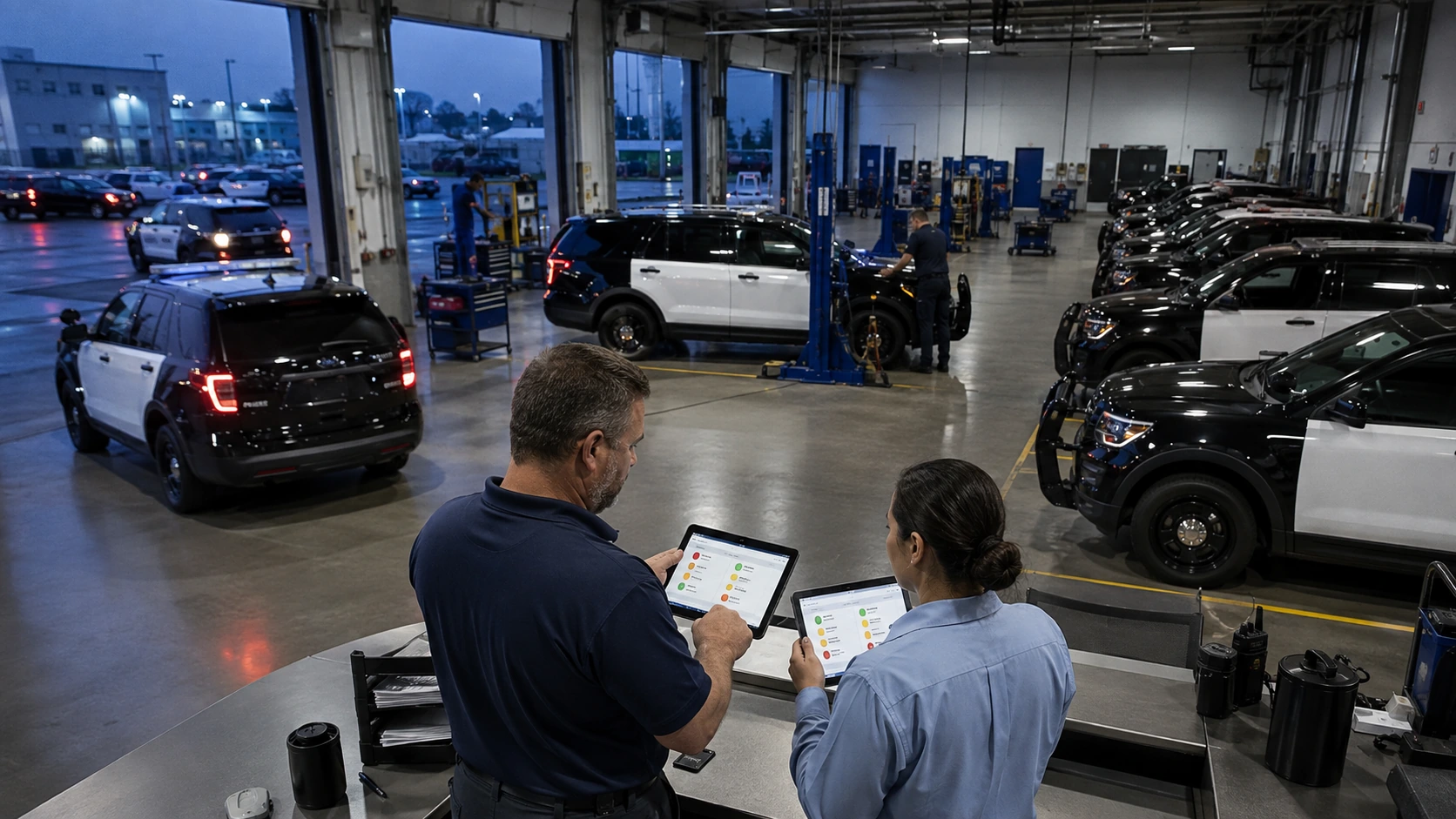
Police fleet managers should review every returned vehicle's inspection report, defects, mileage, engine hours, fault codes, fuel use, idle time, damage, and installed equipment condition after each shift. They must then determine which units are ready, restricted, awaiting maintenance, or out of service.
For departments operating around the clock, this review protects more than vehicle condition. It protects patrol coverage. A consistent process supported by police fleet management software gives the incoming watch commander a reliable view of available units before officers begin the next shift.
Key Takeaways
- Every returned patrol vehicle needs a verified status. The fleet manager must confirm whether each unit is ready, restricted, awaiting maintenance, or out of service before the next shift begins.
- Clean inspection reports still require scrutiny. Repeated defect free reports can indicate rushed inspections or reporting gaps when fault codes, service records, or repair activity tell a different story.
- Safety and operational defects require different decisions. Brake, steering, tire, emergency lighting, siren, radio, and restraint problems must be classified according to their effect on safe patrol deployment.
- Mileage alone does not represent patrol vehicle use. Engine hours, idle time, fuel consumption, and fault codes reveal wear that the odometer cannot show.
- The review ends only when readiness is communicated. Defects, damage, repair actions, restrictions, and substitute vehicle assignments must reach the incoming shift or watch commander.
Why End of Shift Review Matters More for Police Fleets
Police vehicles move continuously between shifts, officers, and assignments. A defect missed during the night can become a breakdown during the morning shift. If several vehicles become unavailable together, the department may need to reassign units, delay deployment, or operate with less reserve capacity.
The City of Fayetteville demonstrates what faster maintenance visibility can achieve. According to reported results from its police telematics program, 94 percent of police vehicles were repaired within 24 to 48 hours during fiscal year 2024, while monthly fleet availability reached 95.97 percent.
Daily review becomes even more valuable as patrol vehicles age. Mileage, idle hours, emergency driving, curb contact, road conditions, and continuous accessory use can expose weaknesses between scheduled services. Managers need current operating evidence rather than waiting for a dashboard warning or roadside failure.
Reviewing Driver Vehicle Inspection Reports and Defect Reports
Start by confirming that every vehicle assigned during the shift has submitted the expected report. Reconcile the dispatched vehicle list with returned units before reviewing individual defects.
The report review should identify:
- Missing submissions
- Incorrect vehicle numbers
- Incomplete inspection fields
- Defects without enough detail
- Missing photographs or supporting evidence
- Reports that still need supervisor review
A digital vehicle inspection process makes missing reports and unresolved defects easier to identify. AUTOsist can also connect a flagged inspection item with the correct vehicle record and subsequent maintenance action.
Spotting a Defect Free Report That Does Not Add Up
One clean report is normal. Weeks of identical defect free reports from a heavily used patrol unit deserve closer attention. This pattern can indicate rushed inspections, copied responses, weak accountability, or a checklist that does not reflect actual patrol conditions.
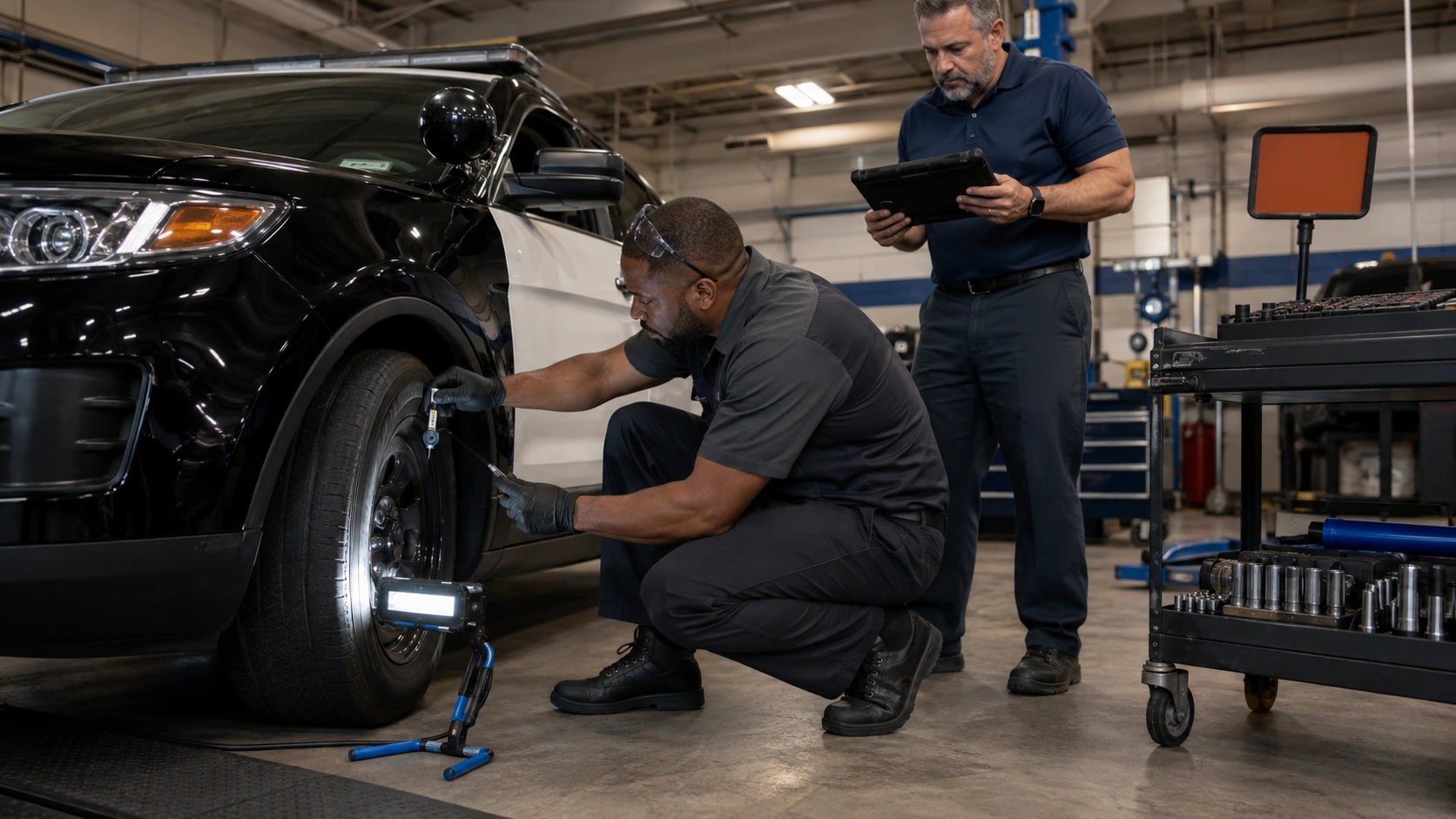
Compare clean reports with fault codes, service history, work orders, tire replacements, officer comments, and roadside repair records. A vehicle that repeatedly enters the shop despite producing perfect inspection reports has a reporting gap.
Managers should also compare reporting quality across officers and shifts. Repeatedly missed or incomplete inspections belong among the driver safety signals fleet managers should monitor because poor reporting can hide developing risk.
Triaging Critical and Noncritical Defects
The decision is not simply whether a defect exists. The manager must determine whether the vehicle can patrol safely and whether all equipment required for its assignment remains functional.
| Defect Category | Example | Required Action |
|---|---|---|
| Safety critical | Brake loss, steering problem, fuel leak, exposed tire cord | Remove the vehicle from service and begin immediate assessment |
| Required operational equipment | Failed emergency lights, siren, radio, camera, or restraint | Hold the vehicle unless policy permits a limited assignment |
| Wear or minor condition | Worn wiper, damaged trim, minor cosmetic damage | Record the issue and schedule repair within a defined period |
| Recurring defect | Repeated warning light, battery drain, or tire pressure loss | Escalate for diagnosis and review previous repair history |
Tire decisions should follow a measurable safety standard. The National Highway Traffic Safety Administration's tire safety guidance states that tires are unsafe when tread reaches 2/32 of an inch. Department policy may require earlier replacement based on vehicle role, patrol conditions, weather, or state requirements.
Every classified defect needs an owner and response time. Connecting flagged reports with automated fleet maintenance work orders prevents an inspection finding from remaining only a note.
Confirming Vehicle Readiness for the Next Shift
Every vehicle should receive one controlled status before reassignment. Avoid vague comments such as check later or watch vehicle. They do not tell the incoming shift whether the unit can be deployed.
Use a clear readiness structure:
- Ready for service
- Ready with a documented restriction
- Awaiting maintenance assessment
- Out of service
- Repair completed and awaiting verification
The incoming watch commander should receive the unit number, current status, restriction, responsible person, and expected update time. Record any substitute vehicle assignment as part of the same handoff.
Departments can use a 20 point vehicle inspection checklist to standardize the information managers receive before making readiness decisions.
Checking Mileage, Engine Hours, and Fault Codes
Mileage remains important for preventive maintenance, but it does not show the full workload of a patrol vehicle. A unit may travel limited miles while running its engine to power emergency lights, radios, cameras, computers, climate control, and other equipment.
Review these data points after each shift:
- Distance traveled
- Current odometer reading
- Total engine hours
- Idle hours
- New diagnostic fault codes
- Approaching service thresholds
A unit with moderate mileage but rapidly increasing engine hours may need maintenance earlier than a mileage only schedule suggests. GPS and telematics integration can help managers identify this difference.
Once usage is verified, connect it to preventive maintenance schedules based on actual vehicle activity. Critical fault codes require immediate assessment. Lower severity codes should still receive an owner, review date, and documented outcome.
Reviewing Fuel Use and Idle Time
Police vehicles may idle during scene security, traffic control, report writing, communications, and climate control. This means high idle time is not automatically evidence of waste. Managers should separate operationally necessary idling from unexplained or avoidable patterns.
Required idling still has a maintenance and fuel effect. The United States Department of Energy's idle reduction guidance confirms that reducing unnecessary idle time can save fuel and decrease engine wear and related maintenance costs.
Compare fuel volume, mileage, engine hours, assignment type, and idle duration. Look for changes from the same vehicle's normal pattern rather than applying one threshold across every patrol assignment.
Review situations such as:
- Fuel use rising without a similar change in mileage or engine hours
- Fuel transactions that conflict with vehicle location or activity
- One unit consuming considerably more fuel than comparable units
- Idle time increasing repeatedly without an operational explanation
A fleet fuel management system can connect transaction and usage records. The purpose is to explain the variance, correct inaccurate data, and identify operational or mechanical causes before the cost repeats.
Documenting Damage, Incidents, and Equipment Issues
Damage and incident information should be recorded before details become difficult to reconstruct. A complete record should identify the vehicle, assigned officer, date, time, location, reported circumstances, visible damage, photographs, supervisor review, and repair decision.
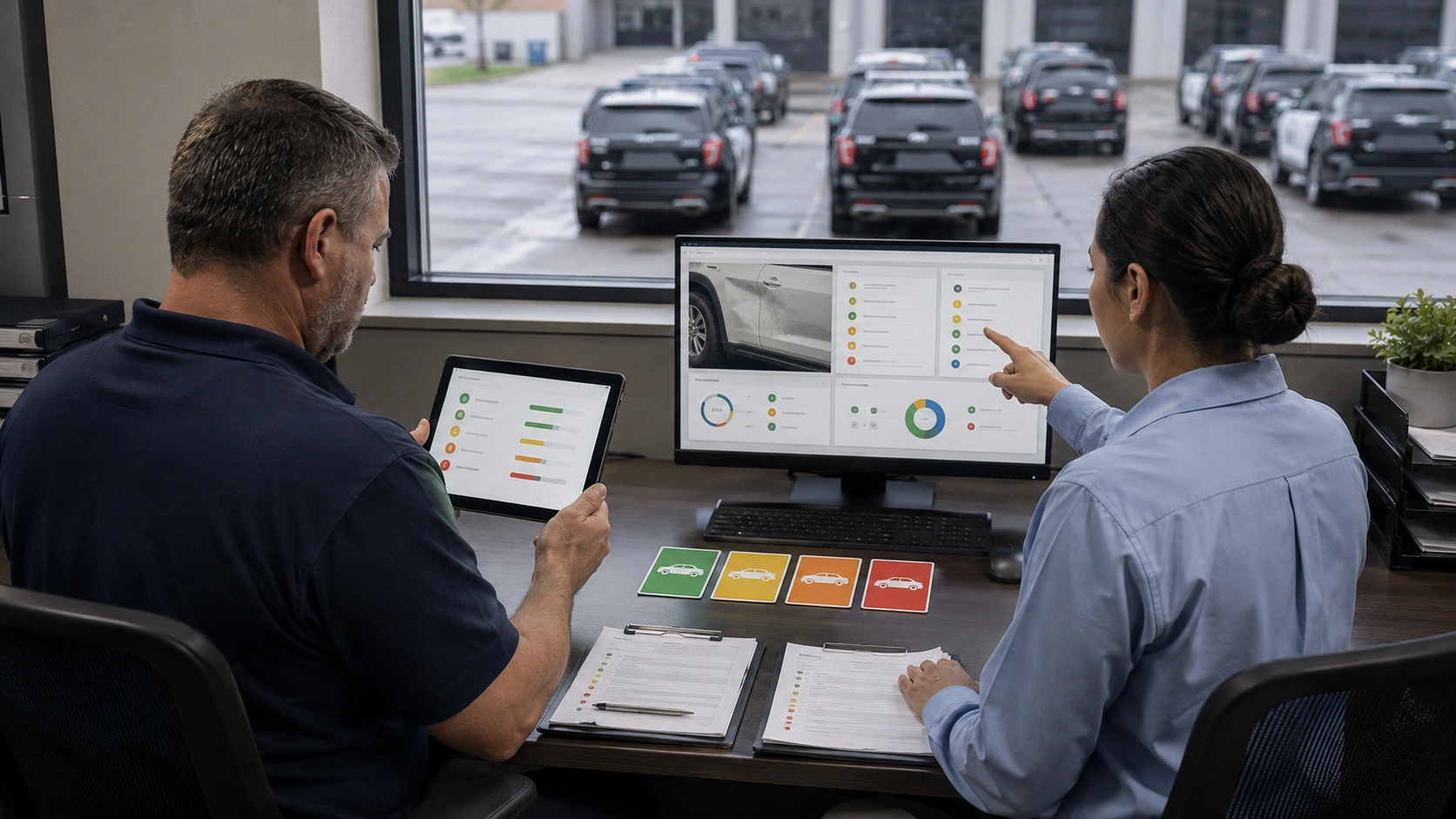
Managers should also document issues involving:
- Emergency lights and sirens
- Mobile data terminals
- Radios and charging equipment
- Cameras and recording systems
- Seats, partitions, restraints, and equipment mounts
An equipment failure may not affect steering or braking, but it can still make a vehicle unsuitable for its assigned role. Same day documentation also protects the department during insurance reviews, audits, investigations, and questions about when damage occurred.
Store incident reports, photographs, approvals, and repair evidence in a centralized vehicle document management system rather than leaving related records across different inboxes.
Building a Repeatable End of Shift Review Routine
The process should be consistent enough for another authorized manager to complete during an absence. Use this seven step workflow.
- Reconcile assigned vehicles. Compare dispatched units with returned vehicles and identify any unit still active, transferred, or unaccounted for.
- Confirm report submission. Verify that every returned vehicle has a completed inspection or defect report from the correct officer.
- Review and classify defects. Separate safety critical problems, required equipment failures, scheduled repairs, and recurring concerns.
- Check operating data. Review mileage, engine hours, idle time, fuel consumption, and new fault codes against the vehicle's normal pattern.
- Create maintenance actions. Open repair requests or work orders, assign responsibility, and set the expected response time.
- Record damage and incidents. Attach reports, photographs, approvals, and equipment concerns to the correct vehicle record.
- Publish readiness status. Mark every unit as ready, restricted, awaiting assessment, or out of service, then communicate the verified list to the incoming shift.
This routine can be aligned with the information fleet managers should track daily, weekly, and monthly. That keeps urgent shift decisions connected to maintenance planning and management reporting.
Frequently Asked Questions
-
How often should police fleet managers review DVIRs?
Police fleet managers should review submitted DVIRs after every shift or formal vehicle handoff. Critical defects require immediate escalation, while lower severity concerns can enter the planned maintenance queue. -
What should a manager do when a vehicle reports no defects for weeks?
Compare the reports with service history, fault codes, engine hours, mileage, and recent repair activity. If the records conflict, observe the inspection process and retrain the assigned officers instead of assuming the vehicle has no problems. -
What happens when a police vehicle is flagged during a shift?
The officer or supervisor should report the issue immediately. An authorized decision maker must determine whether the vehicle can continue safely, requires restricted use, or must be replaced and removed from service. -
Who should clear a police vehicle after repair?
Department policy should identify who can verify each repair category. Mechanical and safety critical repairs normally require confirmation from qualified maintenance personnel before the manager restores the vehicle's ready status. -
How long should police vehicle inspection and damage records be retained?
Retention should follow applicable state law, municipal schedules, insurance requirements, grant conditions, and department policy. Records connected to a claim, investigation, collision, or legal hold must not be destroyed under the normal schedule.