 Miya Bholat
May 08, 2026
How Fleets Manage Equipment and Vehicle Maintenance Together?
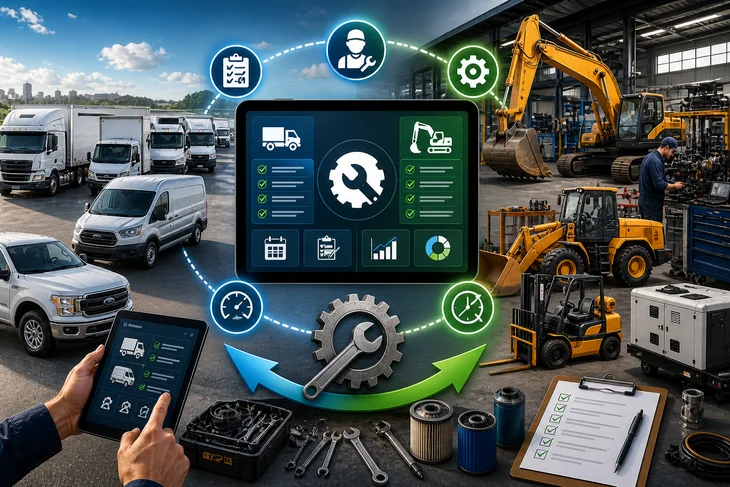
Fleets manage equipment and vehicle maintenance together by using a single system that tracks different service triggers like mileage for vehicles and usage hours for equipment, while keeping all maintenance schedules, work orders, and service history in one place. This unified approach reduces missed maintenance, prevents unexpected downtime, and gives fleet managers complete visibility across all assets.
Key Takeaways
- Fleets manage vehicles and equipment together by using one centralized system
A unified platform allows different maintenance triggers like mileage and hours to be tracked without running separate workflows. - Combining schedules reduces missed services and downtime
When all assets are planned in one calendar, it becomes easier to prevent gaps and avoid reactive repairs. - Centralized maintenance history improves decisions and compliance
Tracking all service data in one place helps during audits, breakdowns, and asset replacement planning. - Work orders and inspections must adapt to both asset types
Vehicles and equipment need different workflows, but managing them together improves execution and visibility. - Data across all assets helps fleets predict failures earlier
When maintenance data is combined, patterns emerge that allow proactive planning instead of last minute fixes.
Why Managing Vehicles and Equipment Together Is Harder Than It Sounds
While the concept of managing all assets in one system sounds straightforward, the execution is more complex. Vehicles typically follow mileage or time based maintenance schedules, while equipment depends on usage hours, load cycles, or operational intensity.
Fleets that successfully manage both do not just track everything in one place. They align different maintenance triggers into a single workflow, standardize scheduling across asset types, and ensure work orders and inspections are handled consistently. Many fleets rely on tools like fleet maintenance software to unify these processes, so teams do not have to switch between systems or risk missing critical service intervals.
But even with the right system, the operational challenge is real.
Vehicles follow predictable patterns such as miles driven or calendar intervals. Equipment like generators, trailers, or forklifts operates on hours, load cycles, or usage intensity. A construction fleet might have trucks due for oil changes while compressors are nearing service based on runtime hours, creating two overlapping maintenance timelines.
The Hidden Cost of Treating Them Separately
When fleets manage these assets separately, inefficiencies show up quickly across operations.
The most common issues include:
- Missed service intervals because equipment usage is not aligned with vehicle schedules
- Duplicate tracking efforts across different teams or systems
- Reactive repairs due to lack of full visibility
- Increased downtime when multiple assets fail at once
- Poor planning caused by incomplete maintenance data
Downtime is one of the biggest cost drivers in fleet operations. When both vehicles and equipment fail unexpectedly, the impact is not just repair cost but also lost productivity. This is explained further in this breakdown of fleet downtime management and how to reduce downtime.
Where Vehicles End and Equipment Begins And Why It Matters
To manage both effectively, fleets must clearly define asset categories.
In most operations:
- Vehicles include trucks, vans, and cars used for transportation
- Attached equipment includes trailers, lifts, or mounted tools
- Standalone equipment includes generators, compressors, and forklifts
The difference matters because maintenance logic changes based on asset type. Vehicles depend on mileage and compliance requirements, while equipment depends on usage intensity. Managing both in isolation creates blind spots, but combining them without structure creates confusion. The goal is a unified system with flexible rules.
Building a Unified Maintenance Schedule for Mixed Fleets
The most effective fleets do not run two maintenance schedules. They build one system that accommodates both vehicles and equipment.
Instead of separating workflows, they create a unified schedule that includes all assets and aligns maintenance planning with real operations.
A strong unified schedule typically includes:
- Standardized service intervals across asset categories
- Clearly defined triggers for each asset type
- Maintenance planning aligned with operational downtime windows
- Automated reminders to prevent missed services
- Continuous updates based on usage and performance data
Many fleets rely on fleet preventive maintenance schedules to automate and manage this complexity.
Setting Triggers That Work for Both Asset Types
Different assets require different service triggers, but they can still be managed together.
Most fleets use a mix of the following:
- Mileage based triggers for vehicles such as every 5000 miles
- Hour based triggers for equipment such as every 250 hours
- Calendar based triggers for periodic inspections
- Usage intensity triggers for high wear equipment
- Seasonal triggers for weather dependent assets
The key is mapping all these triggers into one system so maintenance teams do not have to switch between tools or processes.
Prioritizing Service When Everything Is Due at Once
There will always be situations where multiple assets are due for service at the same time.
Fleets that stay efficient use a clear prioritization framework:
- Safety critical assets are serviced first
- Revenue generating vehicles are prioritized next
- Equipment supporting active jobs follows
- Backup or secondary assets are scheduled last
- Preventive tasks are adjusted based on urgency
This approach ensures that limited resources are used where they have the most impact.
Tracking Maintenance History Across Vehicles and Equipment
One of the biggest differences between reactive and well managed fleets is how they track maintenance history.
When records are scattered across logs or spreadsheets, it becomes difficult to make informed decisions. When everything is centralized, visibility improves immediately.
Centralized maintenance history helps fleets:
- Diagnose issues faster during breakdowns
- Maintain compliance during audits
- Improve resale value with documented service records
- Identify recurring issues across assets
- Plan maintenance based on historical trends
Using tools like vehicle service history tracking allows fleets to maintain consistent records across both vehicles and equipment.
If you are still using manual methods, this guide on how to track fleet maintenance effectively explains the limitations and better alternatives.
How Fleet Managers Handle Work Orders for Both Asset Types
Work orders are where maintenance plans turn into action.
Managing separate work order systems for vehicles and equipment creates delays, miscommunication, and incomplete tracking. A unified approach ensures every job is tracked consistently.
An effective work order system allows fleets to:
- Assign jobs across all asset types from one place
- Track progress in real time
- Record labor, parts, and costs accurately
- Maintain clear communication between teams
- Close jobs with complete documentation
Solutions like fleet maintenance work order software help streamline this process across the entire fleet.
Assigning the Right Technicians to the Right Assets
Different assets require different expertise, and assigning the wrong technician can lead to delays or errors.
Fleets typically improve efficiency by:
- Assigning certified technicians to vehicle repairs
- Using specialized technicians for heavy equipment
- Matching experience level with asset complexity
- Tracking technician performance across tasks
- Using structured assignment rules to avoid confusion
This ensures work is completed correctly and reduces the need for rework.
Parts and Inventory Management Across Asset Classes
Managing inventory across vehicles and equipment adds another layer of complexity.
Common challenges include:
- Maintaining separate parts categories for different assets
- Overstocking due to lack of visibility
- Stockouts delaying repairs
- Difficulty tracking parts usage trends
- Managing multiple vendors across asset types
Using systems like parts inventory management for fleet maintenance helps fleets maintain balance and avoid costly delays.
Inspection Workflows That Cover the Full Fleet
Inspection workflows are often inconsistent when equipment is involved.
Vehicles usually follow structured inspection processes, but equipment checks depend on operator habits. Standardizing inspections across all assets is critical.
To build consistent inspection workflows, fleets should:
- Create asset specific inspection checklists
- Ensure inspections are completed daily or per usage cycle
- Capture results digitally for accuracy
- Link inspection data directly to maintenance actions
- Monitor compliance across teams
Using a digital vehicle inspection app for fleet inspections helps ensure consistency across the fleet.
Making Equipment Inspections as Routine as Vehicle Checks
The biggest challenge with equipment inspections is consistency.
Fleets improve compliance by:
- Introducing daily pre use inspections
- Conducting post use checks for high wear assets
- Adding shift based inspection routines
- Using digital forms to simplify reporting
- Setting reminders for recurring inspections
When inspections become routine, maintenance becomes proactive.
Using Data to Predict Maintenance Needs Across the Entire Fleet
Once maintenance data is centralized, fleets can move beyond reactive maintenance and start predicting failures.
Patterns across vehicles and equipment reveal when assets are likely to fail, allowing managers to act early.
For example, if a generator consistently fails around 800 hours, scheduling maintenance at 700 hours prevents downtime and reduces repair costs.
Key data points fleets should track include:
- Usage patterns across vehicles and equipment
- Frequency of repairs and recurring issues
- Maintenance cost per asset
- Downtime duration and causes
- Parts usage trends
Using a fleet reports dashboard for maintenance insights helps fleet managers turn raw maintenance data into clear, actionable trends. Instead of reacting to isolated issues, teams can see patterns across vehicles and equipment, identify recurring failures, and make informed decisions about scheduling, budgeting, and resource allocation.
When fleets start tracking this data consistently, the next step is knowing what metrics actually matter. Many teams collect data but struggle to interpret it in a meaningful way. That is where structured benchmarks and formulas become important.
If you want a deeper breakdown of what to measure and how to apply it, this guide on fleet maintenance KPIs and formulas explains the key metrics fleets use to monitor performance, control costs, and improve maintenance efficiency.
Frequently Asked Questions
-
How do fleets actually manage both vehicles and equipment in one system?
Fleets use software that supports multiple maintenance triggers such as mileage for vehicles and usage hours for equipment. Everything from scheduling to work orders and history is managed in one place, which keeps operations aligned. -
What is the biggest challenge when combining vehicle and equipment maintenance?
The main challenge is handling different maintenance triggers and schedules without creating confusion. Vehicles follow mileage while equipment follows hours or usage, so fleets need a system that can manage both together. -
Do small fleets also need to manage equipment and vehicles together?
Yes, even small fleets benefit from combining both. It reduces manual tracking, prevents missed maintenance, and improves overall efficiency without needing additional staff. -
How do fleets decide which asset to service first when everything is due?
Fleets prioritize safety critical assets first, then revenue generating vehicles, followed by equipment supporting active work. This ensures operations are not disrupted. -
How can fleets reduce unexpected breakdowns across both vehicles and equipment?
By tracking maintenance data, identifying patterns, and scheduling sesrvice before failures occur. Predictive maintenance becomes possible when all asset data is centralized and consistently monitored.