 Miya Bholat
Feb 23, 2026
How Seasonal Demand Impacts Fleet Performance (and What Fleet Managers Can Do About It)
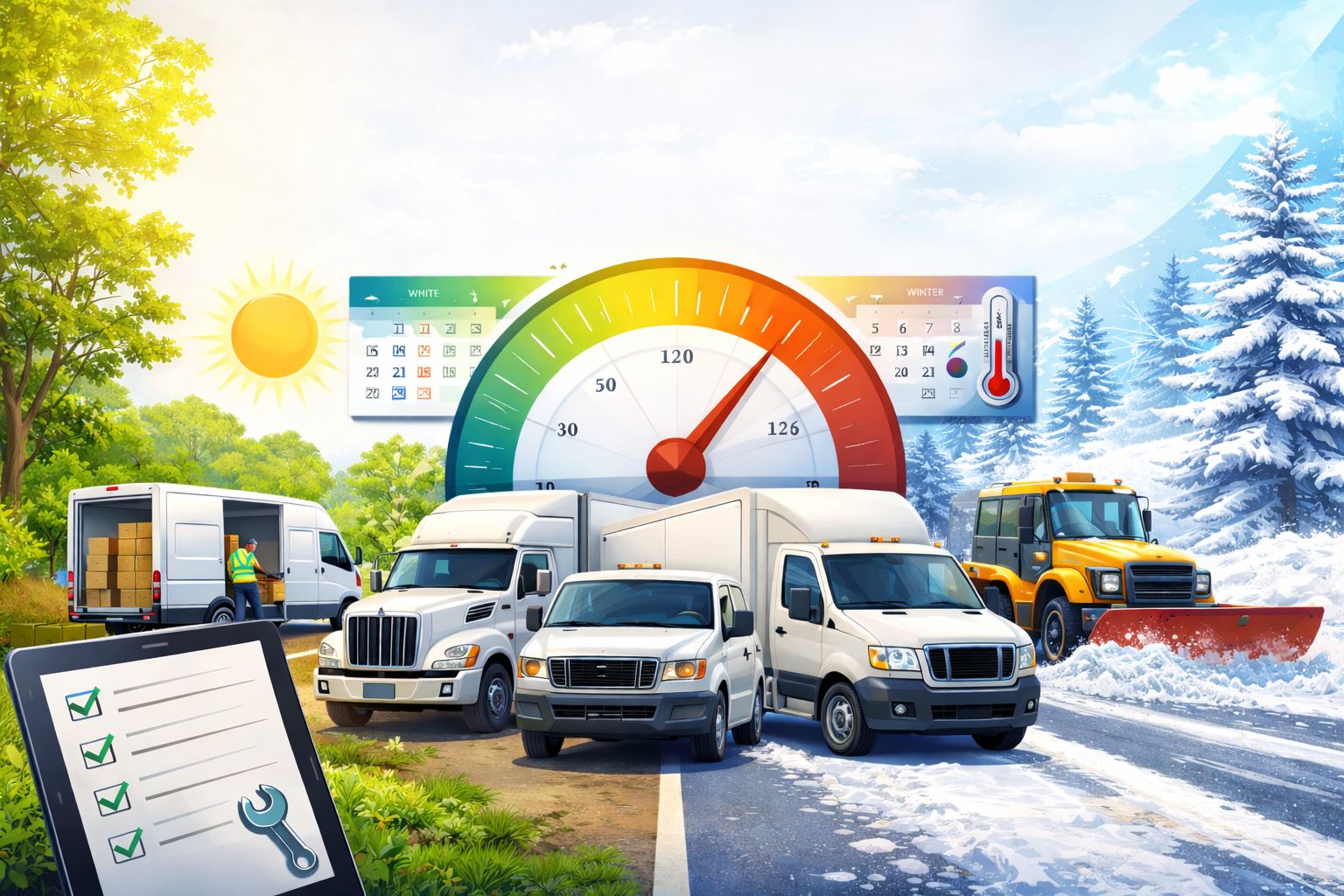
Seasonal demand is one of the most underestimated challenges in fleet management. Many fleets focus on fuel costs, driver behavior, or compliance — but overlook how demand volatility quietly erodes performance month after month. When workloads suddenly rise or fall, vehicles, schedules, and maintenance plans rarely stay aligned.
Seasons don't just change weather conditions. They change utilization rates, wear patterns, operating costs, and risk exposure. A fleet that runs smoothly in February can become overloaded and fragile in July. Likewise, a fleet that looks oversized in April may struggle to meet holiday delivery volumes in December. The real challenge isn't just managing vehicles — it's managing timing.
This article breaks down how seasonal demand affects fleet performance, the real financial impact of being unprepared, and the practical strategies fleet managers can use to stay ahead instead of reacting after breakdowns occur.
Key Takeaways for Fleet Managers
-
Seasonal demand doesn't just change workload — it changes risk.
Higher utilization, weather extremes, and compressed schedules increase the likelihood of failures if preparation is weak. -
Planning for average demand creates peak-season breakdowns.
Fleets must build schedules, maintenance cycles, and capacity plans around their busiest months, not their quietest. -
Transition seasons are your best maintenance opportunity.
Spring and fall inspections prevent the hidden wear that causes summer and winter emergencies. -
Unplanned downtime is dramatically more expensive than preventive maintenance.
Emergency repairs, rentals, and penalties multiply costs far beyond routine service budgets. -
Capacity planning protects both vehicles and drivers.
Forecasting demand, rotating assets, and using rentals strategically prevents overloading your core fleet. -
Data turns seasonal volatility into a manageable pattern.
Maintenance history, utilization metrics, and digital inspections replace guesswork with informed decisions.
Why Seasons Hit Fleets Harder Than Most Businesses Expect
Fleet performance is directly tied to utilization. When vehicles run too much, they wear out faster. When they sit idle, they lose value without producing revenue. Seasonal demand swings create both extremes — and both are expensive.
The problem is that many fleet managers plan for their average demand, not their peak demand. Average planning works fine during calm months, but it collapses during spikes. Delivery fleets in Q4, construction fleets in spring and summer, agricultural fleets during harvest, and HVAC service fleets during temperature extremes all face this same pattern. The fleet either becomes overworked and fragile or underused and inefficient.
Unlike many industries, fleets cannot instantly scale resources. Vehicles need maintenance. Drivers need scheduling. Parts need inventory. When seasons shift quickly, preparation gaps become mechanical failures and operational bottlenecks.
How Different Seasons Create Different Fleet Stress
Summer — High Utilization and Heat-Related Wear
Summer is peak season for many industries. More deliveries, longer routes, heavier payloads, and extended operating hours all increase strain. Heat accelerates tire pressure changes, weakens batteries, stresses cooling systems, and degrades fluids faster.
The real risk in summer isn't just heat — it's deferred maintenance. When demand is high, fleets delay inspections to keep vehicles on the road. That delay compounds wear. A skipped coolant check in June often becomes a roadside breakdown in August.
Winter — Cold Starts, Road Conditions, and Reactive Maintenance
Cold weather changes how engines start, how fluids flow, and how batteries perform. Add snow, ice, and road salt, and fleets face corrosion, traction risks, and increased accident rates. Winter is also when reactive maintenance spikes. Vehicles fail unexpectedly, leading to emergency repairs instead of scheduled service.
For snow removal fleets or last-mile delivery operations, winter also brings demand surges. Vehicles already weakened by cold-weather wear are suddenly pushed harder, increasing downtime risk precisely when availability matters most.
Spring and Fall — Transition Seasons and the Maintenance Window
Spring and fall often look calm compared to summer and winter, but they are actually the highest-value preparation windows. These are the seasons when fleets should inspect, repair, and rebalance workloads. Skipping transitional inspections means entering the next extreme season with hidden vulnerabilities.
Transition seasons are not downtime — they are preparation seasons. Fleets that treat them as routine months miss their best opportunity to prevent future breakdowns.
The Real Cost of Being Caught Unprepared
Seasonal unpreparedness carries tangible financial consequences. Industry estimates show that unplanned downtime can cost $450–$760 or more per vehicle per day, depending on industry and vehicle type. That figure includes lost productivity, missed deliveries, labor inefficiencies, and administrative overhead.
Emergency repairs often cost 2–4× more than scheduled maintenance due to rush labor, premium parts pricing, and towing expenses. When vehicles fail during peak seasons, fleets may also need short-term rentals, which carry inflated seasonal rates.
Driver overtime increases when routes compress due to fewer available vehicles. Customer contracts may include penalties for missed service windows. Even reputational damage becomes a long-term cost when clients perceive unreliability. In contrast, proactive maintenance spreads costs predictably and protects uptime.
Building a Seasonal Maintenance Calendar That Actually Works
A proactive seasonal calendar transforms maintenance from a reaction into a strategy. Instead of asking "What broke?", fleets start asking "What will break if we don't check now?"
Pre-Summer Checklist
Before summer demand rises, fleet managers should complete targeted inspections and services. Key pre-summer priorities include:
- Cooling system inspection and coolant flush
- Tire pressure and tread checks for heat expansion
- Battery load testing and replacement if weak
- Air conditioning system inspection
- Fluid level and viscosity verification
Pre-Winter Checklist
Winter preparation focuses on cold-weather resilience and visibility. Essential pre-winter checks include:
- Antifreeze concentration testing
- Battery load and charging system inspection
- Tire tread depth and winter tire installation where applicable
- Brake system inspection
- Heating, defroster, wipers, and light checks
Year-Round Habits That Reduce Seasonal Shock
Consistent maintenance prevents seasonal spikes from turning into crises. Core year-round habits include:
- Scheduled oil and filter changes
- Regular tire rotation and alignment
- Monthly fluid inspections
- Digital inspection reporting and defect tracking
- Service interval monitoring using maintenance software
Tools like fleet preventive maintenance schedules help standardize these routines and prevent seasonal gaps from forming.
Managing Fleet Capacity When Demand Spikes
Seasonal demand doesn't just break vehicles — it breaks schedules, routing efficiency, and driver availability. Capacity planning must be treated as an operational discipline, not an afterthought.
Effective capacity planning strategies include:
- Forecasting seasonal demand using historical utilization data
- Arranging temporary rental or lease agreements in advance
- Forming partnerships with local subcontractors
- Rotating underutilized vehicles into peak-season service
- Measuring actual available capacity instead of relying on vehicle count alone
Monitoring utilization metrics through fleet analytics — such as those discussed in fleet utilization rate tracking — allows managers to see strain before breakdowns occur.
How Fleet Data Turns Seasonal Guesswork Into a Strategy
Fleets that struggle seasonally often operate reactively. They respond to breakdowns instead of predicting them. Data changes that equation.
Maintenance history reveals seasonal patterns. A fleet might notice battery failures spike every December or tire replacements increase every July. Service interval tracking prioritizes vehicles that need attention before peak season begins. Usage data shows which assets are overloaded and which remain idle.
Digital inspection and reporting tools — such as a digital vehicle inspection app — centralize data so trends become visible instead of anecdotal. Reporting dashboards and service histories allow fleet managers to plan, not guess. When maintenance scheduling, inspection tracking, and fleet reporting work together, seasonal demand becomes predictable rather than disruptive.
Seasonal demand will always exist. The difference between struggling fleets and resilient fleets is preparation, visibility, and disciplined execution.