 Miya Bholat
Mar 03, 2026
How to Reduce Fleet Fuel Costs: Practical Fleet Fuel Management Strategies That Actually Work
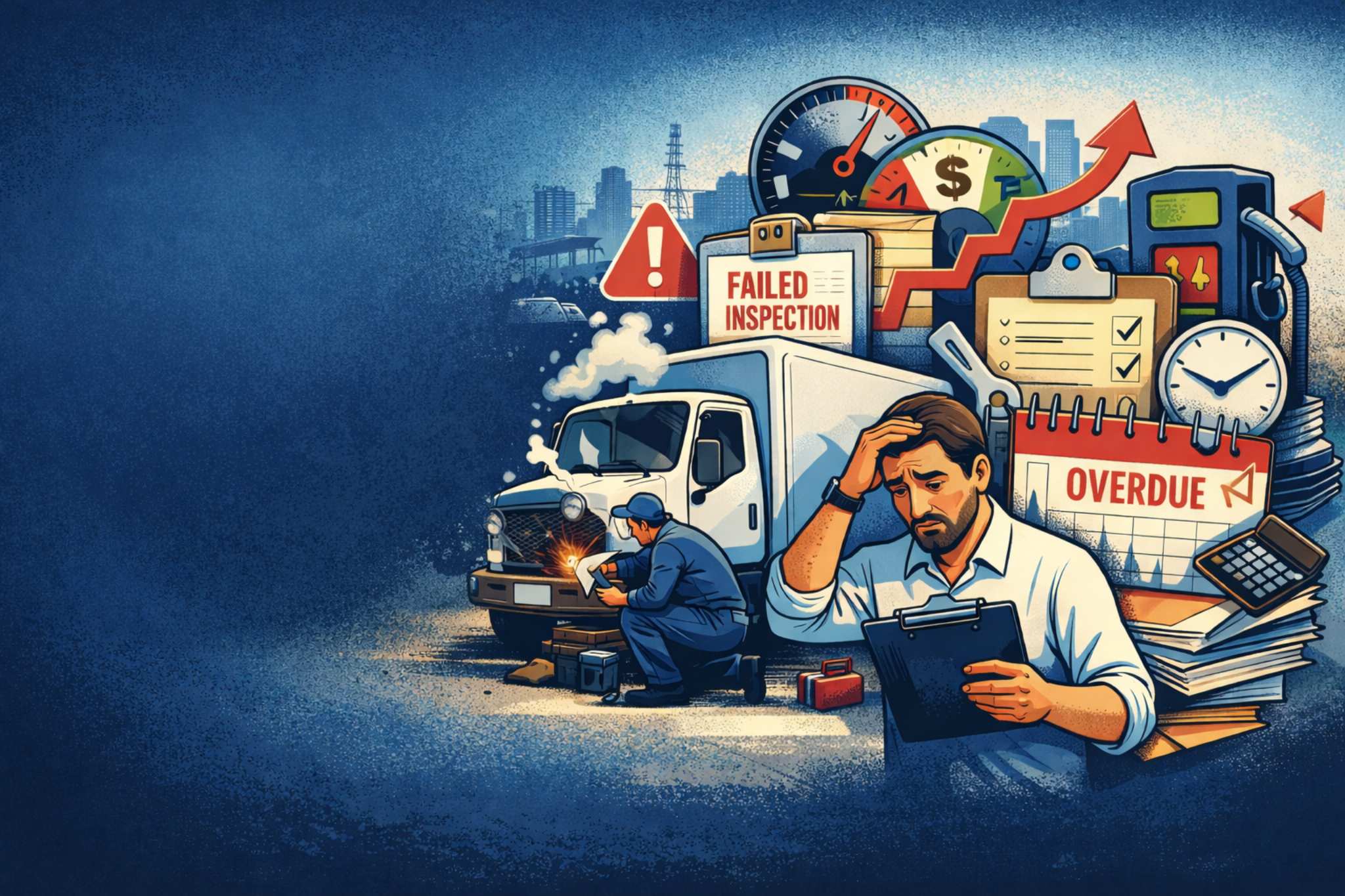
Fuel is one of the largest line items in any fleet budget. For most operations, it represents 25–35% of total operating costs, and in fuel-intensive industries like logistics or construction, it can be even higher. When fuel prices spike, margins tighten almost immediately.
But here’s the part many fleets overlook: a significant percentage of fuel spend is controllable. Driver behavior, routing decisions, vehicle condition, and purchasing policies all influence how much you actually pay at the end of the month. This guide walks through practical, field-tested ways to reduce fleet fuel costs without compromising productivity.
Key Takeaways: Your Fuel Cost Reduction Checklist
- Start with a fleet fuel audit. Establish your baseline MPG, cost per mile, and fuel outliers before implementing changes.
- Improve driver behavior first. Speed control, idle reduction, and smoother driving habits can cut fuel consumption by 10–30%.
- Optimize routes and dispatch decisions. Reducing unnecessary miles directly lowers fuel spend at scale.
- Maintain vehicles proactively. Tire pressure, air filters, and preventive maintenance schedules directly influence MPG.
- Strengthen fuel card controls. Set limits, monitor transactions, and reconcile fuel purchases against mileage.
- Right-size your fleet. Ensure the correct vehicles handle the correct jobs to avoid long-term fuel inefficiencies.
Why Fuel Costs Are Eating Your Fleet Budget
Fuel costs don’t rise for just one reason. They increase due to a combination of external factors and internal inefficiencies.
Externally, fuel price volatility is out of your control. What you can control is how efficiently your vehicles use fuel and how closely you monitor consumption. Many fleets don’t have consistent visibility into MPG trends, idling time, route deviations, or fuel card usage. Without that visibility, waste becomes normalized.
Internally, several operational issues inflate fuel spend:
Before you fix the problem, you need to understand the main contributors:
- Inefficient routes that add unnecessary miles
- Drivers who speed, idle excessively, or accelerate aggressively
- Vehicles operating with poor maintenance
- Oversized vehicles assigned to light-duty routes
- Weak fuel card controls or limited oversight
Even small inefficiencies compound quickly. If each of 50 vehicles wastes just one gallon per day, that’s 250 gallons per week. At $4 per gallon, that’s $1,000 per week — over $50,000 per year in preventable expense.
The Hidden Costs Beyond the Pump
The price on the pump isn’t the full picture. Fuel waste also hides in indirect areas of your operation.
Consider these often-overlooked contributors:
- Excessive idling (a diesel truck burns roughly 0.8 gallons per hour while idling)
- Underinflated tires reducing fuel economy by up to 3%
- Dirty air filters restricting airflow and lowering MPG
- Deferred oil changes increasing engine friction
- Unauthorized or fraudulent fuel card transactions
Fuel inefficiency is rarely caused by one dramatic issue. It’s usually death by a thousand small operational leaks.
Conduct a Fleet Fuel Audit Before Anything Else
You can’t reduce what you haven’t measured.
A fleet fuel audit establishes your baseline. It shows which vehicles perform efficiently and which are dragging your averages down. Without this step, you’re guessing.
A proper fuel audit should include:
- MPG tracking per vehicle and per driver
- Fuel spend by vehicle class
- Comparison against manufacturer MPG benchmarks
- Fuel card transaction review
- Identification of outlier vehicles or routes
Start by calculating cost per mile and MPG across the fleet. If your average light-duty truck should get 16 MPG but one vehicle consistently gets 12 MPG, you have a 25% efficiency gap worth investigating.
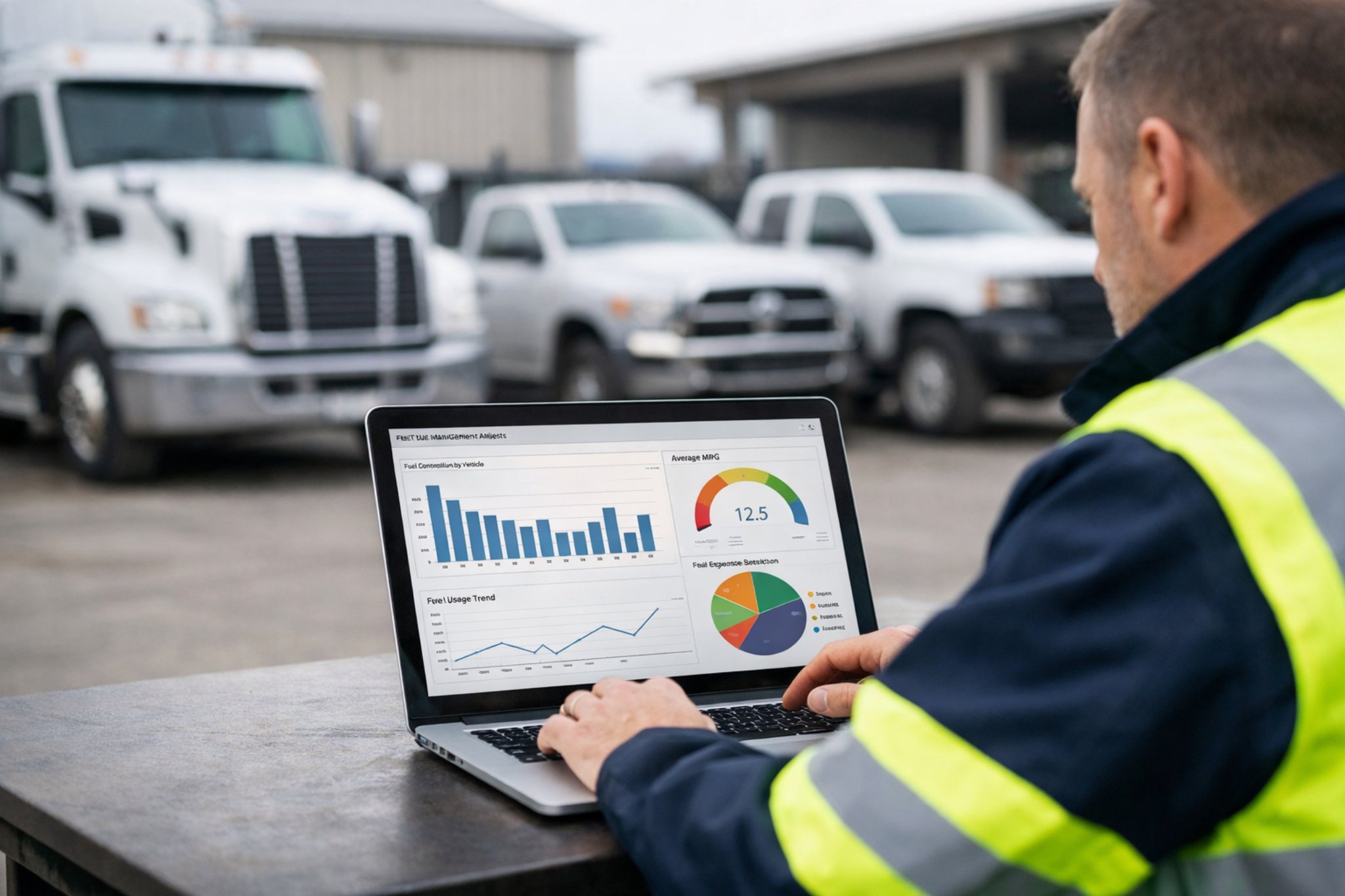
Fleet software platforms with built-in fleet fuel management and tracking software capabilities make this easier by centralizing fuel data alongside mileage and maintenance records. When fuel reporting integrates with maintenance and telematics data, trends become visible instead of buried in spreadsheets.
Once you know where the leaks are, you can prioritize fixes that deliver the fastest return.
How Driver Behavior Directly Impacts Fuel Consumption
Driver behavior is one of the largest controllable variables in fleet fuel management. .
Aggressive driving can reduce fuel efficiency by 15–30% on highways and 10–40% in stop-and-go traffic. Speeding increases aerodynamic drag exponentially. Hard acceleration wastes fuel. Excessive braking wastes the momentum you already paid for.
Idling is another major contributor. A single truck idling two hours per day can burn roughly 1.6 gallons daily — nearly 400 gallons annually.
Improving driver performance often delivers faster savings than replacing vehicles.
Building a Driver Accountability Program
Changing behavior requires visibility and accountability.
An effective driver program typically includes:
- Telematics-based tracking of speed, idle time, and harsh events
- Driver scorecards ranking fuel efficiency metrics
- Regular coaching sessions
- Incentives for top-performing drivers
- Clear idle-reduction policies
Many fleets combine GPS tracking with reporting dashboards to monitor these metrics in real time. Integrated platforms like GPS fleet tracking and telematics allow managers to correlate driver behavior with fuel consumption, making coaching conversations data-driven rather than subjective.
When drivers see their data — and understand how it affects company performance — behavior tends to improve quickly.
Route Optimization and Dispatch Efficiency
Every unnecessary mile burns fuel. Multiply that by dozens or hundreds of vehicles, and inefficiencies scale rapidly.
Route optimization is not just about mapping the shortest path. It involves:
- Consolidating jobs geographically
- Avoiding congestion during peak hours
- Reducing backtracking
- Planning delivery sequences logically
- Minimizing empty miles
Even a 5% reduction in total miles driven can significantly reduce annual fuel spend. For a fleet driving 1 million miles per year at 10 MPG, a 5% reduction saves 5,000 gallons. At $4 per gallon, that’s $20,000 annually.
Dispatch decisions matter. Assigning the wrong vehicle to a route or failing to group nearby jobs increases both fuel and labor costs. Integrating telematics with route data improves visibility and reduces waste at scale.
For deeper optimization strategies, reviewing resources on fleet optimization can help structure improvements across routing, utilization, and vehicle assignment.
Keep Vehicles Well-Maintained to Maximize Fuel Efficiency
Maintenance and fuel efficiency are tightly linked.
Mechanical degradation increases fuel consumption gradually. Worn spark plugs reduce combustion efficiency. Dirty air filters restrict airflow. Old oil increases friction. Underinflated tires increase rolling resistance.
For example:
- Proper tire inflation can improve fuel economy by up to 3%
- Replacing clogged air filters can improve MPG by 2–6%
- Regular oil changes reduce engine drag
These improvements seem small individually. Combined across a fleet, they create measurable savings.
Setting Up Preventive Maintenance Schedules
Reactive maintenance wastes fuel long before breakdown occurs. Preventive maintenance keeps vehicles operating within optimal efficiency ranges.
A structured preventive maintenance program should:
- Follow OEM-recommended service intervals
- Include regular tire pressure inspections
- Track fuel efficiency trends as a maintenance KPI
- Flag declining MPG as a potential mechanical issue
Fleet maintenance software makes this systematic instead of manual. Using tools like fleet preventive maintenance schedules ensures services are completed on time and recorded centrally.
When fuel data integrates with maintenance records, managers can quickly identify whether declining MPG stems from driver behavior or mechanical issues — eliminating guesswork.
Fuel Card Programs and Purchasing Strategies
Fuel cards are more than payment tools. They are control mechanisms.
Without structured policies, fuel cards become risk points for misuse, fraud, and over-purchasing. A disciplined fuel card strategy includes clear restrictions and monitoring.
Key best practices include:
- Setting transaction limits per day
- Restricting fuel types by vehicle
- Enforcing PIN-based authorization
- Monitoring for purchases outside approved geography
- Reconciling fuel purchased against mileage driven
Bulk fuel contracts or regional discounts can also reduce per-gallon cost. However, the biggest gains often come from preventing unauthorized transactions and identifying outliers early.
Integrated reporting dashboards that centralize fuel transactions with vehicle mileage simplify oversight and reduce administrative workload.
Evaluating Fleet Composition and Right-Sizing Vehicles
Long-term fuel cost reduction sometimes requires strategic fleet decisions.
Oversized vehicles burn more fuel than necessary. A heavy-duty truck assigned to light-duty urban routes wastes fuel every mile it operates. Similarly, older vehicles may operate at lower efficiency than newer alternatives.
Periodic fleet composition reviews should examine:
- Vehicle utilization rates
- Fuel cost per mile by vehicle class
- Average age and maintenance cost trends
- Route suitability for hybrid or electric vehicles
For certain short, predictable routes, hybrids or EVs may significantly reduce fuel spend over time. For other applications, downsizing engine specs may deliver savings without compromising capability.
These decisions affect fuel costs for years — not just months — so they deserve structured analysis.
Reducing fleet fuel costs isn’t about one single tactic. It’s about tightening control across behavior, routing, maintenance, purchasing, and vehicle strategy. When you address each lever systematically, fuel stops being a volatile expense and becomes a manageable operational metric.