 Miya Bholat
Sep 25, 2026
Snowplow Fleet Maintenance Checklist for Winter Readiness

A snowplow fleet maintenance checklist is a full season process for keeping the truck, plow, spreader, hydraulics, electrical equipment, and operator visibility ready before, during, and after storms. A strong fleet maintenance software process ties inspections, scheduled service, repairs, and records to each truck so readiness can be verified before dispatch.
For municipal teams, that same process must support overnight shifts, spare trucks, changing material demand, and defensible records. Those requirements make public works fleet management different from maintaining a single commercial plow.
Key Takeaways
- Treat the truck as four connected systems. Inspect the chassis, plow and hydraulics, spreader, and electrical and visibility equipment together.
- Prepare four to six weeks before the first storm. That leaves time for repairs, parts sourcing, calibration, and spare truck planning.
- Use a go or no go check before dispatch. Fuel, lighting, fluids, attachment security, and spreading equipment should be confirmed first.
- Wash salt and brine off quickly. Post storm cleaning and inspection help control corrosion and expose fresh damage.
- Keep records by truck. Inspection and repair history supports claims, spare planning, and replacement decisions.
What a Snowplow Maintenance Checklist Really Covers
A plow truck is four systems working under cold temperatures, impact loads, vibration, salt, and long shifts.
- Truck chassis and powertrain: cooling system, battery, charging system, tires, brakes, fluids, and driveline.
- Plow attachment and hydraulics: blade, cutting edge, frame, springs, pins, cylinders, hoses, fluid, and controller.
- Spreader and material distribution: hopper, conveyor or auger, spinner, bearings, calibration, and tarp.
- Lighting, electrical, and visibility: plow lights, warning lights, wiring, backup alarm, mirrors, wipers, and defroster.
Pre-Season Snowplow Inspection Checklist
Start the major inspection four to six weeks before the first expected storm. FHWA reports that state and local agencies spend more than $2.3 billion each year on snow and ice control, while winter maintenance can consume up to about 20 percent of a state DOT maintenance budget, according to its winter maintenance technology briefs.
A seasonal weather fleet maintenance plan should already cover cold weather effects on batteries, tires, cooling systems, and fluids. The snowplow checklist adds winter equipment and storm duty controls.
Truck Chassis and Powertrain Readiness
Check coolant protection against the coldest expected temperature, load test the battery, review battery age, verify alternator output, and test the block heater. Inspect tire tread and damage, brakes, and cold weather fluid condition.
Build these items into preventive maintenance checklists and schedules so technicians do not rely on memory when the first storm arrives early.
Plow Attachment and Hydraulic System
Inspect cutting edge wear, moldboard condition, mounting bolts, trip springs, push beam and A frame welds, pivot pins, hydraulic fluid, hoses, fittings, cylinders, and controller operation. Cycle the blade through raise, lower, angle, and float functions.
Spreader and Material Distribution
Inspect conveyor or auger chains, spinner condition, bearings, hopper structure, and tarp condition. Calibrate output before storm duty so material rate matches the operating plan.
Lighting, Electrical, and Visibility
Test plow lights, beacons, strobes, backup alarms, connectors, grounds, and exposed wiring. Confirm mirrors, wipers, washer fluid, cab heat, and defrost all work before low visibility operations.
Component Wear Thresholds
| Component | What to Check | Service or Replace Threshold |
|---|---|---|
| Cutting edge | Wear, cracks, loose hardware | Replace before wear reaches moldboard or mounting hardware, or if damage affects scraping |
| Trip springs | Cracks, broken coils, stretch | Replace broken, cracked, or permanently stretched springs |
| Hydraulic fluid | Level, color, contamination | Service at the specified interval or sooner if milky, dark, contaminated, or repeatedly low |
| Hoses and fittings | Leaks, abrasion, blistering | Replace leaking, blistered, cracked, or badly abraded parts |
| Battery | Load test, terminals, case | Replace if it fails the load test or cannot maintain required starting output |
| Coolant | Freeze protection, level | Correct the mixture if protection does not cover expected minimum temperature |
| Tires | Tread, cuts, wear, pressure | Remove from winter service when condition falls below the fleet's safe winter standard |
Pre-Storm Dispatch and In-Shift Checks
Before dispatch, use a short go or no go check focused on defects that could stop the truck during the storm.
- Confirm the plow attachment is secure.
- Confirm the spreader is loaded, operating, and calibrated.
- Start with fuel at 90 percent or higher when operating plans allow.
- Test headlights, plow lights, warning lights, and backup alarm.
- Top off required fluids and investigate active leaks.
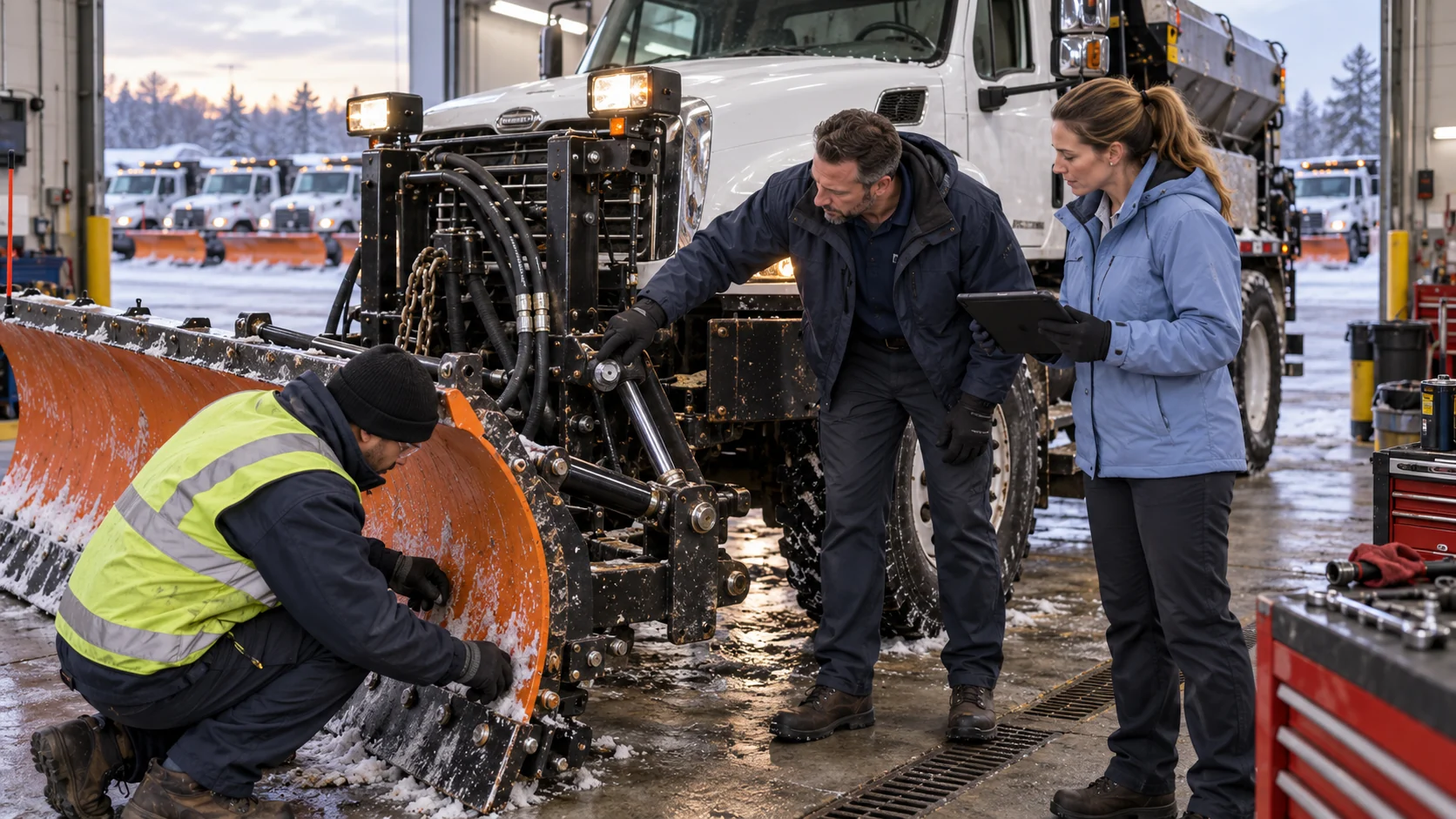
During storm duty, operators should repeat quick condition checks at shift change or roughly every 10 hours of plowing when operations permit.
- Check hydraulic fluid and new leaks.
- Check mounting hardware and critical fasteners.
- Inspect cutting edge wear and impact damage.
- Check tire pressure and visible tire condition.
A digital vehicle inspection process helps standardize these checks across operators and keeps the results tied to each truck.
FHWA says more than 70 percent of U.S. roads are in snowy regions, and average arterial speeds can fall 30 to 40 percent on snowy or slushy pavement. It also reports that 24 percent of weather related crashes occur on snowy, slushy, or icy pavement through its snow and ice resource.
Post-Storm Recovery and Salt Corrosion Control
The hours after a storm can determine how much corrosion and hidden damage carry into the season. AAA estimated in 2017 that road deicers cause roughly $3 billion a year in U.S. vehicle rust damage, with about $500 per repair, according to its deicer corrosion estimate.
Use this five step recovery workflow before returning the truck to ready status.
- Wash within 24 hours when practical. Rinse the undercarriage, frame, wheel wells, plow frame, spreader, and material contact surfaces.
- Inspect corrosion points. Check seams, connectors, fasteners, frame pockets, hopper areas, and hydraulic components.
- Inspect impact damage. Look for blade, frame, weld, light, cylinder, and tire damage.
- Refuel and replenish. Restore fuel, washer fluid, required hydraulic fluid, and storm materials.
- Record defects immediately. Put repair needs into the maintenance queue before the next dispatch.
End-of-Season Teardown, Storage, and Records
At season close, wash the truck, plow, spreader, frame, and undercarriage thoroughly. Remove trapped salt, correct corrosion, repair winter damage, lubricate required points, protect connectors, and store equipment on stable supports in a dry location where possible.
Keep the full inspection and repair trail in each truck's vehicle service history. Records help document what was inspected and repaired when property damage, road gouging, or slip and fall claims are reviewed, and they support spare truck and replacement planning.
Also flag trucks that repeatedly missed shifts, needed substitute equipment, or returned for the same repair. Those patterns reveal operational risk before the next winter.
Turning the Checklist Into a Repeatable System
The checklist becomes more reliable when recurring winter work is scheduled instead of recreated before every storm. AUTOsist can support fleet preventive maintenance schedules for seasonal inspections, recurring service, and reminders by vehicle.
Assign an owner and due point to each inspection. Define which defects block ready status so a completed form does not become a box checking exercise.

When inspections find leaks, damaged cutting edges, weak batteries, or spreader faults, move them into fleet maintenance work orders with an owner, repair status, and completion record.
Close the loop only after the repair is verified. This keeps the inspection and corrective action connected.
Stock critical winter wear items through parts inventory management, especially cutting edges, hydraulic hoses, fittings, lights, connectors, and other fleet specific parts.
Frequently Asked Questions
-
What should I check on a snowplow before every shift?
Check the plow mounting, hydraulic leaks, cutting edge, lights, tires, fluids, and spreader operation. Any defect that could affect safe operation or cause a breakdown should be corrected before dispatch. -
When should a snowplow cutting edge be replaced?
Replace the cutting edge before wear reaches the moldboard or mounting hardware. Also replace it if cracking, bending, or uneven wear affects how the blade contacts the road. -
How often should snowplow pins and pivot points be greased?
Follow the plow manufacturer's lubrication schedule and grease more frequently during heavy use. Some equipment specifies lubrication around every 10 hours of plowing, so fleet managers should base the interval on the specific plow. -
How often should snowplow hydraulic fluid be changed?
Check hydraulic fluid throughout the season and replace it at the manufacturer's recommended interval. Many operators include a fluid change or system service in preseason maintenance because moisture and contamination can cause problems during freezing conditions. -
How often should a salt spreader be calibrated?
Calibrate the spreader before the season and whenever material type, application rate, or equipment setup changes. During storms, verify that the conveyor or auger and spinner are distributing material evenly at the intended rate.