 Miya Bholat
Feb 17, 2026
What to Look for in Fleet Reporting Software
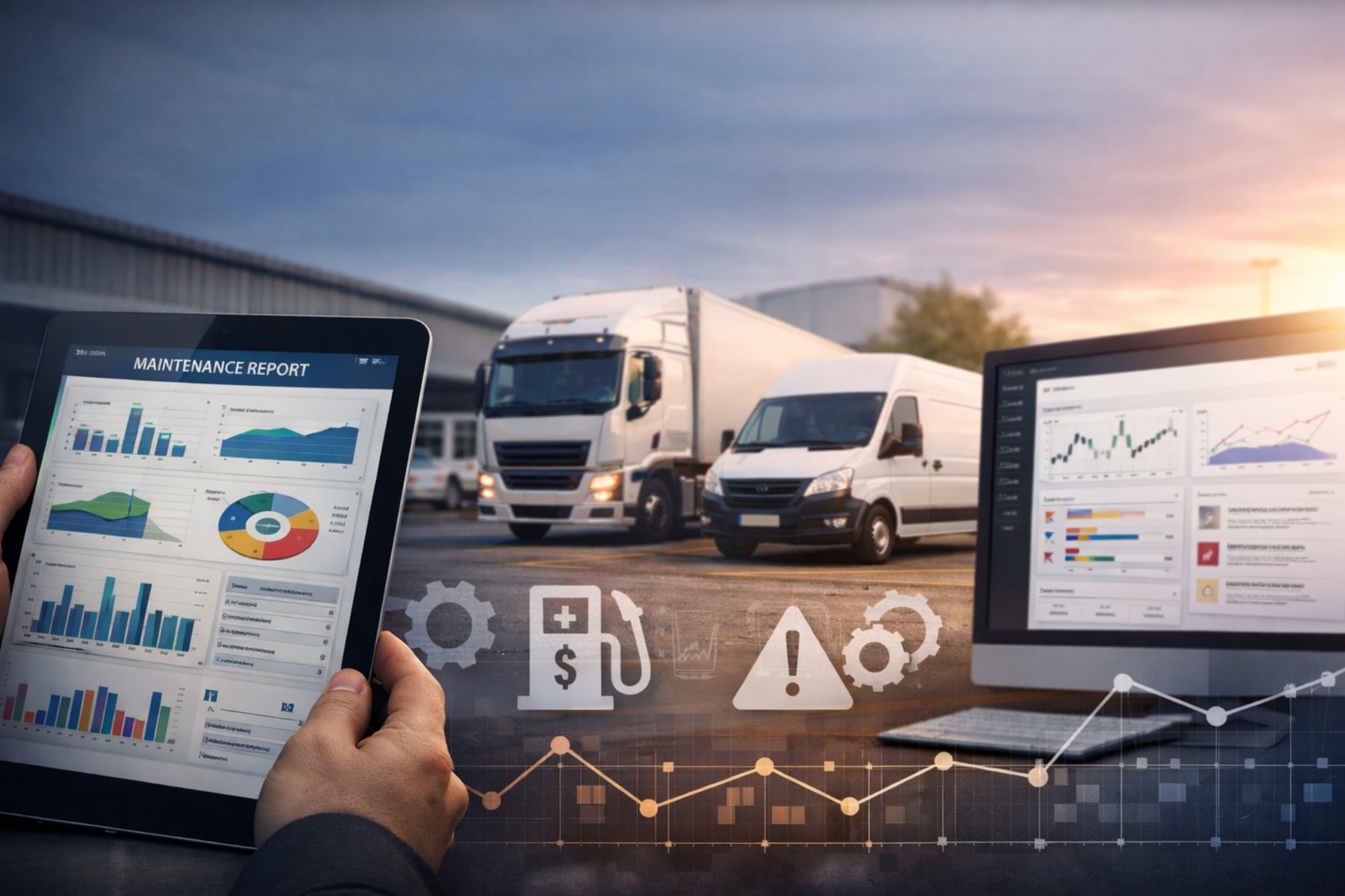
Fleet managers rarely fail because they lack data. They fail because they can’t see what the data is telling them. Late repairs, surprise breakdowns, budget overruns, and compliance gaps usually don’t appear overnight — they build quietly while information sits scattered across spreadsheets, paper logs, and disconnected tools.
Good fleet reporting software changes that dynamic. Instead of reacting to problems after they hit, managers gain visibility into patterns before they become expensive. Reports stop being static charts and start becoming decision tools. The difference between “we think costs are rising” and “we know exactly why costs are rising” often comes down to the quality of reporting.
When you evaluate fleet reporting software, you’re not just choosing dashboards. You’re choosing how clearly your operation can see itself.
Key Takeaways
-
Reporting software is a decision tool, not just a dashboard.
The right system turns raw data into actionable intelligence that prevents costly surprises. -
Core reports are non-negotiable.
Maintenance history, fuel costs, driver behavior, and TCO reporting form the foundation of smart fleet management. -
Real-time and historical data serve different purposes.
One helps you act immediately; the other helps you plan strategically. -
Customization saves time and improves accuracy.
Flexible filters allow managers to generate reports that match their operational reality. -
Integration determines report quality.
Centralized maintenance, fuel, and telematics data produce clearer and more reliable insights. -
Automation keeps problems from hiding.
Scheduled reports and alerts ensure critical metrics stay visible without manual effort.
Why Fleet Reporting Software Is More Than Just Dashboards
Many platforms advertise colorful dashboards and sleek graphs, but true reporting capability goes much deeper. Dashboards display information. Reporting systems interpret it, organize it, and make it usable for planning and action.
A passive dashboard might show that maintenance expenses increased 12% this quarter. Actionable reporting tells you which vehicles caused the increase, what types of repairs drove it, and whether the pattern points to aging assets or missed preventive maintenance. That distinction matters because one leads to awareness while the other leads to decisions.
Choosing the wrong reporting tool often creates hidden costs. Managers spend hours exporting data, merging spreadsheets, and manually building reports that software should generate automatically. Over time, that inefficiency turns into delayed decisions and preventable expenses. Strong reporting software removes that friction and gives managers confidence in their numbers.
The Core Reports Every Fleet Operation Needs
A credible fleet reporting system must include several non-negotiable report types. Without them, managers operate with partial visibility and make decisions based on guesswork instead of evidence.
Vehicle Maintenance and Service History Reports
These reports show the full lifecycle of each asset — inspections, repairs, scheduled services, parts replacements, and downtime. They help managers prevent reactive maintenance and maintain compliance with regulatory requirements. A fleet with consistent maintenance reporting often sees fewer breakdowns and longer vehicle lifespans because issues get addressed before they escalate.
Software platforms that centralize maintenance data, such as tools that combine work orders, inspection logs, and service history in one place, dramatically reduce the time spent tracking records manually.
Fuel Consumption and Cost Reports
Fuel is often the second-largest operating expense after payroll. Fuel reports expose inefficiencies, highlight vehicles with poor MPG, and reveal excessive idling or route inefficiencies. For a 50-vehicle fleet, even a 5% fuel efficiency improvement can translate into tens of thousands of dollars saved annually.
A strong fuel report typically allows:
- Cost per mile tracking
- MPG comparison by vehicle
- Fuel spend trends by month or quarter
- Identification of abnormal consumption spikes
Driver Behavior and Safety Reports
Driver behavior directly affects insurance premiums, accident rates, and fuel costs. Reports that capture speeding, harsh braking, rapid acceleration, and idling help managers coach drivers and reduce liability. Fleets that actively monitor driver behavior often see double-digit reductions in incident rates within a year.
Total Cost of Ownership (TCO) Reports
TCO reports combine acquisition cost, maintenance, fuel, downtime, insurance, and resale value into one clear picture. Without TCO reporting, replacement decisions rely on intuition instead of math. A vehicle that appears “cheap” to maintain might actually cost more over its lifetime than replacing it earlier.
Real-Time vs. Historical Reporting — You Need Both
Real-time reporting and historical reporting serve different purposes, and strong software delivers both seamlessly.
Real-time dashboards catch problems as they happen. For example, a vehicle exceeding a fuel cost threshold this week signals immediate investigation. A driver logging excessive idle time today allows instant coaching before the habit becomes expensive.
Historical reporting reveals patterns. It shows trends across months or years, such as rising maintenance costs tied to aging vehicles or seasonal spikes in fuel usage. Real-time data answers “What is happening now?” Historical data answers “Why does this keep happening?”
A platform that offers both enables two distinct decisions:
- Real-time decision: Pull a vehicle from service due to a sudden maintenance spike.
- Historical decision: Replace a vehicle after identifying a two-year upward repair trend.
Without both views, managers either react too late or lack long-term planning clarity.
Customization and Filtering: Why One-Size Reporting Fails Fleet Managers
Generic canned reports waste time because every fleet operates differently. A delivery company might care about route efficiency and fuel costs, while a construction fleet focuses on equipment downtime and maintenance cycles. Reporting software must adapt to those differences.
Customization allows managers to filter reports by:
- Vehicle or asset type
- Driver or department
- Date ranges or seasonal periods
- Cost centers or business units
- Locations or service regions
A mid-size fleet, for example, might need a report comparing maintenance costs for diesel trucks versus gas vans over the last six months in one specific region. Rigid reporting tools can’t generate that view without manual spreadsheet work. Flexible reporting systems produce it instantly, saving hours of analysis time every week.
Integration With Maintenance, Fuel, and Telematics Data
Reporting software is only as good as the data feeding it. If maintenance logs live in one tool, fuel receipts in another, and GPS data in a third, reports become fragmented and incomplete. Integrated platforms eliminate those silos.
Look for systems that combine:
- Maintenance and work orders
- Fuel tracking and expenses
- Inspection and compliance records
- GPS and telematics data
- Parts inventory and asset history
Centralized tools that connect reporting with maintenance workflows — such as integrated fleet dashboards and reporting features — allow managers to see the full operational picture instead of isolated fragments. Platforms like fleet reports and dashboard capabilities work best when paired with centralized maintenance records and fuel tracking.
Alerts, Scheduling, and Automated Report Delivery
Great reporting software doesn’t wait for managers to log in. It pushes information proactively through alerts and scheduled reports. Automation prevents oversight and keeps critical metrics visible without manual effort.
Effective automation features often include:
- Scheduled weekly or monthly cost reports
- Threshold alerts for excessive expenses
- Maintenance due reminders
- Fuel cost anomaly notifications
- Driver behavior warnings
For example, an automated alert when a vehicle exceeds its maintenance budget allows immediate action rather than discovering the overage at the end of the quarter. Automated reporting shifts managers from reactive firefighting to proactive oversight.
Questions to Ask Before Choosing Fleet Reporting Software
Before committing to a platform, fleet managers should evaluate vendors with targeted questions that reveal real capabilities rather than marketing promises.
Consider asking:
- How easy is it to generate custom reports without technical support?
- Can the platform scale from 10 vehicles to 500 without performance issues?
- Does the system integrate with telematics and fuel card providers?
- Who owns the data, and how easily can it be exported?
- Is mobile access available for on-the-go reporting?
- What level of customer support and onboarding training is provided?
Clear answers to these questions reveal whether the software will grow with your fleet or become another tool you outgrow.
For deeper insight into how reporting connects with maintenance workflows, resources like fleet maintenance KPIs with formulas and guides on fleet management analytics and metrics provide practical benchmarks and performance indicators to compare against your own data.