 Miya Bholat
Aug 10, 2026
When a Truck Maintenance App Stops Being Enough
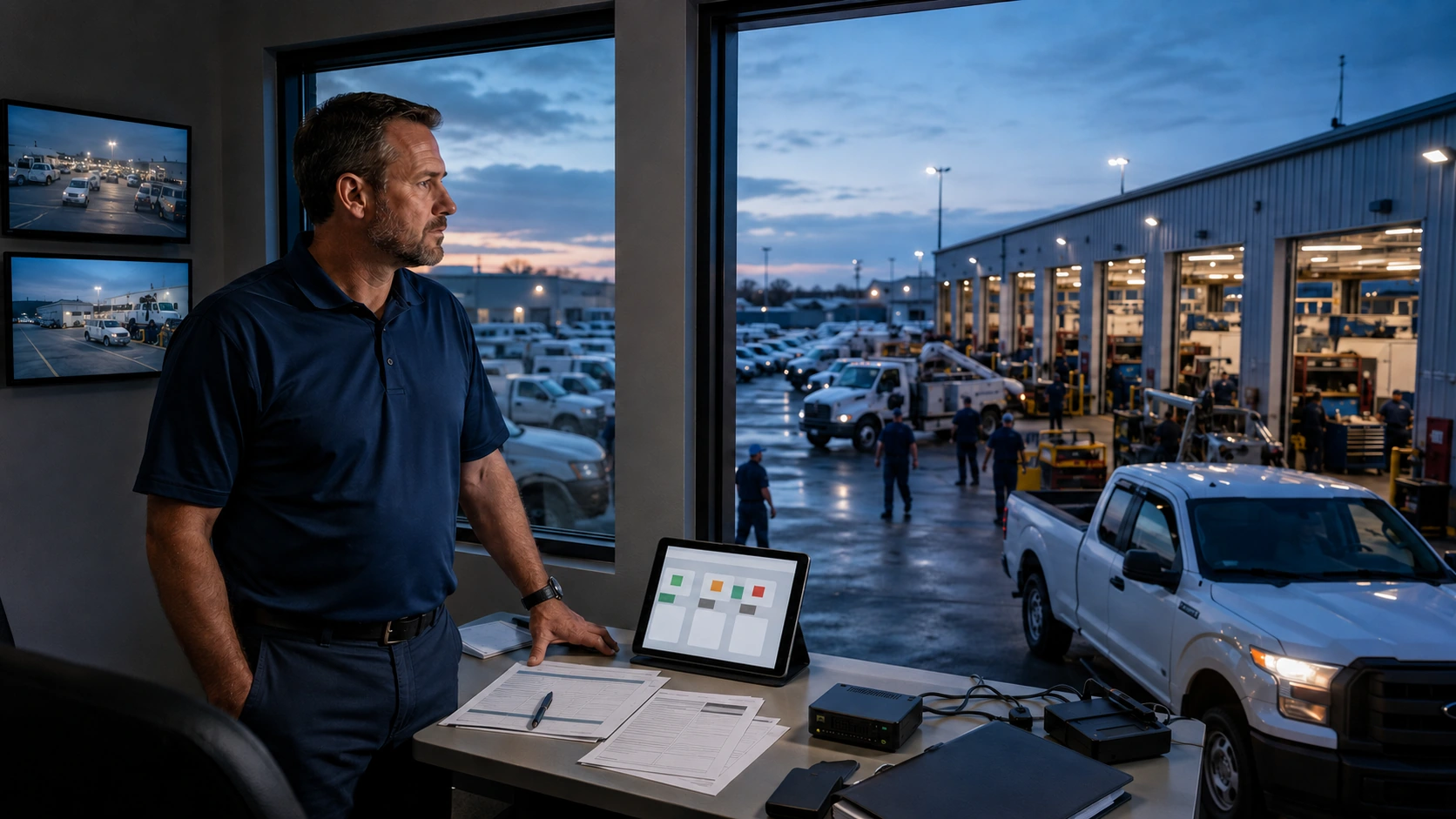
When a truck maintenance app stops being enough, the app has not necessarily become a bad product. Your fleet has become a more complex operation than the app was designed to coordinate. A tool that once handled reminders and service notes may struggle when vehicles, locations, users, compliance records, and connected data sources multiply. The solution is to assess whether your operation now needs fleet maintenance software that connects maintenance activity, records, responsibilities, and costs in one system.
For trucking operations, the ceiling can appear sooner because dispatch pressure, roadside inspections, driver turnover, and ELD data all add complexity. A platform designed around trucking and logistics fleet operations can support that wider operating context instead of treating every truck as an isolated maintenance record.
Key Takeaways
- Growth exposes the ceiling. An app can work exactly as designed while no longer matching the complexity of the fleet using it.
- Vehicle count is only one signal. Locations, users, compliance duties, approval paths, and data sources often matter more.
- Disconnected data creates hidden labor. Reconciliation time grows whenever maintenance, mileage, fuel, and inspection records live apart.
- Workarounds reveal unmet needs. Spreadsheets, group chats, paper forms, and duplicate entry show that the operating process has moved outside the app.
- Reporting gaps weaken decisions. If the system cannot explain cost per mile, repeat repairs, or downtime by unit, managers cannot act with confidence.
- Integration limits become operational limits. Telematics, fuel card, and ELD data only help when maintenance workflows can use them.
- A planned transition protects history. Clean exports, mapped fields, testing, training, and a short parallel run reduce migration risk.
Why "The App Isn't Working" Is Usually the Wrong Diagnosis
Most frustration starts with a missed reminder, an incomplete report, or another hour spent joining data by hand. The immediate conclusion is that the app is broken. More often, the fleet has outgrown its operating model. One location became four, one manager became several supervisors, and one mileage source became a mix of odometers, telematics, and fuel transactions.
That distinction matters because replacing one basic app with another will recreate the problem. Diagnose the required workflows and data connections first. Readers who want the related product perspective can review the inherent capabilities and limits of fleet maintenance software, while the issue here is whether fleet growth has pushed beyond a particular app's ceiling.
What a Basic Truck Maintenance App Is Actually Built For
Entry level apps solve a useful, focused problem. They work well when one person manages a modest fleet from one location, enters mileage manually, schedules recurring preventive maintenance, and records basic service notes. The process stays predictable because the same person controls the data and approvals.
Complexity rises when separate shops, departments, or dispatch teams touch the same vehicle. The app must then coordinate ownership, permissions, evidence, costs, and external data. That is why the needs of growing fleets change beyond basic maintenance tracking even when each individual task still looks simple.
7 Signs Your Fleet Has Outgrown Its Maintenance App
Maintenance Data Living in Three Different Systems
Mileage sits in telematics, repair costs sit in accounting, and service notes remain in the app. Staff reconcile all three before making a decision. Complete fleet maintenance records that reduce repair time should follow the vehicle without requiring a weekly data hunt.
Compliance Documentation Takes Longer Than the Audit Itself
If inspection reports, repair proof, driver acknowledgments, and registration documents require several searches, the system does not preserve a usable evidence trail. The risk is not only slow retrieval. Missing context can make completed work look unverified.
Permissions and Roles Break Down Across Locations
Shared logins and broad administrator access usually appear when the app cannot reflect real responsibilities. Scalable fleet user and driver management should let drivers submit issues, technicians update work, and managers approve costs without exposing every control to everyone.
Reports Can't Answer the Cost Per Mile Question
A total repair spend is not enough. Managers need costs tied to mileage, vehicle, location, vendor, and downtime. If producing that answer requires a separate spreadsheet, the app lacks the fleet reporting depth needed for cost analysis.
Manual Workarounds Are Creeping Back In
Paper inspection sheets, texted repair approvals, calendar reminders, and private spreadsheets signal that people are rebuilding missing workflows. Every workaround creates another place where a status can become stale or disappear.
You Keep Hitting an Integration Ceiling
Telematics, fuel cards, and ELDs produce useful data, but exporting files and retyping readings defeats the purpose. A usable GPS tracking and telematics connection should move timely vehicle data into decisions rather than create another dashboard to check.
Support and Pricing Weren't Built for This Many Trucks
Slow support becomes expensive when multiple locations depend on the system. Pricing can also lose its original advantage when essential permissions, reports, integrations, or support require repeated upgrades. Compare total operating cost, not subscription price alone.

Use this quick scan to recognize the pattern before scoring it in detail:
- Data requires reconciliation across systems
- Audit records take too long to assemble
- Access rules no longer match job responsibilities
- Reports cannot calculate reliable unit economics
- Teams rely on paper, chats, or spreadsheets again
- Connected systems still require manual transfer
- Support or pricing becomes harder as the fleet grows
What Staying Too Long Actually Costs
Consider this illustrative example for a 75 truck fleet. Two coordinators each spend three hours per week reconciling mileage, repairs, and fuel data at a loaded labor cost of $32 per hour. The annual reconciliation cost is 2 × 3 × $32 × 52, or $9,984.
Now assume three missed preventive maintenance windows lead to an average $3,500 urgent repair and two days of downtime valued at $850 per day. Each event costs $5,200, creating $15,600 in annual repair and downtime cost. Add four quarterly compliance packet exercises at eight labor hours each, or $1,024. The visible annual cost reaches $26,608, before estimating citations, roadside delays, or customer disruption.
The broader market shows why disconnected maintenance now stands out. One fleet telematics market forecast values the sector at about $17.5 billion in 2025 and projects about $44.5 billion by 2032. Another telematics market analysis estimates fleet management represented 38.25 percent of 2025 revenue. Market estimates vary, but the direction is clear: fleets are investing in connected systems, so an isolated maintenance app increasingly becomes the weak link.
The Graduation Checklist: Scoring Your Fleet's Readiness
Score each condition from 0 to 2. Use 0 when it rarely occurs, 1 when it causes recurring friction, and 2 when it affects cost, uptime, compliance, or control every week.
| Readiness signal | 0 | 1 | 2 |
|---|---|---|---|
| Data across systems | One reliable record | Occasional reconciliation | Routine manual reconciliation |
| Audit documentation | Ready on demand | Some manual searching | Frequent gaps or delays |
| Roles and permissions | Match responsibilities | Some shared access | Control breaks across locations |
| Cost reporting | Answers unit questions | Needs spreadsheet cleanup | Cannot produce trusted answers |
| Manual workarounds | Rare exceptions | Used by one team | Core work happens outside the app |
| Integrations | Data flows automatically | Partial imports | Re-entry or repeated exports |
| Support and pricing | Scales predictably | Friction is increasing | Cost or delay harms operations |
A total of 0 to 3 suggests the current app still fits. A score of 4 to 7 means the ceiling is emerging. From 8 to 10, build requirements and a migration plan. A score of 11 to 14 means the current stack is already creating material operating risk.
What the Next Tier of Maintenance Software Needs to Do
The next tier should connect telematics mileage, fuel card transactions, and ELD context to maintenance records without routine re-entry. It should also support multiple locations with role based access, local responsibility, and central oversight.
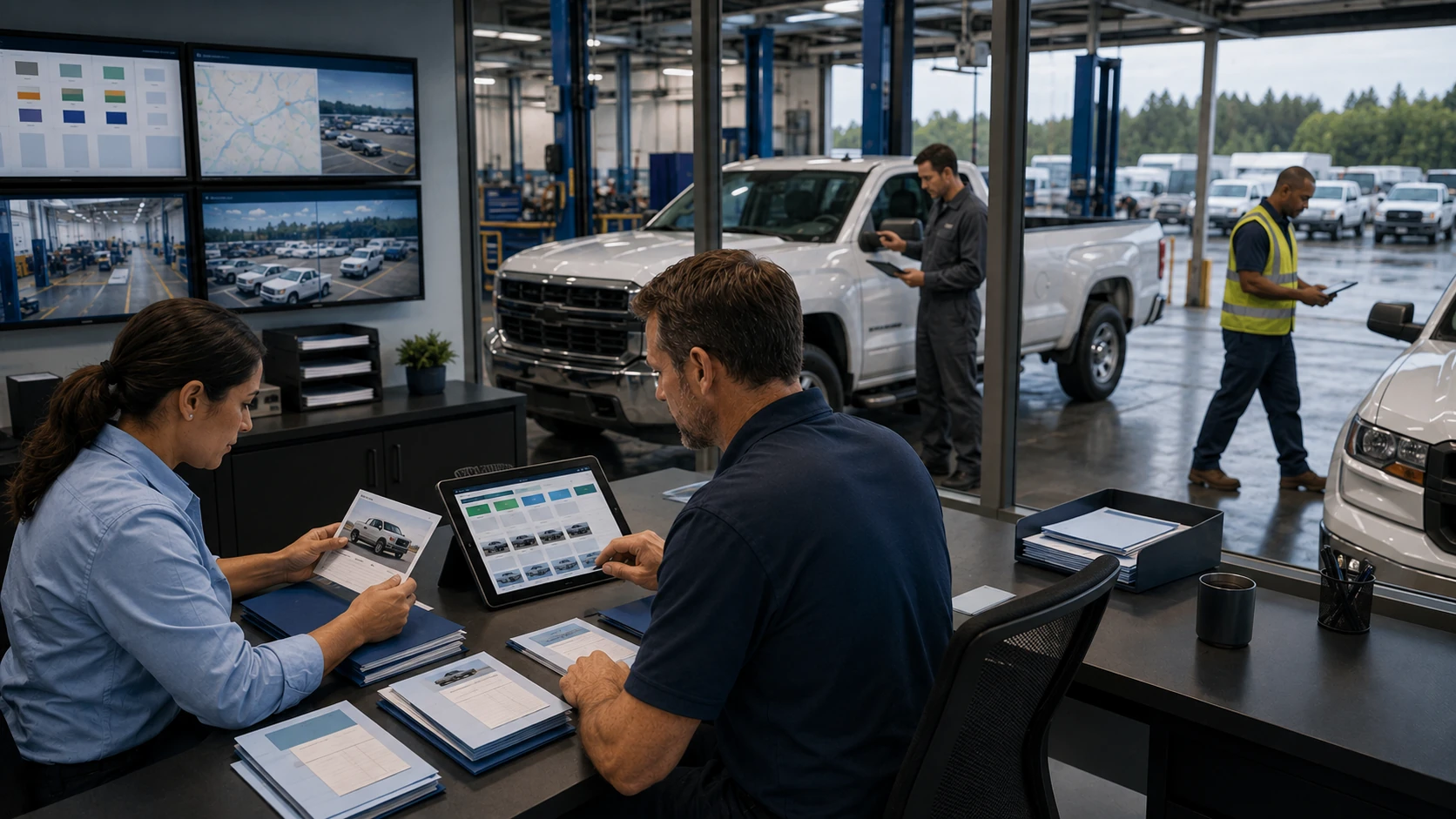
Compliance depth matters too. DOT evidence should connect an inspection defect to its repair and verification. IFTA reporting needs dependable mileage and fuel inputs. Cost analysis should combine labor, parts, vendor invoices, mileage, and downtime at the vehicle and location levels.
Operationally, look for work order management that preserves repair accountability. It should carry the reported issue, approval, labor, parts, and completion evidence through one process while service history tracking preserves the complete record for each vehicle.
Digital inspections that connect defects to action should feed that same process instead of creating another inbox. These capabilities matter because they create one traceable workflow, not because a longer feature list is automatically better.
Making the Switch Without Losing Your Maintenance History
Treat migration as an operations project. Confirm what the current app can export, including attachments, notes, odometer history, service categories, vendors, and user records. Decide which historical fields must remain searchable and which old files can stay in a secure archive.
A clean transition follows this workflow:
- Inventory every data source, owner, format, and required retention period.
- Clean duplicate vehicles, inconsistent unit names, and invalid mileage before import.
- Map old fields to new fields and test a representative group of trucks.
- Validate balances, service dates, open work, attachments, and upcoming PM triggers.
- Train each role on its actual tasks, then run both systems briefly during a slower operating period.
- Set a firm cutover date, lock the old system to read only access, and audit the first month.
Do not measure success only by whether data imported. Confirm that a driver can report a defect, a technician can document the repair, a manager can verify closure, and finance can trace the resulting cost without leaving the new workflow.
Frequently Asked Questions
-
How many vehicles require more advanced fleet software?
There is no universal threshold. A 25 truck fleet across four locations may outgrow a basic app before a 75 truck fleet managed by one team. Score complexity, integrations, permissions, and compliance load alongside vehicle count. -
What is the difference between a maintenance app and a fleet management platform?
A maintenance app usually centers on reminders and service records. A broader platform connects maintenance with inspections, work orders, users, documents, costs, fuel, mileage, and telematics. -
Can a fleet keep its existing telematics provider?
Often, yes. Confirm the new maintenance system supports the provider, required data fields, update frequency, and vehicle identifiers. Test the connection before signing a long contract. -
How much maintenance history should be migrated?
Move the records needed for compliance, warranties, open work, PM forecasting, and cost trends. Older low value records can remain in a searchable archive if retention rules allow it. -
How long should two maintenance systems run in parallel?
A brief period of one to four weeks is often enough for validation and training. Keep it short, assign one system as the official record, and prevent teams from maintaining both indefinitely.