 Miya Bholat
Jul 13, 2026
7 Fleet Maintenance Records That Cut Repair Time

When most people hear "fleet maintenance," they think about oil changes, brake jobs, and tire rotations. What they underestimate is how much time disappears before a technician ever picks up a wrench. Fleet maintenance software exists precisely to close that gap by centralizing the records, workflows, and communication that determine how fast a vehicle moves from flagged to fixed. This post covers the seven specific record types that have the largest direct impact on repair turnaround time and explains exactly why each one matters at the shop level.
Key Takeaways
- Administrative delay, not wrench time, drives most downtime. Research shows 60 to 70% of total vehicle off-road time comes from record searches, approvals, and coordination rather than the actual repair.
- A vehicle identification record is the foundation every other record relies on. Without accurate VIN, specs, and configuration data, technicians waste time confirming the basics before any diagnostic work begins.
- Repair history logs eliminate cold-start diagnosis. When a technician can see three prior brake failures on the same axle, they know exactly where to look instead of starting from scratch.
- Usage-based PM schedules outperform calendar guessing. Mileage and engine-hour triggers catch issues before they become unplanned repairs and protect warranty eligibility at the same time.
- Parts records tied to vehicle history prevent emergency purchases and capture warranty savings. Fleets without connected parts tracking commonly leave 12 to 18% of eligible warranty repairs unclaimed each year.
- DVIRs only save time when they are closed-loop. A driver defect report that auto-generates a work order and attaches photos lets the technician diagnose the issue before the vehicle even arrives at the shop.
- Vendor records turn repeat mistakes into one-time lessons. Tracking turnaround time, cost, and post-repair outcomes by shop makes it easy to match the right vendor to the right repair type every time.
Why Most Repairs Take Longer Than the Actual Fix
The Administrative Gap No One Talks About
Here is a number worth sitting with: 60 to 70% of a vehicle's total off-road time comes from administrative delay, not actual repair work. Technicians spend roughly 32% of their working day on hands-on repairs. The rest goes to hunting down service history, waiting on verbal approvals, identifying the right part number, and chasing vendor availability. This is not a people problem. It is a systems problem, and it plays out the same way across fleets of every size.
Picture a brake job. The wrench time is two hours. But the technician spent 45 minutes tracking down the vehicle's service history across two binders and a shared drive folder. The manager approved the repair verbally over the phone because no one had a digital work order in front of them. The right brake pad was not in stock because the parts record was not linked to work order history, so an emergency purchase added a full day. A two-hour repair became an eight-hour delay. That math repeats itself dozens of times a week across an average-sized fleet.
What Happens When Records Are Scattered or Incomplete
Missing records do not just slow things down. They create cascading failures throughout the repair process. A missing mileage reading means no one knows whether the current issue connects to an overdue PM interval. An unclear symptom description from a prior repair forces the next technician to re-diagnose from zero. A warranty window closes because no one flagged the component's installation date. A vendor with a history of underperforming gets called again because nobody documented the last outcome.
Each of these pain points traces back to a specific record type. The seven records below solve each one directly.
The 7 Fleet Maintenance Records That Save Time During Repairs
1. Vehicle Identification and Configuration Record
This record contains the VIN, make, model, year, engine spec, tire size, axle configuration, and any fleet-specific upfits or modifications. Under 49 CFR 396.3, fleet operators are legally required to maintain this information for every vehicle in service. Beyond compliance, it functions as the cover sheet that every other record references.

Without it, technicians confirm specs by calling the dealer or digging through the glovebox. With it, they pull the correct part number before ordering and confirm compatibility before the vehicle goes on the lift. The fields that matter most for speed are:
- VIN and license plate for fast vehicle lookup
- Engine type and displacement for parts compatibility
- Upfit or modification notes for any non-standard components
- Tire size and load rating for wheel-end repairs
- Fleet-specific asset ID for cross-referencing work orders
2. Repair History Log (Per Vehicle)
A repair history log is a chronological record of every repair performed on a specific vehicle, including the date, reported symptom, diagnosis, work completed, parts used, technician or vendor, and outcome. This is where first-time fix rate lives or dies.
A technician walking into a cold diagnosis has to reconstruct context from scratch. A technician who opens a vehicle's history and sees three brake-related repairs on the left rear axle in eight months knows exactly where to start. That context is the difference between a 90-minute diagnosis and a four-hour one. The vehicle service history feature in fleet management platforms stores this per vehicle so any technician, at any location, starts with full context. The specific fields that compress diagnostic time the most are the prior symptom description, what the last technician found, and whether the repair resolved the issue or recurred.
3. Preventive Maintenance Schedule With Mileage Triggers
A PM schedule built on calendar intervals alone is a guess. A PM schedule built on mileage, engine hours, and vehicle-specific usage patterns is a prediction. The gap between those two approaches is where most unplanned breakdowns hide.
When a vehicle enters the shop and the PM record is current, the technician knows precisely what to inspect, in what order, and at what threshold. There is no guesswork about whether the vehicle is due for a filter, fluid, or inspection. Usage-based fleet preventive maintenance schedules also protect warranty eligibility. OEMs now routinely require documented PM compliance before approving warranty claims. A missed or undocumented PM interval does not just cause a breakdown; it can invalidate the coverage that was supposed to pay for the fix. For fleets running mixed vehicle types, tracking PM intervals by hours versus miles is worth understanding in depth, as the right interval type varies significantly by application.
4. Parts and Inventory Record Tied to Vehicle History
Every part installed on a vehicle should have a record: part number, vendor, installation date, cost, and expected service life, linked directly to that vehicle's work order. Without this linkage, technicians order parts blind and warranty eligibility gets discovered after the repair is already billed.
With it, the workflow changes entirely. The technician opens the vehicle file, sees the brake caliper was installed 14 months ago by a specific vendor with an 18-month warranty, and submits a warranty claim before authorizing a single labor hour. Fleets without connected parts tracking leave an estimated 12 to 18% of eligible warranty repairs unclaimed annually. That is a significant number across a fleet of 50 or more vehicles. The parts inventory management software that links parts records to vehicle history also flags components approaching end of life so they can be pre-ordered before a breakdown forces an emergency purchase at retail pricing.
5. Inspection Reports and DVIR Records
Driver Vehicle Inspection Reports are the earliest signal a fleet has that something is wrong. Under 49 CFR 396.11, commercial drivers are required to submit defect reports before and after every trip. The question is not whether DVIRs exist; it is whether they are connected to anything that acts on them.
A DVIR that sits in a paper binder does nothing. A DVIR that automatically generates a work order, attaches driver-submitted photos, and routes it to the right technician means the shop can begin diagnosis before the vehicle arrives. The digital vehicle inspection app closes the loop from defect report to repair sign-off in one connected workflow. The FMCSA also requires certification that reported defects have been repaired or determined not to need repair before the vehicle returns to service. Fleets that break this chain are not just slow; they are audit exposure.
6. Warranty and Coverage Record Per Component
Most fleets track vehicle purchase dates. Far fewer track warranty coverage at the component level. That gap costs real money on every repair cycle.
A warranty record contains the start date, mileage limit, expiration date, OEM claim requirements, and prior claims filed for every major component on a vehicle. When this record is checked at the moment a work order opens, coverage status is visible before any labor is authorized. Without it, fleet managers discover missed warranty windows weeks later when the claim deadline has already passed. OEM submission windows typically run 30 to 60 days post-repair. Reconstructing documentation after the fact to file a late claim takes more time than it would have taken to check coverage upfront. Storing warranty records alongside the vehicle document management system means nothing gets missed at the moment it matters most.
7. Vendor and Outsourced Repair Record
Every repair handled by an outside shop should generate a record: vendor name, date, work performed, cost, promised and actual turnaround time, outcome, and whether the same issue recurred within 30 to 90 days. Over time, this record set becomes a vendor performance database.
If one shop consistently misdiagnoses drivetrain issues or charges 40% more than market rate for the same repair type, the data shows it. Fleets that track this information stop defaulting to whoever picks up the phone first and start routing specific repair types to the vendors who perform them best. There is also a legal dimension here. Even when maintenance is outsourced, the fleet is responsible for maintaining documentation of what was done. A vendor invoice that reads "service performed" is not a maintenance record. During a DOT audit, that gap falls on the fleet operator, not the vendor. Connecting outsourced repair records to the fleet maintenance work order software ensures documentation accountability regardless of where the work was performed.
What Happens When All 7 Records Are Connected in One System
The value of each individual record is real. The value of all seven connected in a single vehicle file is a different order of magnitude. When records live in separate spreadsheets, email inboxes, and filing cabinets, every repair requires someone to manually assemble context before work can begin. That assembly is the administrative delay. It is where the 60 to 70% goes.
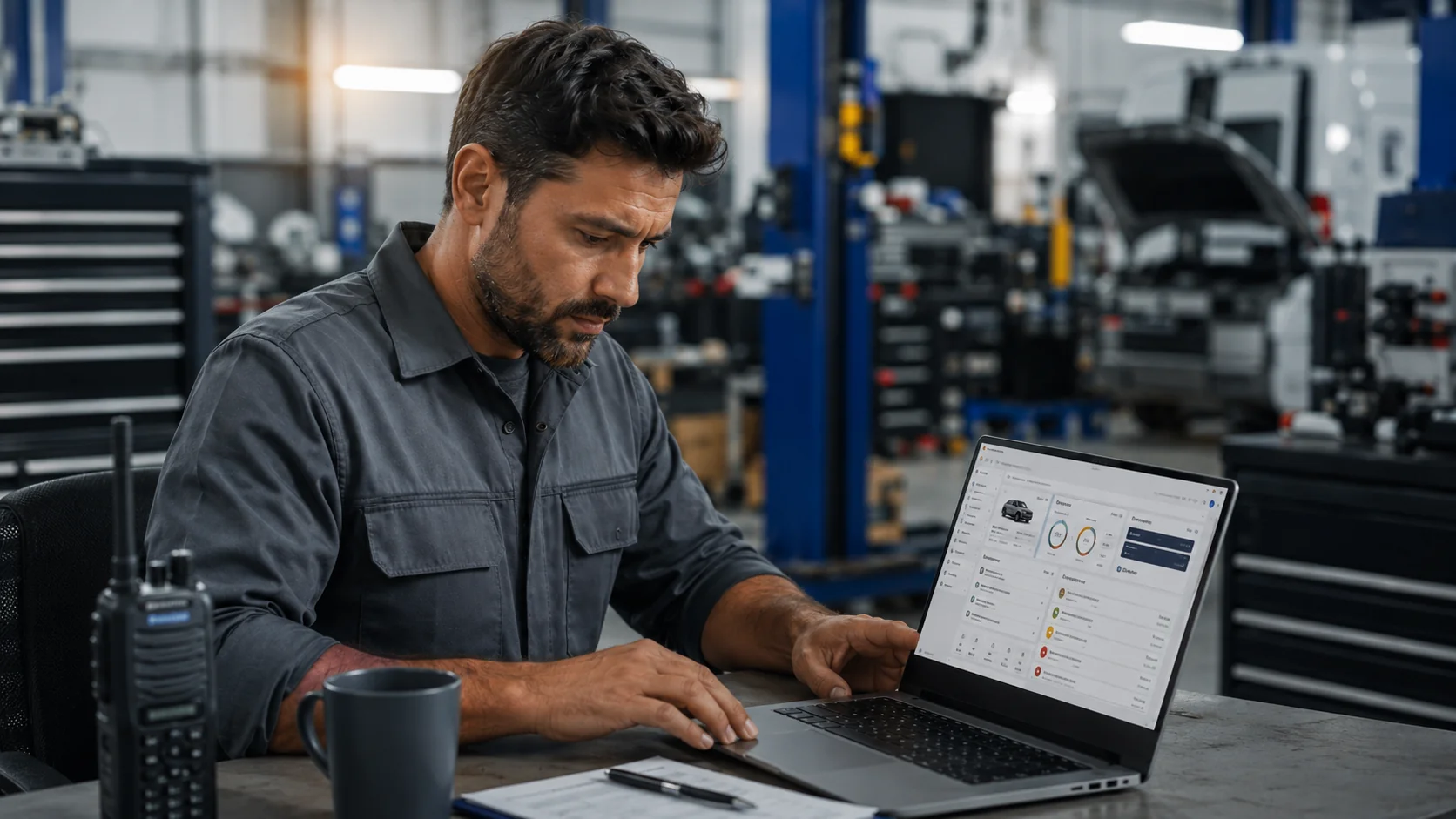
When records are linked, the technician opens one vehicle file and sees prior repairs, pending PM, parts history, warranty status, open DVIRs, and vendor notes at the same time. The diagnostic phase shrinks because the context is already there. Automated workflows in connected platforms compress repair turnaround by an estimated 25 to 40% compared to manual record-keeping environments. The platform connects repair requests, work orders, service records, costs, documents, and status updates in one maintenance record so managers and technicians are never starting from zero. If your fleet is still running on spreadsheets, the guide on transitioning from manual logs to fleet maintenance software walks through exactly how to make that move without disrupting active operations.
How These 7 Records Connect: At-a-Glance
| Record Type | Primary Time-Saver | Compliance Link |
|---|---|---|
| Vehicle ID and Configuration | Eliminates parts confirmation delays | 49 CFR 396.3 |
| Repair History Log | Removes cold-start diagnosis | Internal SOP |
| PM Schedule with Mileage Triggers | Prevents unplanned breakdowns | OEM warranty compliance |
| Parts and Inventory Record | Captures warranty before labor starts | Vendor warranty terms |
| DVIR and Inspection Reports | Pre-arrival diagnosis from driver defect reports | 49 CFR 396.11 / FMCSA |
| Warranty and Coverage Record | Stops missed claim windows | OEM submission deadlines |
| Vendor and Outsourced Repair Record | Routes repairs to the right shop first | DOT audit documentation |
How to Know If Your Current Records Are Slowing Down Repairs
This is not a setup checklist. It is a diagnostic. If any of the following patterns look familiar, the record system is generating administrative repair time rather than cutting it.
Watch for these signals in your current operation:
- Vehicles regularly sit one to two days before repair work actually begins, not because parts are unavailable but because no one has the vehicle's history in front of them yet.
- Major repair costs show up on monthly reports rather than triggering manager review in real time, which means the approval lag is baked into every repair cycle.
- Technicians ask the same diagnostic questions on repeat repairs for the same vehicle, which indicates the prior repair outcome was never documented in a way anyone can find.
- Warranty claims require a documentation hunt after the repair is already complete and billed, meaning coverage was not checked when the work order opened.
- Vendor invoices use phrases like "service performed" or "general maintenance" without itemized detail, leaving the fleet exposed during a DOT review.
- PM compliance is tracked by calendar date rather than mileage or engine hours, which means some vehicles are being serviced too early and others are running past their actual service intervals.
If more than two of these apply, the record system is the bottleneck. The repairs themselves may be efficient. The time before and after them is not. Understanding how to track fleet maintenance without adding staff overhead is a useful starting point for building the right record structure from the ground up.
Frequently Asked Questions
-
What are the most important maintenance records for speeding up fleet repairs?
The repair history log, mileage-triggered PM schedule, and parts record tied to vehicle history have the most direct impact on turnaround time. Together they eliminate cold-start diagnosis, prevent unplanned breakdowns, and surface warranty coverage before labor is ever authorized. -
How long should fleet maintenance records be kept?
Federal regulations under 49 CFR 396.3 require a minimum of 14 months, though OEM warranty terms and state rules often demand longer retention windows. For most fleets, keeping records for the life of the vehicle plus three years covers virtually every audit or claim scenario. -
Can missing maintenance records void a warranty claim?
Yes. OEMs now require documented PM compliance as a condition of approval, and gaps in service history are the most common reason warranty claims get denied even when the failure is clearly a manufacturing defect. -
What is a closed-loop fleet maintenance system?
It is a workflow where every step connects to the next automatically: a driver DVIR generates a work order, the technician closes it, and the closure updates service history and PM schedules without any manual handoff. The FMCSA requires certification that reported defects are resolved before a vehicle returns to service, and a closed-loop system makes that automatic. -
How does a repair history log reduce repeat repairs?
When a technician can see that the same component has failed three times in 12 months, they investigate the root cause instead of replacing the part again. Logging repair outcomes, not just repair actions, is what actually improves first-time fix rate over time.