 Miya Bholat
May 29, 2026
7 School Bus Fleet Problems That Delay Morning Routes
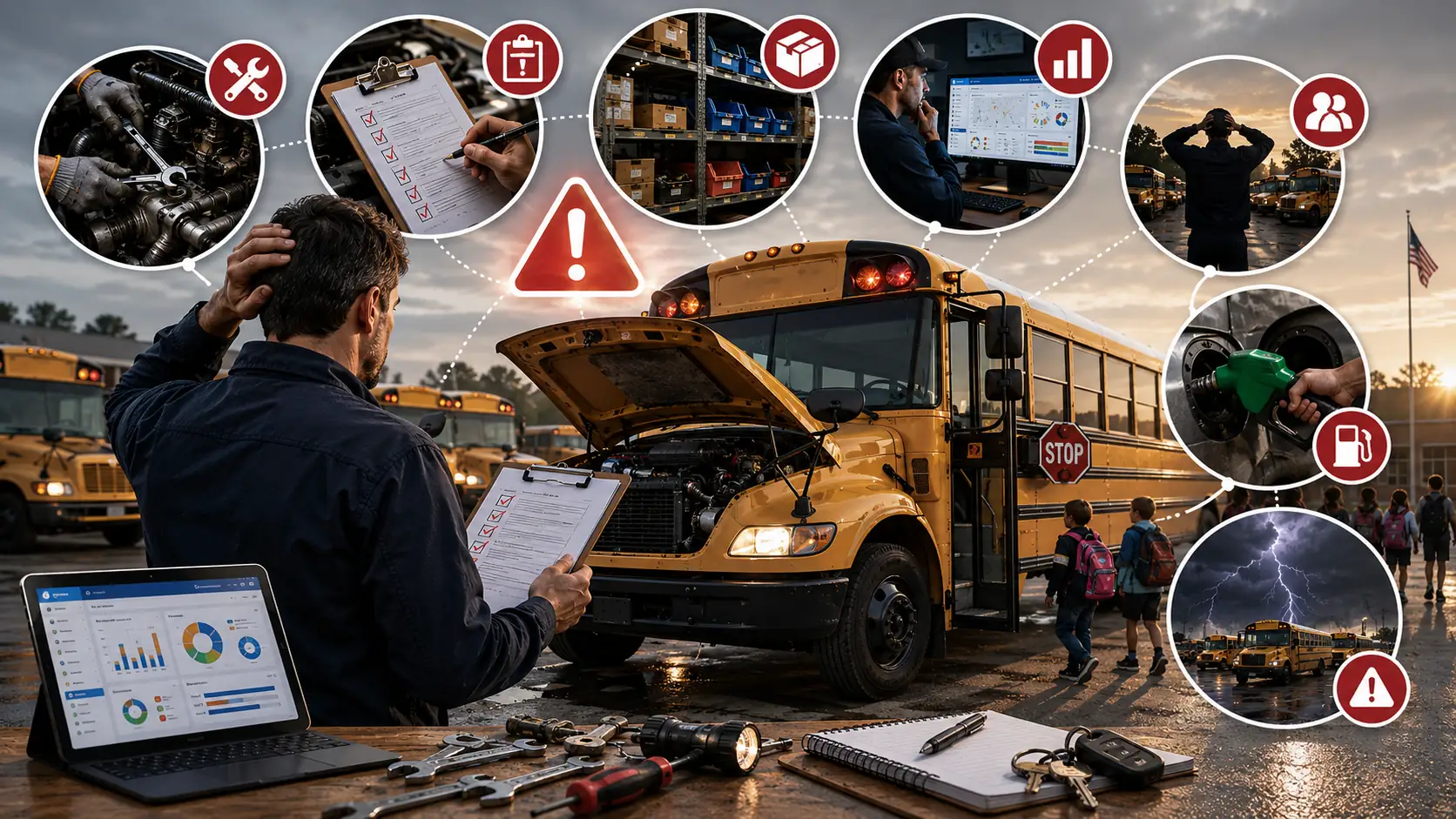
School transportation departments rarely deal with random route delays. Most late buses come from maintenance gaps, weak communication, or poor operational visibility that slowly build over time. Fleets that use organized fleet management software alongside structured maintenance processes usually identify these problems before buses ever leave the yard. School districts managing growing fleets also rely on systems designed specifically for school bus fleet management operations so transportation teams can reduce disruptions during the busiest hours of the day.
A delayed school bus affects far more than a pickup schedule. Parents call transportation offices immediately, dispatchers reshuffle routes under pressure, drivers lose time recovering schedules, and students arrive late to class. Most of these situations can be prevented when fleets track inspections, maintenance schedules, inventory, fueling activity, and route readiness in one organized workflow instead of scattered spreadsheets or verbal updates.
Key Takeaways
-
Missed preventive maintenance creates avoidable morning breakdowns
School buses that miss scheduled maintenance checks are far more likely to fail before routes begin. -
Weak pre trip inspection processes slow down dispatch decisions
Drivers need clear digital workflows so defects reach mechanics and dispatch immediately. -
Parts shortages leave buses parked during critical route hours
Poor inventory tracking causes fleets to wait on parts instead of preparing buses in advance. -
Limited visibility into fleet status leads to poor route planning
Transportation teams struggle when they cannot quickly see which buses are safe and ready. -
Driver shortages create chain reactions across multiple routes
Last minute substitutions often delay student pickups and overload dispatch teams. -
Fuel management issues still delay school transportation operations
Low fuel levels and inconsistent fueling records create preventable route interruptions. -
Reactive maintenance culture compounds every other fleet problem
Fleets that only fix issues after breakdowns usually experience more downtime and higher route disruption rates.
Why Morning Route Delays Cost More Than Just Time
A single delayed school bus route can create problems across an entire district within minutes. When buses arrive late, schools deal with attendance inconsistencies, missed breakfast programs, classroom disruptions, and parent complaints before the first period even starts. Transportation departments also face pressure from district leadership when delays become recurring rather than occasional.
Morning delays also increase labor costs. Drivers may exceed scheduled hours while dispatchers spend extra time coordinating replacements, rerouting buses, or responding to parents. Mechanics often stop planned work just to handle emergency repairs before routes begin. According to multiple transportation studies, preventable maintenance issues account for a significant portion of unexpected school bus downtime every year, especially in fleets still relying on manual maintenance tracking.
Many fleets underestimate the reputation impact as well. Parents expect school transportation to operate consistently every morning. Repeated delays create distrust in the transportation department even when the underlying problems are operational rather than driver related. Fleets using organized systems similar to the workflows discussed in common fleet management mistakes often reduce these recurring disruptions by identifying weak points earlier.
The 7 School Bus Fleet Problems Behind Most Morning Delays
1. Missed or Overdue Preventive Maintenance
Many school transportation departments still manage maintenance schedules through whiteboards, spreadsheets, or paper logs. That works for a small fleet until schedules get busy, buses rotate routes, or staffing changes occur. Once maintenance tracking becomes inconsistent, overdue inspections and service intervals start slipping through unnoticed.
A missed preventive maintenance task rarely causes problems immediately. The issue builds quietly until a driver discovers a dead battery, worn brakes, fluid leak, or electrical issue minutes before route departure. Morning route failures often trace back to maintenance that should have happened days or weeks earlier.
Fleets using automated preventive maintenance scheduling software can tie maintenance intervals directly to mileage, engine hours, or calendar dates. Transportation managers receive reminders before buses become overdue instead of discovering problems during dispatch.
Operations teams reviewing how fleet managers use fleet management software often realize that proactive maintenance tracking removes much of the uncertainty that creates early morning scrambling.
2. Failed Pre Trip Inspections With No Clear Process
Drivers identify problems every morning, but many fleets still lack a structured process for what happens next. A driver may report brake concerns verbally while another leaves a handwritten note inside the bus. Dispatchers then spend valuable time trying to confirm whether the vehicle is safe to operate.
This breakdown slows every decision. Mechanics may not receive the issue quickly enough, replacement buses may not get assigned immediately, and routes begin falling behind before students are even onboard.
Digital inspection systems help eliminate this confusion. With digital vehicle inspection tools, drivers can submit defects directly from mobile devices while mechanics and dispatch teams receive immediate alerts. That creates faster decisions during the busiest operational window of the day.
Strong inspection workflows usually include:
- Required inspection categories before route approval
- Photo documentation for defects
- Automatic notifications for failed inspections
- Clear severity prioritization
- Timestamped inspection records
Transportation teams managing large fleets often improve accountability after moving away from paper inspections and verbal reporting.
3. Parts and Inventory Gaps That Ground Buses
Many school fleets do not realize they have inventory problems until a bus needs a repair before morning dispatch. A mechanic may identify a failed component quickly, but if the replacement part is unavailable, the bus stays parked regardless of how minor the issue is.
Reactive ordering creates constant risk. Fleets that only purchase parts after failures occur usually experience more route delays because school transportation operates on extremely tight morning timelines.
Inventory tracking systems help transportation departments monitor usage trends and reorder critical components before stock runs low. Using parts inventory management software also improves visibility into frequently used components across the fleet.
4. Poor Visibility Into Which Buses Are Road Ready
Some transportation departments still rely on phone calls, paper binders, or separate spreadsheets to determine which buses are available each morning. That approach slows dispatch decisions and increases the risk of assigning routes to buses with unresolved issues.
Fleet managers need immediate visibility into:
- Open work orders
- Failed inspections
- Upcoming maintenance
- Fuel status
- Driver assignments
- Vehicle availability
Without centralized visibility, dispatch teams spend the busiest hour of the day gathering information manually instead of making fast operational decisions.
Using a centralized fleet reports and dashboard system allows transportation teams to see fleet readiness from one screen. Dispatchers can quickly identify which buses are safe, serviced, fueled, and available before routes begin.
Districts scaling operations often experience the same challenges discussed in managing fleet operations without spreadsheets once fleet complexity increases.
5. Driver Shortage and Last Minute Substitutions
Even a perfectly maintained school bus cannot complete a route without a driver. Driver shortages continue affecting school transportation departments across the country, especially during illness spikes, substitute shortages, or seasonal turnover periods.
Last minute substitutions create operational confusion quickly. Dispatch teams must locate available drivers, confirm route familiarity, communicate schedule changes, and sometimes combine routes with limited notice. Every adjustment increases the chance of delayed pickups.
Transportation departments improve response times when driver assignments, communication, and route information stay organized within centralized systems. Using tools similar to fleet user and driver management software helps fleets manage permissions, driver records, and operational coordination more efficiently.
6. Fuel Management Failures
Fuel related delays still happen more often than many districts admit. Drivers may discover low fuel levels before departure while dispatchers assume buses were fueled after prior routes. Inconsistent fueling records create avoidable operational mistakes.
A bus running low on fuel during morning routes creates immediate disruption. Drivers must stop unexpectedly, routes fall behind schedule, and parents begin calling transportation offices within minutes.
Fleets improve consistency by tracking fueling activity digitally rather than relying on handwritten logs or verbal confirmations. Using fleet fuel management software allows transportation teams to monitor fuel usage, fueling schedules, and operating costs more accurately.
Transportation departments also identify broader inefficiencies through operational reviews similar to those discussed in information fleet managers should track daily weekly and monthly.
7. Reactive Maintenance Culture Instead of Proactive Systems
The largest problem behind school bus route delays is not one isolated failure. It is a reactive maintenance culture that waits for breakdowns before taking action.
Reactive fleets constantly operate under pressure. Mechanics prioritize emergency repairs over planned maintenance while dispatchers regularly adjust routes around unavailable vehicles. Drivers lose confidence in vehicle reliability because problems repeat frequently.
Proactive fleets operate differently. They monitor inspection trends, track recurring failures, review downtime patterns, and address issues before buses fail during morning dispatch.
Transportation departments moving toward proactive operations often focus on:
- Scheduled preventive maintenance compliance
- Digital inspection accountability
- Inventory forecasting
- Fleet wide maintenance visibility
- Standardized communication workflows
Many of the operational problems outlined in problems fleet management software solves become easier to control once fleets stop relying on reactive processes alone.
How to Build a Pre Route Readiness Checklist That Actually Works
Strong morning readiness processes involve drivers, mechanics, dispatchers, and fleet managers working through the same operational workflow every day. Paper forms and verbal communication rarely scale across large school transportation departments because information gets delayed or lost.
A structured digital workflow allows transportation teams to identify problems before buses leave the yard while keeping accountability visible across departments.
What to Include in a Driver Pre Trip Inspection
A proper pre trip inspection should cover both safety and operational readiness before routes begin each morning.
Key inspection areas should include:
- Brake condition and warning indicators
- Tire pressure and visible tire damage
- Exterior lights and emergency signals
- Mirrors and windshield visibility
- Fluid levels and visible leaks
- Emergency exits and safety equipment
- Fuel level confirmation
- Camera and communication system checks
Many fleets also use vehicle document management systems to organize inspection records, registration documents, and compliance paperwork digitally.
What Happens After a Defect Is Flagged
This is where many school transportation departments lose valuable time. Drivers report problems, but nobody owns the next step clearly enough.
A strong workflow should move information quickly from driver to mechanic to dispatcher without relying on verbal relays. Once a defect is submitted, mechanics should evaluate severity immediately while dispatch teams determine whether the route requires a replacement bus.
Closed loop maintenance workflows using fleet maintenance work order systems help ensure defects remain visible until resolved rather than disappearing into paper notes or disconnected spreadsheets.
The Role of Fleet Maintenance Software in Preventing Route Delays
Modern fleet maintenance software helps transportation departments organize operations before problems create route disruptions. The goal is not simply digitizing paperwork. The goal is improving visibility, accountability, and response speed across the entire transportation operation.
Systems designed for fleet operations typically help school districts:
- Automate preventive maintenance reminders
- Track inspections digitally
- Monitor parts inventory levels
- Manage work orders centrally
- View fleet readiness from one dashboard
- Store service history records
Using tools like vehicle service history tracking allows mechanics and transportation managers to review recurring repair patterns before failures become route delaying breakdowns.
Transportation teams evaluating why fleet management systems break in operations often discover that disconnected maintenance data is creating operational blind spots across departments.
What Fleet Managers Can Do This Week to Reduce Delays
Fleet managers do not need a complete operational overhaul to start improving route reliability. Small process improvements often reduce morning disruptions quickly.
- Review all overdue preventive maintenance tasks across the fleet
- Standardize pre trip inspection reporting procedures
- Audit inventory levels for commonly replaced parts
- Identify buses with recurring breakdown patterns
- Confirm fuel tracking procedures are consistent across drivers
- Create a daily fleet readiness review before morning dispatch
Even modest operational visibility improvements can significantly reduce the last minute confusion that delays school bus routes every morning.
Frequently Asked Questions
-
What are the most common reasons school buses are late in the morning?
The most common causes include missed maintenance, failed inspections, driver shortages, fuel issues, and unavailable replacement parts. Many delays happen because transportation departments lack centralized visibility into fleet readiness before routes begin. -
How do I set up a pre trip inspection process for my school bus fleet?
Start with a standardized checklist covering brakes, tires, lights, fuel, mirrors, fluid levels, and emergency equipment. Digital inspection systems work better than paper forms because they notify mechanics and dispatch teams immediately when drivers report defects. -
Can fleet maintenance software reduce school bus breakdowns?
Yes. Fleet maintenance software helps transportation departments schedule preventive maintenance, track inspections, organize repairs, and monitor recurring issues before buses fail during active routes. -
What should a school bus pre trip checklist include?
A strong checklist should include tire checks, brake inspections, emergency exits, warning lights, mirrors, fuel levels, communication systems, fluid levels, and visible exterior damage. The goal is identifying safety or operational issues before buses leave the yard. -
How do I manage school bus maintenance schedules across a large fleet?
Large fleets usually manage maintenance more effectively with automated scheduling systems tied to mileage, engine hours, or time intervals. Centralized maintenance dashboards also help transportation teams monitor upcoming service requirements across all vehicles.