 Miya Bholat
May 28, 2026
8 Construction Fleet Decisions Hurt by Scattered Data

Construction fleets struggle with scattered information because maintenance records, inspections, fuel costs, work orders, and dispatch updates often live across disconnected spreadsheets, paper logs, and separate apps. The result is slower decisions, higher downtime, and rising operating costs. A centralized fleet management software platform helps construction teams connect maintenance, inspections, cost tracking, and vehicle availability in one place so managers can make decisions with current data instead of assumptions.
Many companies in the construction fleet management industry already collect huge amounts of operational data every day, but fragmented systems make that information difficult to use in real time. When fleet data becomes centralized, managers can quickly identify overdue maintenance, track true vehicle costs, reduce downtime risk, and improve equipment utilization across multiple job sites without chasing paperwork or updating disconnected spreadsheets manually.
Key Takeaways
-
Scattered fleet data creates expensive blind spots
Construction fleets often store maintenance records, inspections, fuel receipts, and dispatch updates in different systems that do not communicate with each other. -
Downtime costs rise quickly when maintenance data is incomplete
Missing service history and delayed inspections increase the risk of breakdowns that can cost hundreds or even thousands of dollars per hour on active job sites. -
Fleet managers make critical decisions without full visibility
Preventive maintenance scheduling, repair budgeting, dispatching, and compliance tracking become guesswork when data stays fragmented. -
Spreadsheets create compounding operational errors
One missed update in a manual spreadsheet can affect repair scheduling, asset availability, and maintenance planning across the fleet. -
Construction fleets often use too many disconnected tools
Fuel systems, inspection logs, GPS tracking platforms, and work order processes frequently operate separately instead of sharing information. -
Centralized fleet data improves speed and confidence
Fleet managers can see vehicle status, maintenance history, inspection results, and operating costs from one dashboard instead of multiple files. -
The best transition happens gradually
Most fleets improve operations faster when they centralize maintenance and inspections first before expanding into other workflows.
Why Construction Fleets Are Drowning in Data But Starving for Insight
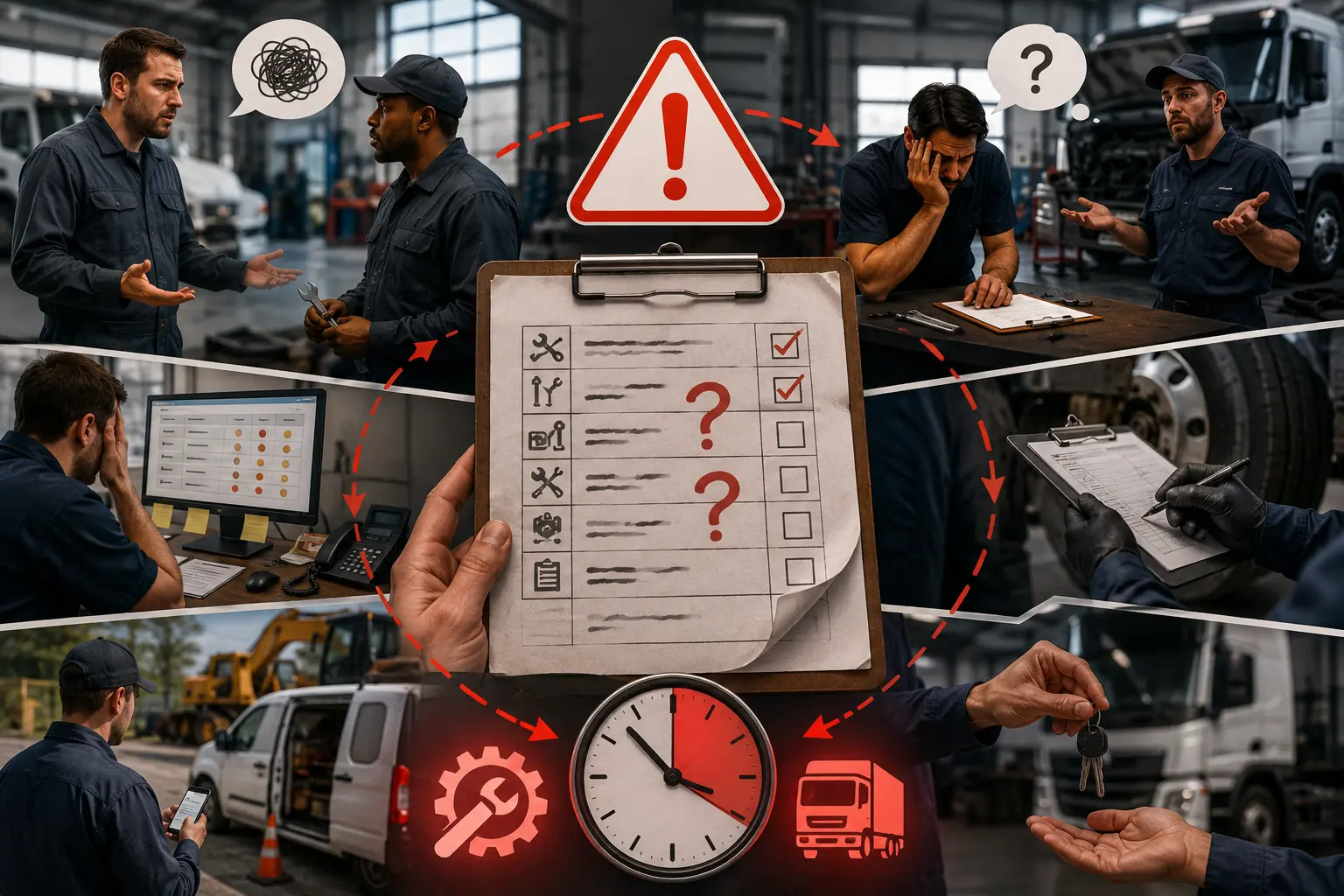
Construction fleets generate enormous amounts of information every day. Drivers complete inspections before shifts. Technicians log repairs. Supervisors track fuel usage. GPS systems capture location data constantly. Equipment managers monitor utilization across multiple job sites. The problem is not a lack of information. The problem is that every piece of information lives somewhere different.
Many fleet managers still rely on spreadsheets, email threads, handwritten inspection sheets, shared drives, and disconnected apps to manage operations. A maintenance issue reported in the field may never reach the shop until days later. A vehicle marked available in one spreadsheet might already be scheduled for service somewhere else. Managers spend more time searching for information than using it.
This problem becomes even worse as fleets grow. Companies managing vehicles across several projects often experience the same operational issues discussed in managing fleet operations without spreadsheets because disconnected systems slow down communication and decision making across departments.
Construction companies are not dealing with a knowledge problem. They are dealing with a visibility problem.
The Real Cost of Disconnected Fleet Data in Construction
Disconnected fleet data directly affects profitability. Every delayed repair, unnecessary overtime hour, and missed preventive maintenance interval increases operating costs. Construction fleets already work in high pressure environments where downtime can stop crews, delay projects, and create scheduling conflicts across multiple teams.
Industry estimates commonly place construction equipment downtime between several hundred and several thousand dollars per hour depending on the machine and project impact. A single breakdown can delay subcontractors, equipment deliveries, and crew schedules simultaneously.
Some of the biggest hidden costs include:
- Emergency roadside repairs instead of planned maintenance
- Idle crews waiting for replacement equipment
- Overtime caused by delayed project timelines
- Duplicate repairs from missing maintenance records
- Underutilized vehicles sitting unused at other locations
- Compliance penalties from incomplete documentation
Fleet managers often notice these issues becoming worse as operations scale, especially when they experience the same growth challenges explained in why fleet operations become harder beyond 20 vehicles.
Downtime You Didn't See Coming
Unexpected downtime rarely appears without warning. Most failures start as smaller maintenance issues that fleets either miss or delay. A missed oil change, overdue inspection, or ignored driver report can eventually create a breakdown during active project work.
The difference between preventive and reactive maintenance costs becomes massive over time. Replacing a worn component during scheduled service may cost a few hundred dollars. Replacing a failed engine after a roadside breakdown can cost thousands while removing a vehicle from service for days.
Using centralized fleet preventive maintenance scheduling tools allows construction fleets to monitor service intervals in real time instead of depending on outdated spreadsheets or memory.
The Spreadsheet Trap
Spreadsheets feel simple at first because they are familiar and inexpensive. The problem is that spreadsheets become outdated the moment someone forgets to update them.
One technician logs a repair in one file. Another manager tracks fuel costs elsewhere. Inspection reports remain on paper inside the truck. Nobody sees the full picture together.
Over time, these disconnected records create operational blind spots:
- Vehicles receive duplicate repairs
- Maintenance costs become difficult to track accurately
- Dispatch teams send unavailable vehicles to job sites
- Managers lose visibility into recurring issues
- Historical maintenance trends disappear
This is one reason many fleets eventually transition away from manual systems after encountering the operational problems covered in spreadsheets versus fleet management software.
8 Construction Fleet Decisions Being Made Without Complete Data
Decision 1: When to Schedule Preventive Maintenance
Preventive maintenance depends on accurate service intervals, inspection data, and vehicle usage history. When records stay scattered across spreadsheets or paper logs, maintenance scheduling becomes inconsistent.
Some vehicles get serviced too early, increasing unnecessary costs. Others get serviced too late, increasing breakdown risk. Centralized equipment maintenance management software helps managers monitor service schedules across the fleet in real time.
Decision 2: Whether to Repair or Replace a Vehicle
Repair versus replacement decisions require complete maintenance history, fuel costs, downtime trends, and recurring repair data. Without centralized records, managers often rely on gut instinct instead of accurate lifecycle data.
Tracking long term operating costs through vehicle service history management creates a much clearer picture of which assets continue delivering value and which ones drain maintenance budgets.
Decision 3: Which Vehicles to Dispatch to Which Job Sites
Dispatching equipment without current condition data creates unnecessary risk. A vehicle might appear available while carrying unresolved inspection issues or overdue maintenance.
Construction fleets using GPS fleet tracking and telematics tools can monitor vehicle location, utilization, and operational status more accurately before assigning equipment to projects.
Decision 4: How to Allocate the Maintenance Budget
Budget planning becomes difficult when repair costs, labor hours, and parts expenses remain disconnected across different systems.
Managers need visibility into which assets consume the highest repair costs and which preventive investments reduce reactive repairs. Centralized fleet reports and maintenance dashboards help fleets identify long term cost trends faster.
Decision 5: When a Vehicle Is Actually Available
Vehicle availability often exists only in someone's memory or inside outdated spreadsheets. This creates double bookings, idle assets, and project delays.
Construction fleets improve visibility significantly when dispatch teams, maintenance staff, and field supervisors work from the same operational system instead of separate tracking methods.
Decision 6: Whether Drivers Are Completing Pre Trip Inspections
Paper inspections create major communication delays. A driver may report a brake issue Monday morning while the repair team does not receive the paperwork until later in the week.
Digital vehicle inspection reporting systems help fleets surface issues immediately instead of waiting for paperwork to move between departments.
Decision 7: How to Handle a Compliance or DOT Audit
Audits become chaotic when records live across filing cabinets, spreadsheets, emails, and disconnected systems. Managers waste hours searching for inspection reports, maintenance records, and service documentation under pressure.
Centralized vehicle document management systems make audit preparation significantly easier because records stay organized by vehicle and asset.
Decision 8: Whether Your Fleet Is Actually Growing or Shrinking in Value
Construction fleets often underestimate how difficult it is to calculate real fleet value accurately. Asset depreciation, downtime frequency, fuel costs, and maintenance history all affect long term value.
Without centralized data, companies struggle to understand which assets improve profitability and which ones quietly increase operating costs over time.
How Data Silos Form in Construction Fleets And Why They're Hard to Break
Most construction fleets did not intentionally create disconnected systems. These silos formed gradually over years of operational growth.
Different departments adopted different tools. Field teams used paper because it was faster onsite. Managers inherited spreadsheets from previous supervisors. Dispatch teams relied on whiteboards or shared calendars.
As operations expanded, disconnected processes became normal.
The Multi Tool Problem
Many fleets operate across several disconnected systems at once. Common examples include:
- Fuel card portals
- GPS tracking platforms
- Paper inspection forms
- Shared spreadsheets
- Separate work order systems
- Email based maintenance requests
Each system collects useful information, but none provide a complete operational picture together. This operational disconnect appears frequently in fleets struggling with the same issues discussed in how integrated fleet management software connects operations.
Field vs Office Disconnect
The people closest to the equipment often are not the people entering operational data into management systems.
Drivers and operators notice issues first, but delayed communication creates missing context and slower repair response times. When inspection reports stay on paper or updates rely on manual data entry, important maintenance information gets delayed or lost entirely.
What Centralized Fleet Data Actually Looks Like in Practice
Centralized fleet management changes how quickly teams can answer operational questions.
Before centralization, a fleet manager might open three spreadsheets, search emails, and call the maintenance shop just to confirm whether a vehicle is available. After centralization, that same answer appears on one dashboard.
Platforms like AUTOsist help construction fleets consolidate maintenance records, inspections, work orders, service history, and operational reporting into one system instead of multiple disconnected workflows.
Real Time Visibility on Maintenance Status
Fleet managers need immediate visibility into what is due, overdue, and currently under repair.
Centralized fleet maintenance work order software helps teams monitor maintenance progress without chasing technicians or searching through paperwork manually.
Cost Tracking That Actually Follows the Vehicle
True cost tracking requires linking repairs, labor, fuel, inspections, and downtime directly to each asset.
Construction fleets using fleet fuel management systems alongside centralized maintenance tracking can understand operating costs at the vehicle level instead of relying on rough estimates.
How to Start Consolidating Construction Fleet Data Without Disrupting Operations
Most fleets do not need a complete operational overhaul immediately. The best approach usually starts with the highest impact workflows first, especially maintenance tracking and inspections.
A gradual rollout helps teams adapt faster while improving operational visibility immediately.
Construction fleets can start with these practical steps:
- Centralize preventive maintenance schedules first
- Replace paper inspections with digital inspection workflows
- Track all repairs under a single vehicle record
- Standardize how field teams report issues
- Connect fuel, maintenance, and utilization data together
- Train supervisors and technicians using one consistent process
Many fleets begin improving visibility faster after reviewing operational gaps covered in common fleet management mistakes that slow operations.
The Fleet Decisions You Can Make Confidently When Data Is Centralized
When construction fleet data becomes centralized, managers stop making decisions blindly.
Preventive maintenance gets scheduled at the right time. Dispatch teams know which assets are available. Repair budgets become easier to forecast. Inspection issues reach technicians immediately instead of days later.
Fleet managers also gain stronger visibility into:
- Asset utilization trends
- Vehicle downtime patterns
- Maintenance cost increases
- Fuel consumption changes
- Compliance documentation
- Long term fleet value
Construction companies that centralize operational data respond faster, reduce downtime risk, and make more confident decisions across every stage of fleet management.
Frequently Asked Questions
-
What data do construction fleet managers need to make better decisions?
Construction fleet managers need maintenance history, inspection reports, fuel costs, utilization data, vehicle availability status, and repair trends. Centralizing this information helps managers make faster and more accurate operational decisions. -
How much does fleet downtime cost construction companies?
Fleet downtime can cost hundreds or even thousands of dollars per hour depending on the equipment and project impact. Delays often affect crews, subcontractors, and project schedules simultaneously. -
Why do spreadsheets create problems for construction fleets?
Spreadsheets become outdated quickly because they rely on manual updates. Important maintenance information, inspection reports, and repair history often end up scattered across multiple files that do not stay synchronized. -
What is the best way to centralize construction fleet data?
Most fleets start by centralizing maintenance schedules and inspections first. From there, they gradually connect work orders, fuel tracking, service history, and operational reporting into one platform. -
How does centralized fleet data improve maintenance planning?
Centralized systems help managers track overdue services, recurring repairs, inspection defects, and operating costs in real time. This visibility reduces reactive maintenance and improves vehicle uptime.