 Miya Bholat
Nov 11, 2026
Fleet Parts Obsolescence: When Stock Becomes Waste

Fleet parts obsolescence is stock that no longer fits active vehicles, is no longer needed, or is unsafe to install. Control it by matching parts to vehicles, auditing stock when units retire, and recovering value before return windows close. Obsolete stock belongs in fleet cost management because it can drain the budget without reaching a repair bay.
The Massachusetts Office of the State Auditor found in 2019 that Pioneer Valley Transit Authority held 2,521 obsolete parts originally worth $118,257, more than 7% of inventory value. Its bus model had been retired by 2015.
Key Takeaways
- Four causes create waste: Retirements, superseded numbers, expiration, and overbuying strand stock.
- Holding costs continue: Capital, space, handling, insurance, and shrink consume money.
- Retirements trigger audits: Check orphaned parts against remaining active vehicles.
- Keep or clear: Compare likely uptime benefit, holding expense, and potential recovery.
- Prevention takes routine: Link parts to vehicles, review aging, control buying, and document disposal.
What Fleet Parts Obsolescence Really Means
Stock becomes obsolete when it loses its maintenance purpose. A slow moving filter may still be useful; one for a retired engine may not.
Excess, Obsolete and Expired: Three Different Problems
Excess stock still fits but exceeds demand. Obsolete parts inventory fits nothing active or has been superseded. Expired stock may fit but fails age or storage requirements.
| Category | What it looks like in a fleet parts room | Usual fix |
|---|---|---|
| Excess | Cases of filters for active vans | Transfer or freeze buying |
| Obsolete, orphaned | Brake parts for sold buses | Return, sell, or scrap |
| Obsolete, superseded | Old number beside replacement number | Verify interchange and consolidate |
| Expired, shelf life | Aged tires or degraded fluids | Remove and dispose safely |
Do not confuse slow movement with waste. A fleet inventory and parts management process should protect critical spares while exposing unusable stock.
Why Fleets Feel It More Than Dealers
Fleets consume rather than retail parts. S&P Global Mobility reported in 2025 that US light vehicles averaged 12.8 years old and light trucks 11.9 years. These national figures show why equipment generations coexist.

The American Transportation Research Institute's 2026 report put 2025 Class 8 repair and maintenance at $0.215 per mile, up 8.6% from 2024. This includes parts, labor, and roadside service, excluding tires.
The Four Ways Fleet Parts Turn Into Waste
Four common triggers turn usable parts into waste. Each needs a different fix.
Orphaned When Vehicles Retire or Specs Change
When a municipal fleet replaces its last older buses, unique filters, sensors, and brakes can remain unused. The 2019 Massachusetts audit's $118,257 finding demonstrates this risk.
Engine, EV, and telematics changes can orphan stock. Tie reviews to each vehicle replacement decision.
Superseded Part Numbers
A manufacturer replacement number does not necessarily make an older physical part unsafe. Verify approved interchange, fitment, and restrictions first.
If technicians request the new number but old bins remain unlinked, purchasing can buy duplicates. Link approved replacements and consolidate bins.
Shelf Life Expiration
Stored tires, batteries, belts, hoses, fluids, and chemicals degrade. NHTSA's current guidance says some manufacturers recommend tire replacement at 6 to 10 years regardless of treadwear. Check date codes and the manufacturer's instructions.
Rotate suitable supplies first in first out. A maintenance shop spare parts process helps issue older safe stock first.
Overbuying: Bulk Deals, Emergency Orders and Tariff Hedging
A construction fleet buys extra transmissions during shortages, then replaces its trucks. The 2025 Section 232 proclamation's 25% tariff on specified imported medium and heavy duty vehicle parts, effective November 1, 2025 with exceptions, illustrates pressure to buy early.
Check use before retirement, storage, cash, and return terms. Fleet parts bulk buying only works when demand consumes the purchase.
What Dead Stock Really Costs Your Fleet
Dead stock costs more than its purchase price or eventual parts write off. The shelf itself has recurring expenses.
The Holding Cost Formula
Annual holding cost = (inventory value × cost of capital) + storage space cost + counting and handling labor + insurance and shrink.
Capital is cash tied up; storage is shelf space; labor covers handling; insurance and shrink cover protection and losses.
Worked Example: A 60 Vehicle Fleet's Back Shelf
Every input below is an example assumption, replace with your own numbers, not an industry benchmark:
- Stock with no movement for 13 or more months: $27,000.
- Capital rate: 8%, giving $27,000 × 0.08 = $2,160 yearly.
- Storage: 200 square feet × $12 yearly = $2,400.
- Handling: 2 hours monthly × $45 × 12 months = $1,080 yearly.
- Insurance and shrink: 2% × $27,000 = $540 yearly.
Annual cost = $2,160 + $2,400 + $1,080 + $540 = $6,180, or 22.9% of stock value. Three years at that rate cost $18,540, about 69% of the original value, before any write off.
The Keep or Clear Test for a Single Part
Hold value = chance of use before retirement or expiration × (replacement cost + downtime cost avoided). Annual hold cost = part cost × annual holding rate. Clear when hold cost plus recoverable credit lost by waiting exceeds hold value, unless safety or operations require it.
Every input is an example assumption, replace with your own numbers: a $640 module serves two units retiring in 8 months. Use chance: 10%. Avoided downtime: 2 days × $300 = $600. Hold value = 0.10 × ($640 + $600) = $124. One year at 22.9% costs about $147. 80% return credit now = $512, possibly $0 after the window closes. $147 + $512 = $659, exceeding $124, so clear it in this annualized comparison.
How to Spot Obsolete Parts Before They Become Write Offs
Review usage alongside vehicle status. These AUTOsist aging buckets are a suggested framework, not an industry standard.
Set Aging Buckets That Match How Fleets Use Parts
Use months since the last issue to a work order:
- 0 to 6 months: Active, monitor normally.
- 7 to 12 months: Watch, confirm likely demand.
- 13 to 24 months: Review fitment and return options.
- 24 or more months: Clear unless justified as a critical spare.
Exempt documented critical spares with long lead times or severe downtime risk from automatic clearance.
Run an Orphan Audit Against Your Active Vehicle List
Map each part to an active vehicle, equipment type, or PM task. At retirement approval, identify anything with no remaining application.
Parts inventory management records connect locations, issues, and quantities. Check manufacturer fitment before marking parts orphaned.
Red Flags Hiding in Work Order and Purchase Data
These signals can expose a mismatch between recorded stock and real demand:
- Parts received but never issued to a work order.
- Duplicate bins for old and superseded part numbers.
- Repeat emergency purchases despite stock on hand.
- Parts for PM tasks whose intervals changed.
- Quantities unchanged across repeated cycle counts.
The Obsolete Parts Triage: Keep, Move, Return, Sell or Scrap
Check compatibility, safety, supplier returns, and downtime before choosing a disposition:
| Situation | Best move | Why |
|---|---|---|
| Fits active vehicles, but overstocked | Move or freeze reordering | Preserve useful stock without adding more |
| Inside supplier return window | Return | Recover available credit |
| Useful to another fleet or shop | Sell or transfer | Recover value and space |
| Expired or unsafe | Scrap properly | Prevent unsafe installation |
| Critical spare with long lead time | Keep and document | Protect fleet uptime |
Return and Credit Programs
Ask distributors about credit, return windows, packaging conditions, and restocking fees as soon as retirement is approved. Waiting can erase recovery value.
Transfer, Sell or Donate
Check internal locations first, then eligible fleet buyers, shops, salvage buyers, or technical school donations. Record part numbers, quantities, recipients, approvals, and recovered value.
Disposal Rules for Batteries, Fluids and Tires
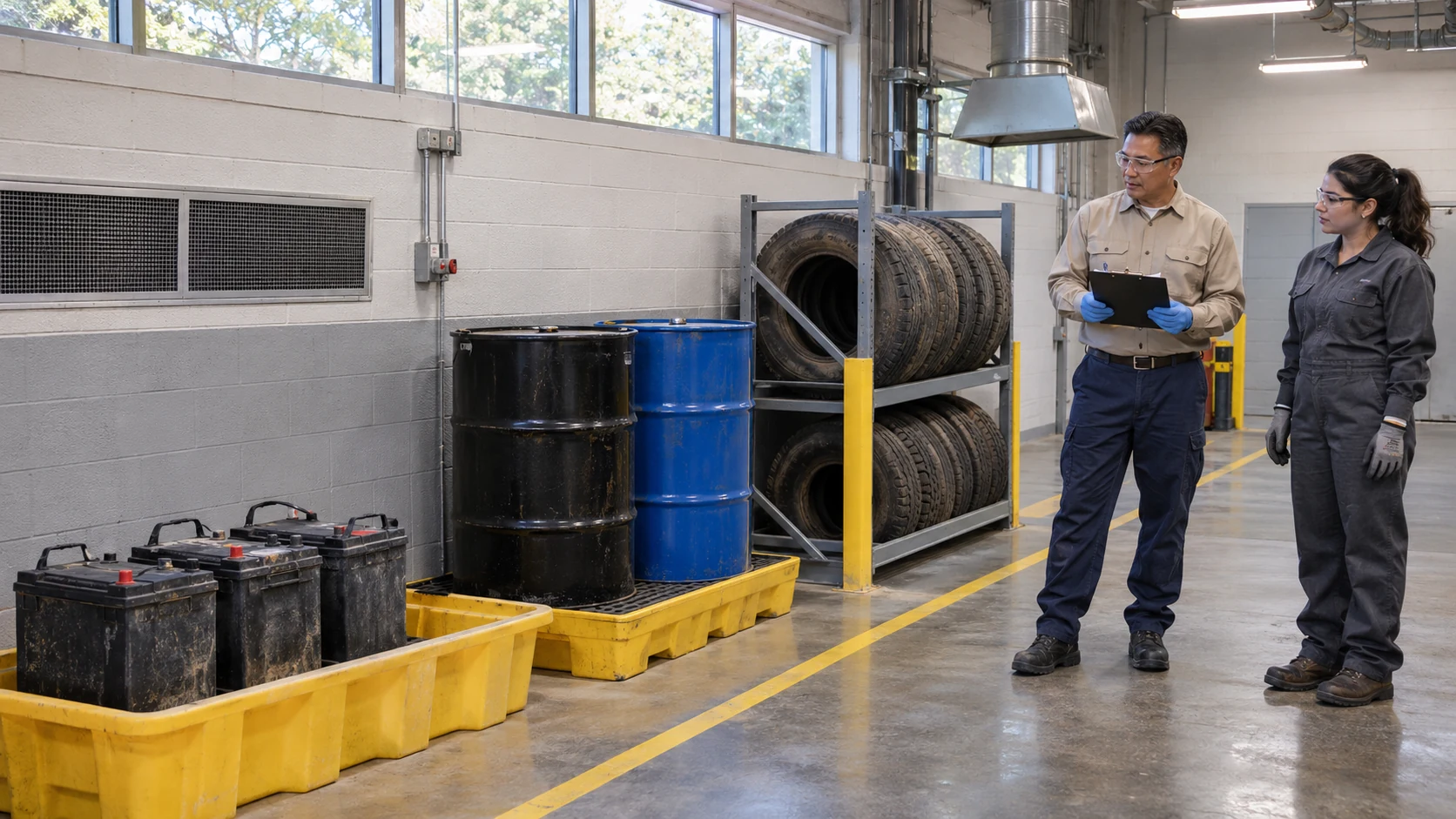
Do not trash hazardous stock. The US EPA's current universal waste requirements cover qualifying batteries; reclaimed lead acid batteries may use separate rules. Check used oil, tire, state, and local procedures.
A Note for Public Fleets
Public fleets may need surplus approvals and records. Federal agencies use GSA processes; state and municipal rules differ.
A 6 Step Workflow to Stop Stock From Becoming Waste
Fleet operations, purchasing, the parts room, and finance should share this routine:
Metrics That Show the Problem Is Shrinking
Track these measures quarterly:
- Obsolete stock value as a percentage of total parts value.
- Value with no issues for 13 or more months.
- Recovery rate on inventory cleared.
- Number of orphaned part numbers.
Use parts inventory turnover for movement analysis; turnover alone does not prove obsolescence.
Before clearing a part, reconcile its last issue date and count against the physical bin.
Software that connects vehicle status, inventory locations, and fleet maintenance work orders helps distinguish dead stock from missing transactions. Your team still approves clearance.
Clearing the Back Shelf Without Risking Uptime
Clear dead stock without sacrificing critical spares. The 2025 US Department of Defense Inspector General audit of Army M88 recovery vehicle parts found unused and excess parts alongside shortages of needed stock. Both problems can coexist.
This week, list parts linked to retired units and check return windows. Protect active vehicles with fleet parts reorder points while clearing stock without a job.
Frequently Asked Questions
-
How do you know if a fleet part is truly obsolete?
Check whether the part fits any active vehicle, equipment type, or maintenance task. Also verify manufacturer replacements and expiration dates. A part with no recent use is not automatically obsolete, especially if it is a critical spare needed to prevent costly downtime. -
Can fleets still use parts with superseded part numbers?
Yes, if the manufacturer confirms the older part remains compatible and approved for installation. Superseded does not always mean unusable. Verify interchangeability before issuing the part, and stop reordering older versions when the replacement is required. -
Should fleets discard parts that have not been used for two years?
Not automatically. Check whether the part still fits active equipment and how difficult it would be to replace. Keep critical spares with long lead times when justified. Review other unused parts for supplier returns, transfers, sales, or disposal. -
Can fleets return unused parts from retired vehicles?
Yes, if the supplier's return policy allows it. Eligibility may depend on packaging, condition, purchase records, and return deadlines. Contact suppliers when vehicle retirement is approved. If returns are unavailable, consider transferring or selling compatible parts. -
How should fleets dispose of obsolete batteries, fluids, and tires?
Use appropriate recycling or disposal services rather than general waste bins. Qualifying batteries follow EPA universal waste or applicable reclamation rules, used oil has separate requirements, and tire disposal rules vary by state. Confirm local regulations and maintain disposal records.