 Miya Bholat
Jun 05, 2026
6 Government Fleet Budget Problems from Poor Coordination
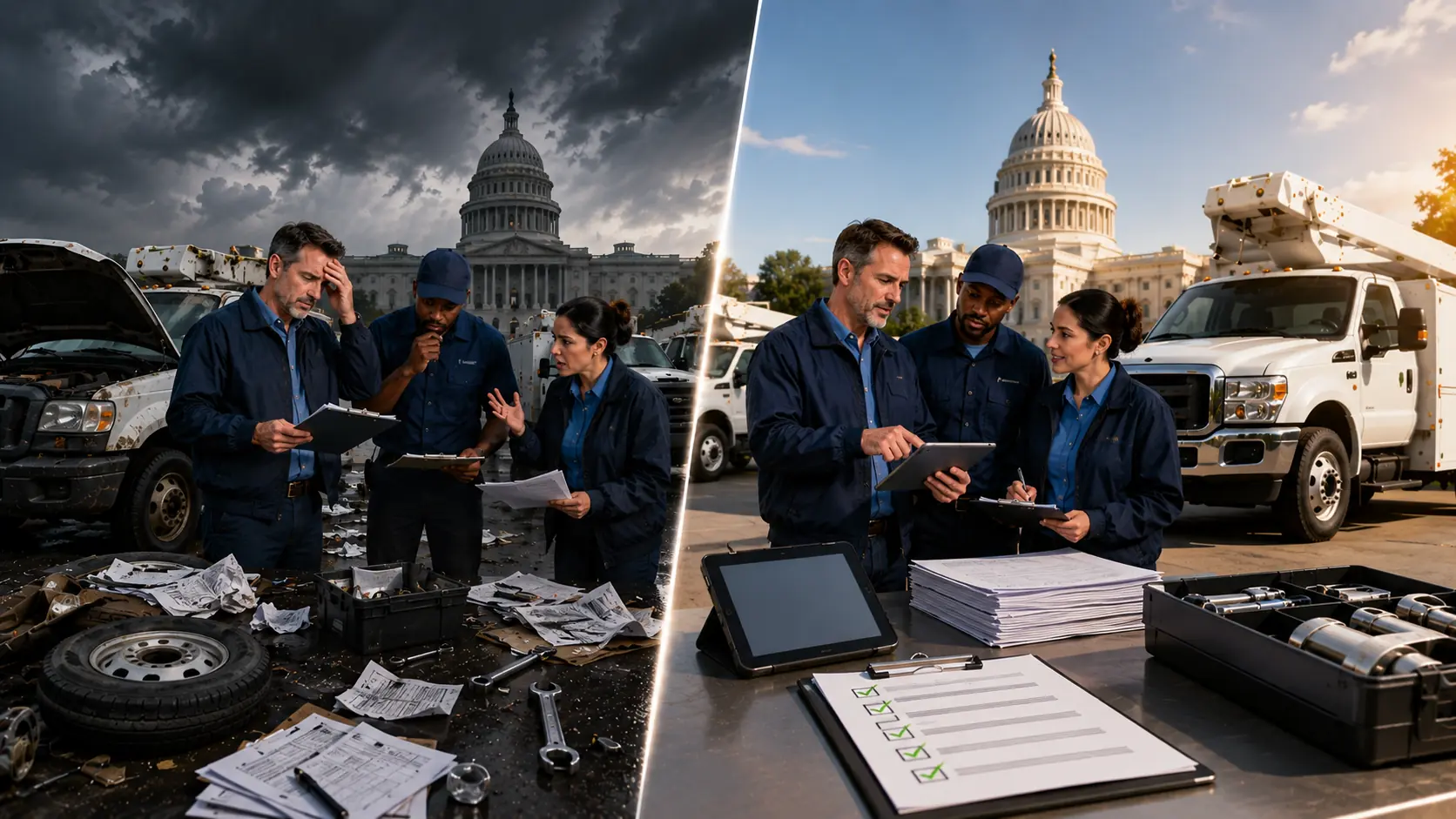
Government fleet budget problems caused by poor coordination usually start when departments manage vehicles, maintenance, fuel, parts, and compliance in separate places. A fleet management software platform helps government fleet managers bring those records into one system, so they can spot duplicate spending, missed service, fuel waste, and budget risk before public funds disappear into preventable costs.
For a government fleet management operation, poor coordination does more than create internal frustration. It weakens accountability. When public works, police, parks, utilities, and administration teams use different spreadsheets or approval processes, leaders lose the clear budget picture they need to plan repairs, justify replacement requests, and control spending.
Key Takeaways
-
Duplicate purchases waste funds
Departments may buy the same parts, tools, or equipment because nobody can see what another team already has. -
Missed preventive service creates reactive repair bills
When maintenance schedules live in separate systems, small services can turn into expensive breakdowns. -
Budget forecasting becomes guesswork
Fleet leaders cannot request accurate funding when vehicle age, service history, fuel use, and utilization data stay scattered. -
Fuel overruns hide inside daily operations
Untracked mileage, inefficient routing, idling, and poor vehicle assignments can quietly drain fuel budgets. -
Procurement delays shift costs into the wrong budget cycle
Late approvals and disconnected purchasing workflows can force rushed orders or push costs into the next fiscal year. -
Compliance misses create unplanned spending
Expired inspections, missing records, and overdue certifications can trigger fines, audits, or emergency vehicle replacement.
Why Government Fleet Budgets Are Especially Vulnerable to Coordination Failures
Government fleets carry a different type of budget pressure than private fleets. A private company mainly answers to ownership, customers, and profit targets.
| Area | Government Fleet | Private Fleet |
|---|---|---|
| Budget approvals | Multiple stakeholders | Fewer decision makers |
| Procurement process | Formal purchasing rules | Faster purchasing decisions |
| Accountability | Taxpayer funded | Profit driven |
| Fiscal year pressure | Use it or lose it budgets | More flexible budgeting |
| Department structure | Multiple departments share fleet resources | Often centralized management |
| Reporting requirements | Audits and public oversight | Internal reporting |
A government fleet answers to taxpayers, finance teams, elected officials, auditors, department heads, and service expectations from the public.
That makes visibility critical. If one department delays maintenance, another ignores inspections, and another stores unused parts, the fleet manager may not see the full cost until budget review season. By then, the agency may already face overtime repair labor, rental costs, delayed services, or emergency procurement.
Government fleets often show these warning signs before spending gets out of control:
- Departments track vehicles in separate spreadsheets.
- Repair records stay with individual teams instead of one central fleet record.
- Parts inventory does not show what is available across departments.
- Fuel reports do not connect to vehicle use or driver behavior.
- Budget requests rely on last year's spending instead of current fleet data.
The Multi Department Coordination Challenge
Many government fleets support public works, police, parks, utilities, inspections, and administrative departments. Each group may have its own vehicles, supervisors, budgets, and service priorities. That structure makes sense operationally, but it creates financial blind spots when nobody owns the full fleet picture.
A public works team may know which dump truck needs repairs, while finance only sees a large parts invoice. A police department may know which vehicles idle heavily, while the fleet manager only sees fuel totals. A parks department may delay a maintenance request because the approval chain feels unclear. Without shared visibility, small decisions across departments become one large budget problem.
This is why many agencies compare spreadsheet based tracking with fleet management software for government fleets when manual coordination starts creating too many gaps.
How Fiscal Year Pressures Amplify Budget Mistakes
Fiscal year deadlines can push government fleets into reactive spending. If departments fear losing unused funds, they may rush purchases near year end. If they lack clear maintenance and replacement data, they may buy parts or equipment based on habit instead of need.
Poor data sharing makes this worse. A department may order tires, batteries, or filters because its own spreadsheet shows low stock, while another department has the same items sitting unused. A centralized view helps fleet and finance teams decide what to buy now, what to delay, and what to plan for the next cycle.
Problem 1 : Duplicate Purchases and Redundant Inventory Caused by Siloed Departments
Duplicate purchasing happens when departments buy the same part, tool, or equipment without checking shared inventory. One department may order a 4,000 dollar replacement part while another department already has that part in storage. If two departments repeat the same mistake, the agency ties up 8,000 dollars in a part it only needed once.
This problem usually does not come from careless spending. It comes from missing visibility. Department heads may not know what exists outside their own storage area. Purchasing teams may only see approved requests, not fleet wide inventory. Fleet managers may discover the duplicate order after the invoice arrives.
A better process starts with shared parts visibility. A parts inventory management system can help teams see available stock, track usage, and reduce unnecessary purchases before procurement approves another order.
Problem 2 : Reactive Maintenance Spending from Missed Preventive Service Windows
Reactive maintenance costs more because the fleet pays after a failure has already disrupted operations. Industry estimates often place reactive maintenance around 3 to 5 times higher than preventive maintenance when emergency labor, towing, downtime, and parts premiums enter the total cost.
In government fleets, missed preventive maintenance often comes from unclear ownership. A driver assumes the department supervisor handles service. The supervisor assumes the central fleet team has the mileage update. The fleet manager never receives the latest odometer reading. The vehicle keeps working until a small service need becomes a major repair.
| Cost Category | Preventive Maintenance | Reactive Maintenance |
|---|---|---|
| Oil service | $150 | Not performed |
| Emergency towing | $0 | $300 |
| Repair labor | Planned labor rate | Premium emergency labor |
| Vehicle downtime | Minimal | Several days |
| Rental vehicle | $0 | $750 |
| Total estimated cost | $150 | $5,000+ |
A fleet preventive maintenance scheduling system helps reduce that risk by creating service reminders based on mileage, time, or usage. It removes the common excuse that nobody knew a vehicle was due.
The Real Cost of a Missed Oil Change or Inspection
Consider a city vehicle that misses an oil change and a routine inspection. The original service may have cost 150 dollars. Because the service window passed, the vehicle later needs towing, engine diagnostics, emergency labor, and several days out of service.
The budget impact can grow quickly:
- Preventive oil service: 150 dollars.
- Emergency tow: 300 dollars.
- Engine repair: 3,500 dollars.
- Rental vehicle for five days: 750 dollars.
- Staff time spent coordinating repairs: 400 dollars.
That missed service can turn a small planned cost into more than 5,000 dollars in unplanned spending. A complete vehicle service history record helps fleet teams prove what happened, identify repeat misses, and stop the same pattern from affecting other vehicles.
Problem 3 : Inaccurate Budget Forecasting Without Centralized Fleet Data
Budget forecasting fails when fleet data lives in too many places. Maintenance records may sit in one spreadsheet. Vehicle age data may stay in another. Fuel use may live in a fuel card report. Utilization may depend on department estimates.
That setup creates overfunded and underfunded budget lines. Some departments may request too much because they cannot separate real needs from old habits. Others may request too little because they do not see upcoming repairs, aging assets, or rising utilization.
Accurate forecasting requires a current view of each vehicle, including age, mileage, service history, repair frequency, fuel cost, downtime, and replacement timing. Fleet leaders can support stronger budget requests by using fleet reports and dashboards to show finance teams where money goes and what needs funding next.
Problem 4 : Fuel Budget Overruns Driven by Untracked Utilization
Fuel often ranks among the largest fleet expenses, yet many government agencies struggle to connect fuel use to actual work. Dispatch may know which vehicles went out. Department heads may know which drivers used them. Finance may know the fuel bill. The fleet manager may not see how those details connect.
When mileage, route efficiency, idle time, and vehicle assignment stay disconnected, fuel waste hides in plain sight. A 50 vehicle fleet that wastes only 20 dollars per vehicle each week loses 52,000 dollars in a year. A 200 vehicle fleet with the same pattern loses 208,000 dollars.
How Unauthorized or Inefficient Vehicle Use Drains Fuel Budgets
Fuel waste can come from idling during job site delays, assigning heavy vehicles to light duty routes, using take home vehicles without clear policy, or sending multiple vehicles to a task one vehicle could handle. None of those choices may look expensive in one day. Across a full fleet, they become a serious budget leak.
A fleet fuel management software system helps managers compare fuel spend against mileage, vehicle use, driver activity, and service records. That context matters because a high fuel bill may signal route inefficiency, poor driver habits, underused assets, or a maintenance issue.
Problem 5 : Procurement Delays That Push Costs Into the Next Fiscal Year
Procurement delays usually happen when the fleet manager, department head, purchasing officer, and finance team do not share the same timeline. A department may wait too long to approve a replacement. Purchasing may need more documentation. Finance may ask for cost justification. By the time everyone aligns, the vendor lead time may push the order into the next fiscal year.

That creates two problems. First, the current year budget may show unused funds even though the need still exists. Second, the next year budget starts with costs that should have been handled earlier. If the agency rushes the order to avoid delay, expedited pricing can raise the final cost.
A stronger procurement workflow connects data to approval steps:
- Fleet manager identifies asset need using repair cost and utilization data.
- Department head confirms operational impact.
- Finance reviews budget availability.
- Purchasing checks vendor timelines.
- Leadership approves before the fiscal deadline.
A fleet maintenance work order system can also support procurement decisions by showing recurring repair patterns, open repair needs, and cost history tied to specific assets.
Problem 6 : Compliance Failures That Trigger Fines, Audits, or Emergency Spending
Government fleets must track inspections, registrations, emissions requirements, safety certifications, driver records, insurance documents, and repair documentation. Compliance problems often look like scheduling issues, but they usually point to coordination gaps.
A police unit may operate under one inspection workflow. Public works may use another. Parks may store documents in a folder. Finance may only hear about compliance when a fine or audit request arrives. Without one shared system, a missed document or overdue inspection can force an agency into emergency action.
Government fleets should track these compliance items in one place:
- DOT and annual inspection status.
- Emissions and safety certification deadlines.
- Driver license and training records.
- Vehicle registration and insurance documents.
- Repair records tied to failed inspections.
- Required retention periods for fleet documents.
A vehicle document management system helps teams store records with the asset instead of chasing files across departments when an audit or inspection request appears.
How to Fix These Coordination Problems Before They Break Your Budget
Fleet managers cannot fix budget waste with reminders alone. They need shared data, clear ownership, repeatable workflows, and reports that finance teams can trust. That starts with moving the fleet from department level tracking to fleet wide coordination.
Centralizing Fleet Data Across Departments
A single source of truth gives every approved stakeholder the same view of maintenance, fuel, utilization, documents, parts, inspections, and work orders. It does not remove department ownership. It gives each department better information while giving the central fleet team full visibility.
A centralized fleet platform should help teams manage these core functions:
- Vehicle profiles with service history and documents.
- Preventive maintenance schedules and reminders.
- Fuel and mileage records.
- Parts inventory and usage.
- Work orders and repair status.
- Reports for finance and leadership.
Agencies that still rely on disconnected files often face the same problems described in common fleet management mistakes, especially when fleet size grows or operations spread across multiple locations.
Automating Preventive Maintenance Alerts to Prevent Reactive Costs
Automated reminders reduce missed service because they do not depend on memory, paper notes, or manual follow up. The system can alert the right person when a vehicle reaches a mileage threshold, time interval, or inspection deadline.
This creates a cleaner workflow:
- Driver updates mileage or inspection results.
- System checks service rules.
- Fleet manager receives a due service alert.
- Work order gets created.
- Repair gets completed and logged.
- Service history updates for future budgeting.
That process helps government fleets prevent the classic coordination problem where everyone thought someone else handled the task.
Using Fleet Reporting to Strengthen Budget Requests and Forecasts
Finance teams respond better to evidence than general requests. A fleet manager who can show rising repair cost by asset, fuel cost by vehicle, overdue service trends, and downtime patterns has a stronger case for funding.
Data backed reporting also helps leadership separate real budget needs from noise. Instead of asking for more money because costs feel high, the fleet manager can show which vehicles cost the most, which departments use assets the most, and which repairs signal replacement risk. That makes budget conversations more specific and more credible.
What Government Fleet Managers Should Track to Prevent Budget Waste
Government fleet managers can catch coordination failures early by tracking the numbers that connect daily activity to budget outcomes. The goal is not to track everything. The goal is to track the data that reveals waste, risk, and planning gaps.
| Metric | Why it matters | Budget signal |
|---|---|---|
| Preventive maintenance completion rate | Shows whether vehicles receive service on time | Low completion can predict higher repair costs |
| Cost per vehicle | Compares spending across departments and assets | High cost can reveal aging vehicles or poor utilization |
| Fuel cost per mile | Connects fuel spend to actual usage | Rising cost can reveal idling, routing, or maintenance issues |
| Downtime days | Shows how often vehicles cannot work | High downtime can justify replacement or process changes |
| Parts inventory turnover | Shows whether parts get used or sit unused | Low turnover can reveal duplicate purchasing |
| Compliance deadline status | Tracks inspections, documents, and renewals | Missed deadlines can create fines or emergency spending |
Fleet managers should review these items monthly with department leaders so budget risks do not stay hidden until year end.
Frequently Asked Questions
-
What is the most common cause of government fleet budget overruns?
The most common cause is poor visibility across departments. When maintenance, fuel, parts, utilization, and compliance data live in separate places, fleet managers cannot spot duplicate spending or prevent small issues from becoming expensive problems. -
How can fleet management software reduce coordination problems across departments?
Fleet management software gives departments and fleet managers one shared place to track vehicles, service schedules, fuel records, parts, documents, and reports. That shared visibility helps teams make decisions from the same data instead of relying on separate spreadsheets or verbal updates. -
What is the difference between reactive and preventive maintenance costs in government fleets?
Preventive maintenance covers planned services such as oil changes, inspections, tire checks, and scheduled repairs. Reactive maintenance happens after something fails, which often adds towing, emergency labor, rental vehicles, downtime, and larger repair bills. -
How do government fleets improve budget forecasting accuracy?
Government fleets improve forecasting by centralizing vehicle age, mileage, service history, fuel spend, downtime, and utilization data. When those records stay current, fleet managers can build budget requests around real asset needs instead of last year's spending patterns. -
What compliance requirements do government fleet managers need to track?
Government fleet managers often need to track inspections, registrations, emissions requirements, driver records, insurance documents, safety certifications, and maintenance records. The exact requirements vary by fleet type and location, but the process works best when deadlines and documents stay connected to each vehicle record.