 Miya Bholat
Oct 02, 2026
Government Fleet Chargebacks: How Costs Get Allocated?
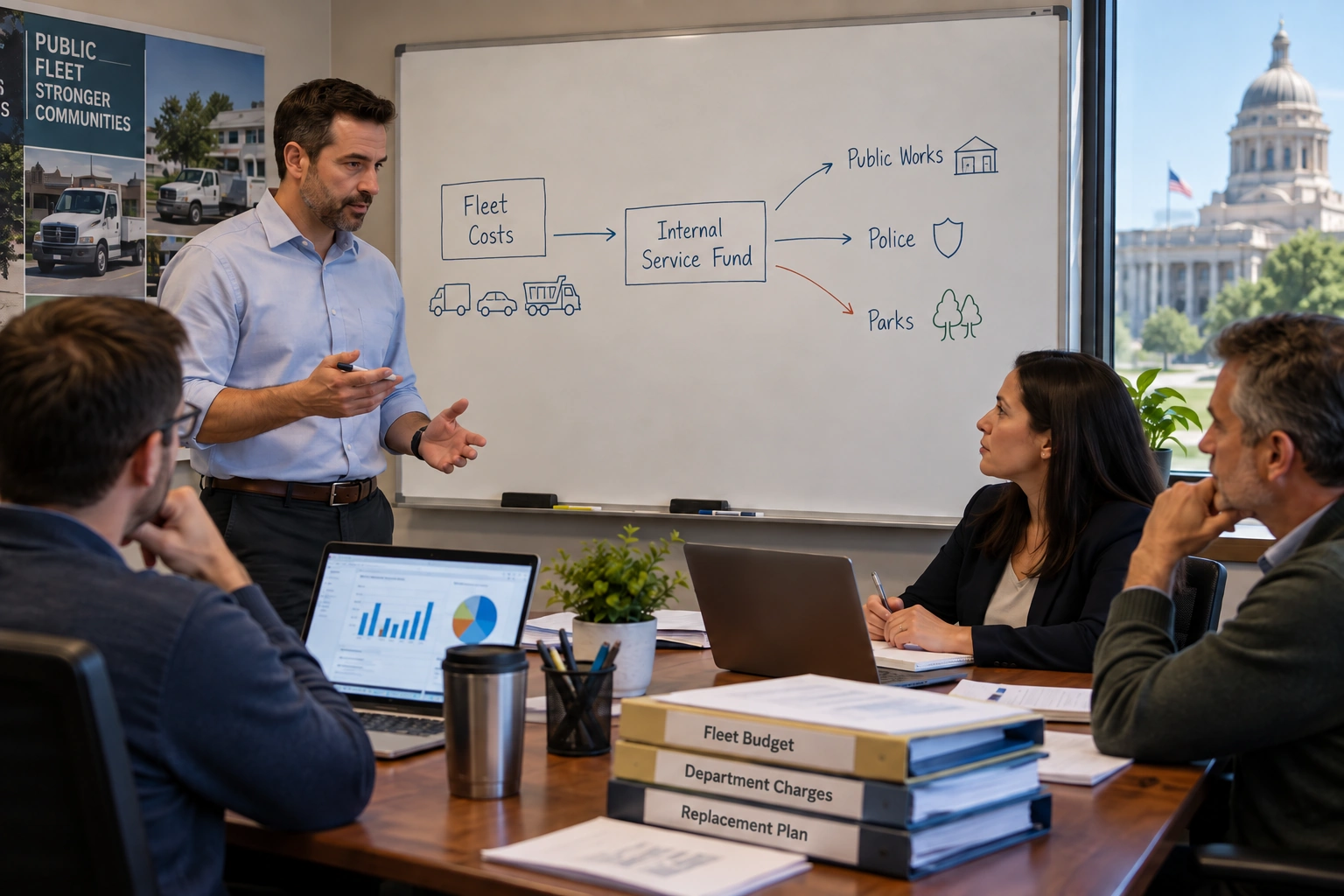
Government fleet chargebacks allocate the full cost of owning and operating vehicles to the departments that use them, usually through an internal service fund designed to recover costs over time. In government fleet management, the rate needs to connect vehicle use with operating cost, overhead, capital replacement, and any applicable grant rules. Public fleets also have to satisfy fund accounting, federal funding requirements, and public accountability standards that a private cost center transfer may not face.
Key Takeaways
- Government chargebacks usually run through an internal service fund. User departments pay the central fleet operation for the services they receive.
- A defensible rate recovers full cost. Fuel and repairs are only part of the rate because overhead, labor burden, depreciation, and capital also matter.
- Federal grant dollars change the rules. Charges tied to federal awards must meet federal cost principles and documentation requirements.
- Replacement funding belongs inside the rate. A planned capital charge can build replacement funding gradually.
- Stale or overly broad rates create disputes. One rate across dissimilar assets can shift costs unfairly between departments.
- Showback should come before chargeback. Departments should review and correct their cost statements before money starts moving.
What Makes Government Fleet Chargebacks Different From Private Fleets
A private fleet can move vehicle costs between internal cost centers. A public fleet also faces taxpayer scrutiny, governing body approval, grant conditions, public records expectations, and procurement cycles that can stretch 18 to 36 months. The chargeback therefore needs to function as a documented cost recovery structure, not just an accounting transfer.
The companion article on fleet costs departments should be charged for covers cost categories and common allocation methods. The government question goes further: how should those costs flow through a public fund, how much should each department pay, and how does the agency prove the rate is fair?
The Internal Service Fund Explained
An internal service fund is a government fund used when a central operation provides services to other departments or funds and charges them for those services. For fleet, department charges become revenue while fuel, maintenance, staff, facilities, administration, and capital needs become expenses. The aim is cost recovery over time, not profit generation.
Some governments use a central cost allocation plan instead. Direct chargebacks can return cash to fleet sooner because departments pay as services are billed. Shared vehicles need stronger usage records because costs still have to reach the right department, which makes shared government fleet cost allocation especially dependent on accurate assignments.
The Full Cost a Chargeback Rate Must Recover
A defensible rate includes direct costs such as fuel, parts, fully burdened labor, supervision, and outside repairs. It also includes indirect costs such as administration, facilities, information systems, and invoice review, plus capital costs such as depreciation and replacement funding.

Leaving out overhead or capital makes the department price look cheaper than the service really is. Before setting the rate, compare the recovery model with the agency's complete definition of what counts as a fleet expense so shared and indirect costs do not disappear.
| Rate component | What it covers | Typical charge structure |
|---|---|---|
| Fixed monthly vehicle charge | Depreciation, insurance, registration, administration | Monthly amount by vehicle or asset class |
| Variable fuel charge | Fuel consumed or purchased | Actual transaction, gallon, or mileage amount |
| Variable maintenance charge | Labor, parts, outside repairs | Actual transaction or class based recovery |
| Capital or replacement charge | Future replacement funding | Monthly amount by vehicle or asset class |
The Washington State Auditor internal service fund guidance says internal service equipment rates should normally recover maintenance and operation, depreciation, and a replacement surcharge. Its guidance also warns against composite rates for dissimilar assets because they can create overcharges or undercharges.
Fixed, Variable, and Capital Charges
A practical rate separates standing ownership costs from costs caused by use. A fixed monthly charge can cover depreciation, insurance, registration, and administration. Fuel and maintenance can follow actual transactions, mileage, or hours. A separate capital charge can fund replacement.
For example, if 20 similar vehicles need $240,000 a year for fixed and capital recovery, the starting target is $12,000 per vehicle per year, or $1,000 per month. Fuel and maintenance then stay tied to actual activity.
How to Set a Defensible Chargeback Rate
Use a documented workflow so finance staff, departments, auditors, and governing bodies can reproduce the calculation.
- Capture every direct, indirect, and capital cost by category.
- Assign each cost to the vehicle, service, or asset class that caused it.
- Choose an allocation basis using cause and effect, benefit received, and fairness.
- Build the rate from fixed, variable, and capital components.
- Add only the working capital reserve that applicable rules allow.
- Document the calculation, sources, assumptions, and exceptions.
- Compare actual recovery with cost during the year and reset rates annually.
A rate file should show where each figure came from and why the chosen basis fits the service being billed. That evidence also strengthens government fleet budget defense because leaders can trace a charge to actual vehicles, usage, and capital obligations.
Choosing an Allocation Basis
Use a fixed per vehicle charge for stable assignments with similar ownership costs. Use mileage when road use varies sharply. Use engine hours for equipment that works while stationary. Mixed fleets usually need a blended structure because a police cruiser, snowplow, mower, and administrative sedan do not consume resources the same way.
Avoid one composite rate across dissimilar assets. It can make a low cost vehicle subsidize a high cost one and weakens the connection between the department's activity and the amount billed.
Federal Grant Rules That Change Cost Allocation
When a department receives federal grant funding, any internal fleet charge assigned to that award must follow 2 CFR Part 200 cost principles. The current eCFR requires costs to be reasonable, allocable, consistently treated, and adequately documented. It also states that recipients and subrecipients generally may not earn or keep profit from federal financial assistance unless the award explicitly allows it.

Appendix V to 2 CFR Part 200 says up to 60 calendar days of cash expenses for normal operating purposes is considered a reasonable working capital reserve. A larger reserve may receive approval from the cognizant agency for indirect costs in exceptional cases. Billed central services charging federal awards must also compare revenue with actual allowable costs at least annually and adjust differences.
Suppose a police unit uses a vehicle partly for a federally funded program. The agency cannot assign the grant an arbitrary share of pooled fleet spending. The allocation must show the benefit to the award and support the amount charged. Weak documentation can contribute to government fleet audit record failures, and federal rules allow unallowable costs to be refunded.
The 2024 OMB Uniform Guidance final rule became effective October 1, 2024. Federal agencies may also elect to apply it to earlier awards, so finance teams should check the terms of the specific award.
Funding Vehicle Replacement Through the Rate
A replacement reserve spreads future capital needs across the useful life of the vehicles creating those needs. Instead of depending on one large future appropriation, the fleet collects a planned capital amount through the rate and retains it for replacement within applicable accounting and grant limits.
Replacement charges work best when they connect to an actual replacement plan. A department should be able to see why a unit is approaching replacement based on age, utilization, maintenance cost, downtime, condition, and service impact. A structured government vehicle replacement prioritization process makes the capital charge easier to defend.
The capital rate should change when acquisition costs, replacement timing, or expected service life change. Otherwise, a fund can appear balanced while its future replacement need keeps growing.
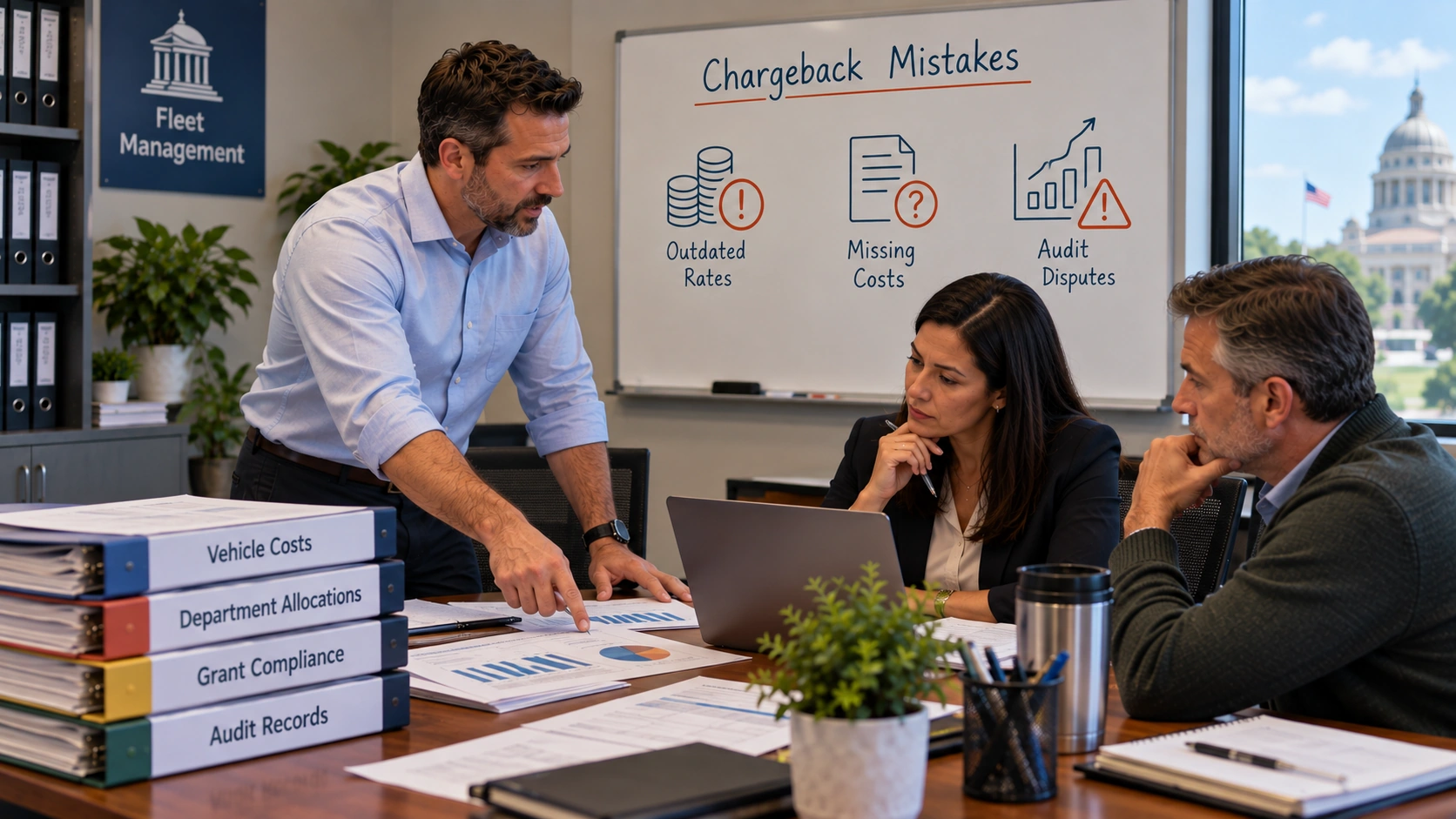
Chargeback Mistakes That Trigger Disputes and Audit Findings
Most disputes start with a rate departments cannot trace or data they do not trust. Pair each common mistake with a clear fix:
- One composite rate for dissimilar assets. Build rates by similar vehicle or equipment class.
- Rates stay unchanged for years. Compare actual recovery with cost and reset the rate annually.
- The fund over collects without correction. Apply credits, refunds, or future rate adjustments as required.
- Departments cannot see the methodology. Publish the cost pools, allocation basis, assumptions, and exceptions.
- Grant funded programs receive unsupported charges. Apply federal cost principles and retain supporting records.
- Replacement is excluded from the rate. Add a documented capital component tied to replacement planning.
- Chargeback starts before departments trust the data. Run showback statements first and correct assignments before billing.
The data behind the statement matters as much as the formula. AUTOsist can connect vehicle assignments, fuel activity, service records, work orders, inspections, and department reporting so finance has a consistent record behind each charge. A fleet reports dashboard can organize that information into reviewable department level cost records.
Start with showback. Send each department the statement it would have received without transferring money. Let managers challenge vehicle assignments, missing transactions, and allocation rules, then correct the records before real billing begins.
Fuel is one of the easiest costs to challenge when vehicle, driver, and department records do not line up. A fleet fuel management process makes the transaction trail easier to connect to the department that created the cost, while work orders, service history, and inspections support the maintenance side.
Frequently Asked Questions
-
How is an internal service fund different from a general fund fleet budget?
An internal service fund charges departments for the fleet services they use and recovers those costs over time. A general fund model typically pays fleet expenses from a central appropriation without directly billing each department. -
Should government fleet chargeback rates include vehicle replacement costs?
Yes. A capital or replacement component can collect funds over the vehicle's useful life so replacement does not depend entirely on a future one time budget request. -
How often should government fleet chargeback rates be reviewed?
Review rates at least annually and compare actual costs with recovered revenue during the year. Adjust rates when operating costs, utilization, replacement costs, or fleet composition change materially. -
Can grant funded departments be charged for fleet costs?
Yes. Costs charged to a federal award must be allowable, reasonable, allocable to the funded activity, consistently treated, and adequately documented. -
How much working capital can an internal service fund keep when federal funds are involved?
Federal guidance considers up to 60 calendar days of cash expenses for normal operations a reasonable working capital reserve. A larger reserve may require approval from the cognizant agency for indirect costs.