 Miya Bholat
Jul 16, 2026
Which Fleet Processes Should Be Standardized First?

Fleet processes should be standardized in this order: preventive maintenance scheduling, vehicle inspections, work orders, fuel tracking, and driver records. This sequence works because each process creates the information required by the next. A centralized fleet management software system helps connect schedules, defects, repairs, costs, and compliance records in one operating structure.
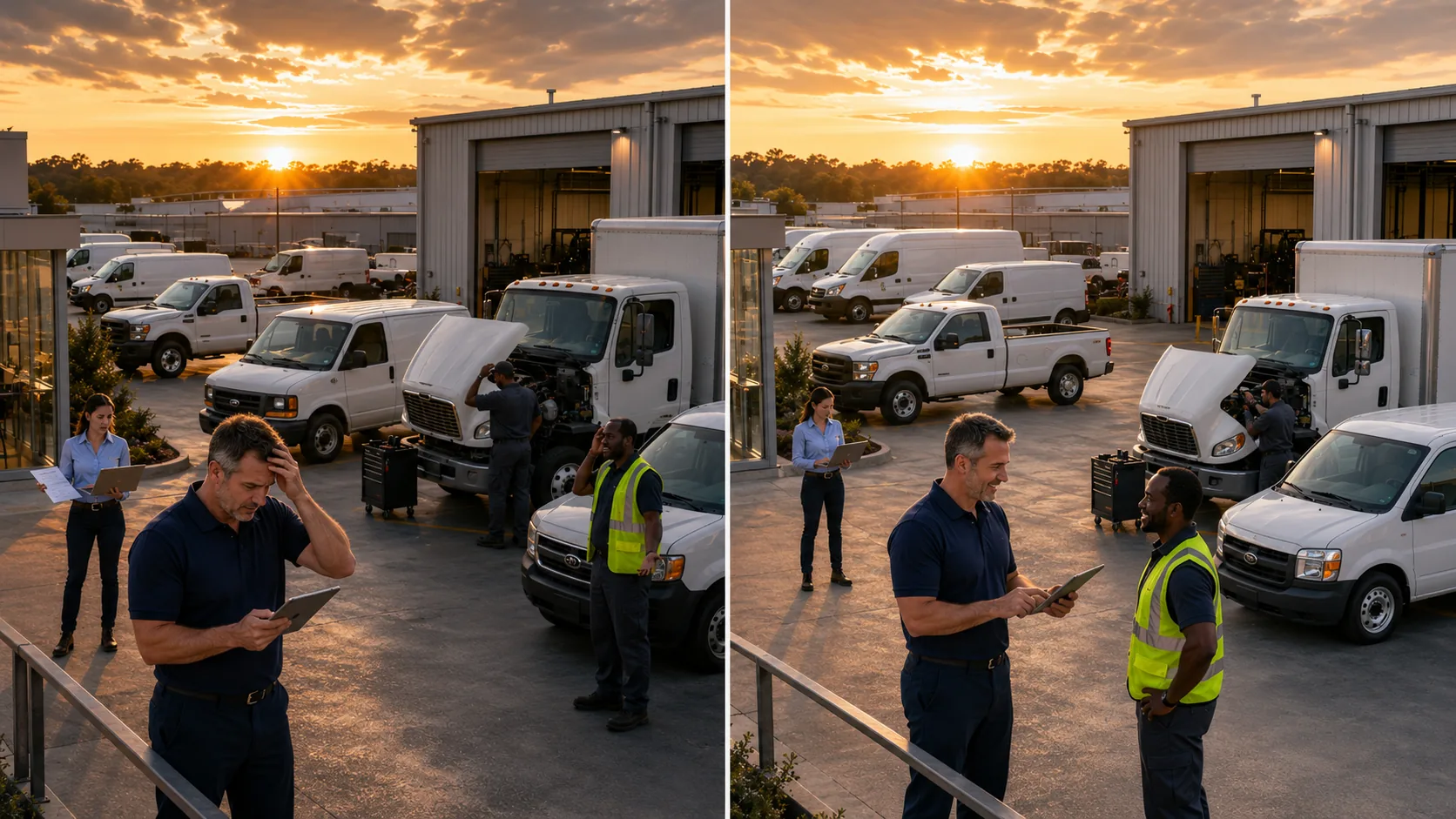
A fleet manager may inherit different inspection forms, scattered service calendars, incomplete repair notes, and inconsistent fuel logs. The problem is not always poor effort. It is the absence of shared rules. The practical answer is to standardize the processes with the highest safety, cost, and downtime exposure first, then expand when each stage is stable.
Key Takeaways
- Start with preventive maintenance scheduling. It carries the clearest downtime risk and creates the service foundation for every later process.
- Standardize inspections second. Reliable inspections create usable defect data before problems become roadside failures.
- Build work order rules next. Every reported defect needs a consistent priority, owner, response time, and closure record.
- Standardize fuel after maintenance. Fuel trends become more useful when managers can compare them with service and repair history.
- Centralize driver records last. License, training, medical, and incident records then connect with trusted operational data.
- Use performance gates before expanding. Move forward only when the current process shows stable adoption and clean records.
Why Standardization Order Matters More Than You Think
Fleet processes form a dependency chain. Maintenance schedules define expected service, inspections reveal current defects, work orders document the response, and fuel and driver records explain later performance. Launching every change at once creates new forms, ownership questions, and training demands before employees master any one process.

The risk becomes greater when teams must run fleet operations across multiple locations, since each site may interpret new rules differently. Prologis found that 87% of surveyed executives considered protecting supply chains against unforeseen disruption a top priority. Standardized fleet workflows support that resilience by making routine decisions repeatable during staffing, demand, or operating changes.
The Cost of Starting in the Wrong Place
Consider a fleet that standardizes driver scorecards before fixing inspection forms. Managers can see idling and harsh braking, but they cannot reliably separate behavior from low tire pressure, overdue maintenance, or unresolved defects. The scorecard appears precise while the maintenance evidence remains weak. Starting out of sequence creates more data without improving decisions.
Process #1: Preventive Maintenance Scheduling
Preventive maintenance comes first because missed service creates a direct path to breakdowns and lost availability. Industry reporting estimates average downtime at $448 to $760 per vehicle per day. MaintainX reports that customers using preventive maintenance reduced unplanned downtime by 32% and increased mean time between failures by 37%.
Standardization means defining service intervals by vehicle type, selecting mileage, time, or engine hour triggers, assigning ownership, and recording completion in one place. The schedule should reflect actual asset use rather than applying one generic interval to every vehicle.
What a Standardized PM Schedule Actually Looks Like
A usable PM standard should define these items before rollout:
- The mileage, time, engine hour, or combined trigger for each service.
- A checklist matched to each vehicle or equipment class.
- The person who reviews upcoming service and the person who completes it.
- The escalation rule for overdue service and vehicle removal.
- Required evidence, including labor, parts, readings, notes, and sign off.
Completed work should update a consistent vehicle service history so managers can verify patterns without searching separate files.
How Software Supports PM Standardization
Fleet maintenance software supports preventive maintenance scheduling with vehicle specific schedules, automated reminders, notifications, and centralized maintenance records. This replaces individual calendars and memory based follow up with one visible process for due and overdue service.
Process #2: Vehicle Inspection Workflows
Inspections come second because they are the early warning system between scheduled services. A PM schedule predicts when work should occur, while an inspection records what a driver or technician can see now. Both processes must use the same asset identity and maintenance history.
A recent HVI case example found that 67% of drivers had been completing paper forms without a full inspection. After photo verified digital standardization, defect detection increased from 5% to 23%. HVI also reports digital inspection ROI benchmarks of 300% to 500%, although fleets should compare vendor reported results with their own baseline.
A consistent digital vehicle inspection workflow also creates retrievable evidence for pre trip checks, post trip checks, defects, and repair confirmation.
Daily vs. Periodic Inspections: What Each Needs to Cover
Daily inspections should focus on conditions that can change between trips. Every daily form should consistently cover:
- Tires, wheels, lights, mirrors, glass, and visible damage.
- Brakes, steering, leaks, warning indicators, and safety equipment.
- Odometer or hour readings linked to the correct asset.
- A clear pass, monitor, or fail response for each item.
- Notes and photos for defects requiring maintenance review.
Periodic inspections can add deeper mechanical checks and asset specific items for trailers, lift gates, buses, emergency equipment, or construction attachments.
The Paper to Digital Shift and What It Changes
Digital inspections send defects to maintenance when they are found rather than after paper reaches the office. Required fields reduce skipped items, photos clarify severity, and failed checks can alert dispatch immediately. Managers can also connect results with license and inspection tracking records instead of keeping compliance evidence in separate folders.
Process #3: Work Order Management
Reliable PM and inspection data must lead to a standard repair response. Without consistent work orders, technicians receive incomplete requests, repair priorities compete, and costs remain difficult to compare. A standard record should include the asset, defect source, priority, technician, labor, parts, status, cost, and final approval.
A connected fleet maintenance work order process creates a traceable path from the first defect report through repair completion.
Priority Classification: Stop Treating Every Repair the Same
Use a simple three tier model that every driver, dispatcher, and technician can interpret.
| Priority | Meaning | Required response |
|---|---|---|
| P1 Safety Critical | Immediate safety or compliance risk | Ground the vehicle until repair and verification are complete |
| P2 Preventive | Delay may increase cost or downtime | Schedule repair within five business days |
| P3 Opportunistic | No immediate operating risk | Batch with the next planned shop visit |
This prevents cosmetic work from competing with brake, steering, tire, or regulatory issues.
Watch how a structured work order process connects inspection findings, repair priority, and maintenance scheduling.
Process #4: Fuel Tracking and Consumption Logging
Fuel comes next because it is a major operating cost, but fuel data is hard to interpret without reliable maintenance context. ATRI reported fuel cost of 48.1 cents per mile against total operating cost of $2.260 per mile for 2024, placing fuel at roughly 21% of total marginal cost.
Standardization requires each fill to capture the vehicle, driver, date, quantity, cost, odometer, vendor, and fuel type. A consistent fleet fuel management process also supports fuel card reconciliation and idle reporting.
For trucking and logistics fleet operations, small mileage differences compound quickly. Research found that driving behavior can create up to a 29% fuel consumption difference for light duty trucks in similar traffic, supporting the practical estimate that behavior may explain about one third of fleet fuel variance.
What Standardized Fuel Data Unlocks
Consistent fuel records allow managers to:
- Compare cost per mile and fuel economy within the same vehicle class.
- Flag consumption changes linked to leaks, theft, idling, or mechanical problems.
- Separate route, load, weather, maintenance, and driver influences.
- Identify vehicles whose operating cost supports replacement analysis.
- Investigate why identical fleet vehicles use different fuel with comparable evidence.
Process #5: Driver Records and Compliance Documentation
Driver records come fifth because they become more useful when connected to trusted vehicle and repair data. Each operator should have one profile containing license status, medical certification where required, training, assigned assets, incidents, and corrective actions.
A consistent fleet driver management process should include expiry alerts, standard incident fields, document ownership, and scheduled reviews. This reduces the chance that missing credentials or records remain hidden until an audit, claim, or roadside event.
How to Sequence Your Standardization Rollout Without Overwhelming Your Team
Do not launch all five processes together. A phased rollout gives employees time to learn the rules and allows managers to correct weak data before it spreads.

| Phase | Timing | Processes | Primary goal |
|---|---|---|---|
| Phase 1 | Months 1 and 2 | PM scheduling and inspections | Establish service control and reliable defect reporting |
| Phase 2 | Months 3 and 4 | Work orders | Standardize repair priority, execution, and closure |
| Phase 3 | Months 5 and 6 | Fuel and driver records | Connect cost, behavior, and compliance data |
Use this dependency workflow throughout implementation:
Published case benchmarks range from about 6 to 10 weeks for some large inspection deployments to 3 to 6 months for small fleet software adoption. Two to six months is a reasonable window for measuring early administrative and maintenance gains, not a guaranteed result.
Signs You Are Ready to Move to the Next Process
Move forward when the current workflow meets clear readiness gates:
- PM compliance remains above 85% for two reporting periods.
- Inspection completion is stable and defect detection has improved.
- P1 defects trigger immediate grounding and documented verification.
- At least 80% of work orders close within their response target.
- Asset, odometer, labor, parts, and completion records are consistently complete.
Summary: Build the Foundation Before the Features
Fleet process standardization creates a dependable operating sequence, not more paperwork. Start with PM scheduling, then inspections, work orders, fuel tracking, and driver records. Each process strengthens the next through cleaner information and clearer ownership.
The goal is consistency that teams can follow and managers can measure. One connected platform can support the full sequence without separate systems for maintenance, inspections, repairs, fuel, and compliance records.
Frequently Asked Questions
-
What fleet process should a company standardize first?
Preventive maintenance scheduling should usually come first because missed service creates direct downtime, safety, cost, and compliance exposure. It also establishes the records that inspections and work orders need. -
How long does it take to see ROI from standardizing fleet maintenance?
Early scheduling and administrative gains may appear within two to six months. Larger savings develop as fleets miss fewer services, find defects earlier, and reduce emergency repairs. -
Can small fleets benefit from process standardization?
Yes. Simple standards reduce dependence on one manager's memory and protect the operation when workload or staffing changes. Small fleets can begin with basic service, inspection, repair, fuel, and expiry rules. -
What happens when inspection workflows are not standardized?
Drivers may inspect different components, describe defects inconsistently, or submit reports too late. This weakens compliance evidence and increases the chance that safety defects reach the road. -
Should managers standardize processes before choosing fleet software?
Managers should first define the essential workflow, ownership, required fields, and response rules. Software should support that process rather than replace the decision about how the fleet should operate.