 Miya Bholat
Jul 23, 2026
Why Landscaping Fleets Lose Control in Peak Season?
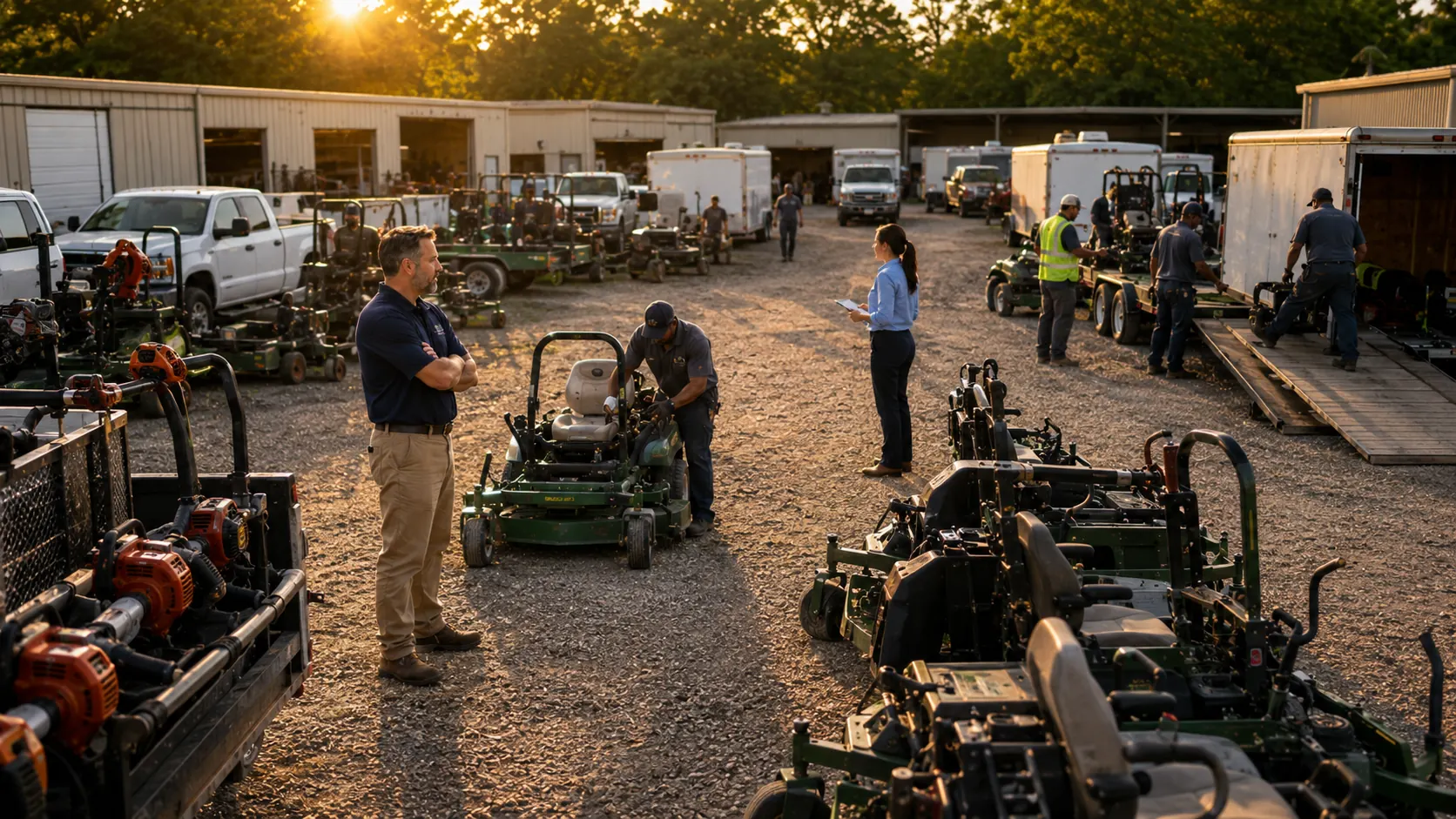
Landscaping fleets lose control in peak season when asset usage, crew activity, maintenance needs, and job schedules grow faster than the systems used to manage them. The solution is not simply adding more trucks or reminding crews to work harder. It is creating a connected fleet management system that shows what each asset needs, who is responsible for it, and which problems require action before they disrupt scheduled work.
This loss of control usually builds gradually. A missed inspection creates an undetected equipment issue. That issue causes a breakdown, which forces a crew reassignment, delays customer work, and overloads another vehicle. For businesses managing multiple crews, landscaping fleet operations become unstable when these small failures begin stacking up faster than managers can resolve them.
Key Takeaways
- Peak season exposes weak operating systems. Heavy asset use does not create every problem. It reveals inspection, maintenance, communication, and accountability gaps that already existed.
- One missed service can affect several crews. A single unavailable truck, trailer, or mower can disrupt job assignments, labor hours, customer schedules, and revenue.
- Seasonal employees need fleet specific training. Training someone to perform landscaping work does not automatically teach them how to inspect, report, and protect company assets.
- Spreadsheets delay important decisions. Maintenance records that depend on manual updates often become inaccurate when crews are moving quickly between jobs.
- Hours matter as much as mileage. Mowers, blowers, compact equipment, and other powered assets can reach service intervals without adding meaningful road mileage.
- Visibility prevents operational surprises. Fleets stay in control when inspection findings, maintenance history, fuel use, parts stock, and asset assignments are visible in one place.
What "Losing Control" Actually Looks Like Mid Season
It is Tuesday morning in July. One crew reports that a zero turn mower is vibrating, but nobody knows whether it was inspected yesterday. Another crew cannot leave because its trailer lights are not working. A supervisor starts calling employees to locate a spare mower while the office receives two client calls about delayed service.
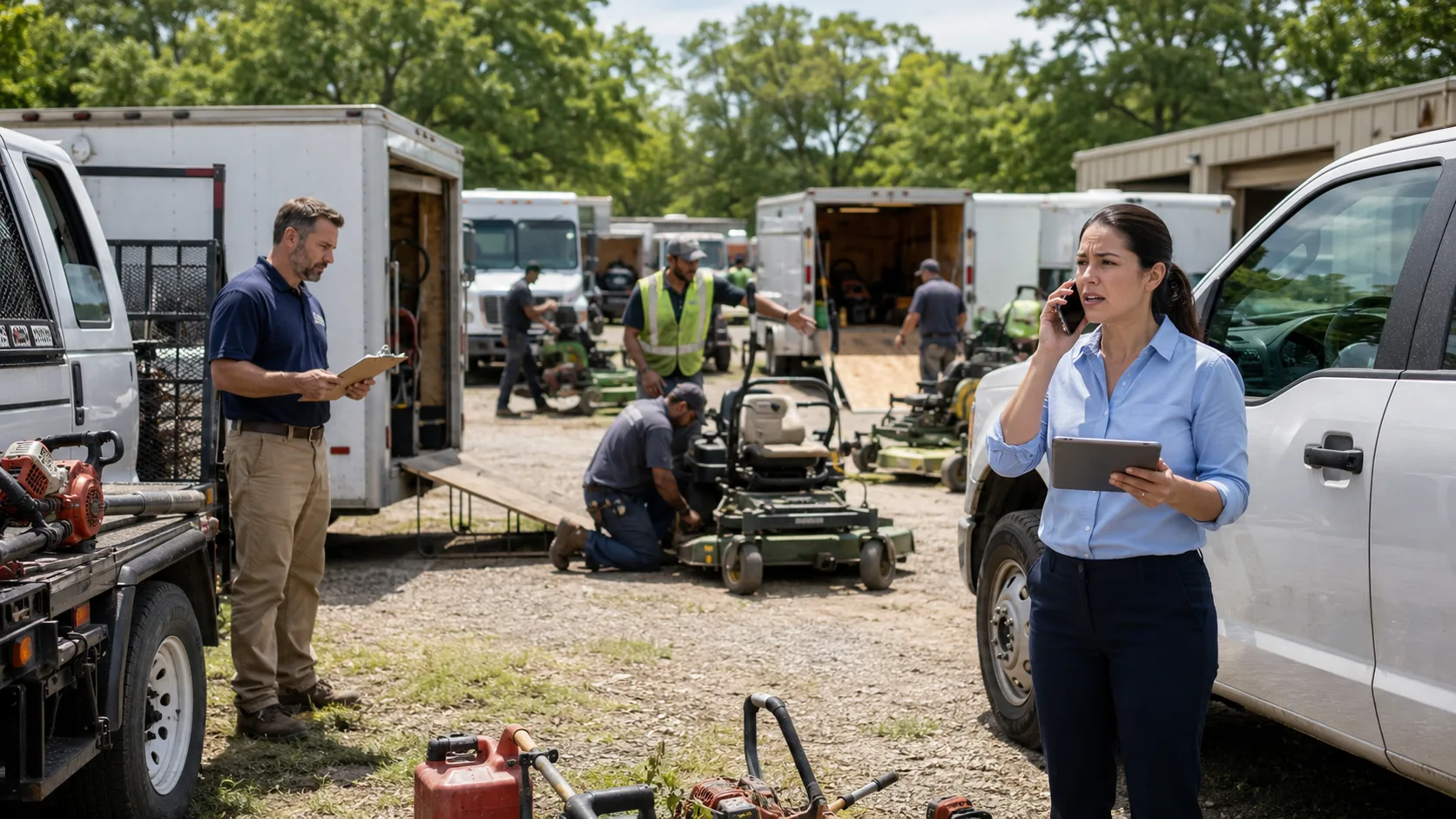
By noon, the fleet manager is rearranging trucks instead of managing the fleet. A preventive service scheduled for that afternoon gets postponed because the truck is now covering another route. The crew works late, fuel use increases, and the equipment issue that started the disruption still has not been documented properly.
Common signs that control is slipping include:
- Service appointments repeatedly moved to accommodate jobs
- Crew leaders calling the office to locate vehicles or equipment
- Inspection forms submitted after equipment has already been used
- Repair bills appearing without an earlier defect report
- Repeated customer callbacks caused by missed or rushed work
- Managers relying on memory to decide which asset needs attention
These symptoms are often treated as separate problems. In reality, they are connected outcomes of poor fleet visibility and inconsistent operating discipline.
The Five Operational Failures That Trigger the Spiral
Skipping Pre Season Fleet Readiness Audits
A landscaping company may enter spring with trucks that started reliably during winter and equipment that appeared functional when it was stored. That does not mean those assets are ready for daily commercial use. Belts can weaken, batteries can lose capacity, hydraulic lines can crack, tires can deteriorate, and corrosion can affect trailers or electrical connections.
Without a complete audit, these issues remain hidden until equipment begins running for long hours. The first weeks of peak demand then become an expensive testing period conducted on customer time.
A readiness audit should cover:
- Trucks, vans, and utility vehicles
- Open and enclosed trailers
- Mowers and compact equipment
- Blowers, trimmers, and handheld tools
- Safety equipment and vehicle documents
- Common replacement parts and fluids
Skipping this process is one of the fleet management mistakes that creates avoidable disruption, especially when managers assume that an asset is ready simply because it starts.
Relying on Reactive Maintenance Instead of Scheduled Service
Unplanned repairs are often estimated to cost three to nine times more than preventive work once towing, emergency labor, lost production, and secondary damage are included. Landscaping businesses remain vulnerable because there is always another property to service and rarely a convenient time to remove equipment from use.
The phrase "it still runs" becomes the maintenance standard. Crews continue operating noisy bearings, worn belts, leaking lines, or overdue engines because stopping today feels more expensive than risking tomorrow.
A structured preventive maintenance schedule changes that decision. It gives managers a defined service trigger before the condition becomes an emergency.
Losing Visibility Across Crews, Trucks, and Equipment
A business operating six to fifteen crews can have dozens of assets moving across a metro area each day. Trucks change drivers, trailers are reassigned, mowers move between crews, and handheld equipment may return to a different yard than where it started.
Paper logs and group messages cannot reliably show:
- Which crew currently has an asset
- Whether the morning inspection was completed
- What defects were reported
- When the asset was last serviced
- Whether an open repair remains unresolved
This is the difference between knowing that equipment exists and having useful fleet visibility across daily operations. Without that visibility, managers discover problems only after work has already been affected.
Onboarding Seasonal Hires Without Fleet Accountability Standards
Many landscaping companies expand quickly in spring. A new employee may learn route procedures, mowing techniques, and customer expectations within a few days, but fleet responsibilities often receive less attention.
There is a major gap between being trained on the job and being trained on the fleet. Seasonal operators need to know how to inspect an asset, report damage, document warning signs, record fuel activity, and confirm who is responsible for the equipment.
A digital vehicle inspection process gives every employee the same reporting steps. Clear driver and user accountability also makes it easier to connect inspections, assignments, and reported damage to the correct person.
Letting Parts Inventory and Fuel Tracking Slide
Peak season consumes wear parts quickly. Blades dull, belts stretch, filters clog, and hydraulic fluid gets used faster than expected. When nobody tracks stock levels, the first warning may be a technician discovering that the required part is unavailable.
The most important items to monitor often include:
- Mower blades and belts
- Air, oil, and fuel filters
- Spark plugs and batteries
- Hydraulic fluid and engine oil
- Trailer lights and electrical connectors
- Tires, tubes, and repair kits
A parts inventory tracking system helps prevent stockouts and unnecessary emergency purchasing. At the same time, fleet fuel tracking can reveal excessive idling, route inefficiency, fuel misuse, or an asset consuming more fuel because of a developing mechanical issue.
How One Breakdown Becomes a Week of Lost Revenue
Consider a mower trailer that develops a wheel bearing failure on Monday morning. The assigned crew cannot reach its first properties, so the manager moves the crew onto another truck and trailer. Two jobs are pushed into Tuesday, while another route receives only partial service.
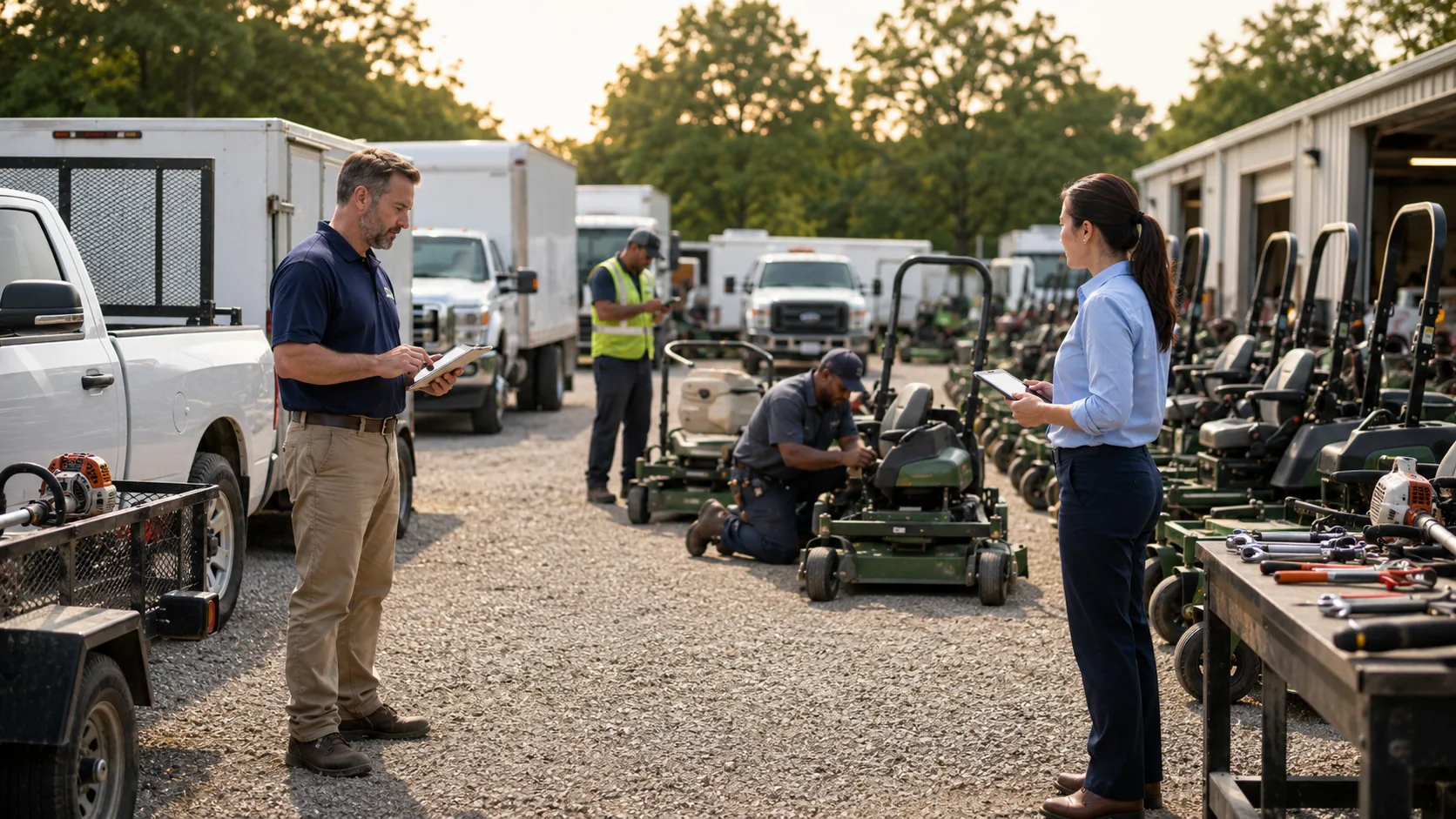
By Wednesday, customer calls increase and the business authorizes overtime to recover the schedule. The replacement truck carries more equipment and operates longer hours than planned. By Thursday, that truck develops a cooling issue because its service was already overdue.
The cost can build quickly:
| Cost category | Rough impact |
|---|---|
| Lost crew billings for one day | $1,200 |
| Emergency trailer repair and transport | $650 |
| Overtime to recover delayed work | $480 |
| Extra fuel and route changes | $170 |
| Estimated immediate impact | $2,500 |
This calculation does not include lost contracts, reduced customer trust, or the cost of a second equipment failure. It shows why downtime should be measured as an operational chain rather than a single repair invoice.
Peak season failure workflow
Why Spreadsheets and Group Texts Can't Scale in Peak Season
A typical manual system may include an Excel maintenance sheet, paper inspections inside vehicles, text messages for breakdowns, and fuel receipts collected at the end of the week. Each tool may appear manageable on its own. The problem is that none of them updates the others.
A technician may complete a repair without updating the spreadsheet. A crew leader may report damage in a group text that gets buried beneath schedule messages. A paper inspection may remain in the glovebox while the equipment continues operating.
Manual tracking creates four serious limitations:
- Reporting arrives after decisions have already been made
- There is no dependable audit trail for defects or repairs
- Service reminders depend on someone checking a file
- Critical information remains trapped on one employee's device
The operational difference between spreadsheets and fleet management software becomes most visible during high demand. A spreadsheet stores information. A connected system alerts people when that information requires action.
Building a Peak Season Control System That Doesn't Break
Run a Pre Season Fleet Audit (Every Asset, Every Year)
Complete the audit six to eight weeks before demand normally increases. This provides time to order parts, schedule repairs, replace unsafe equipment, and test assets before crews depend on them.
Document condition, service needs, engine hours, mileage, assigned location, registration status, and photos of existing damage. The audit should create a clear readiness status for every asset, not just a list of issues.
Set Maintenance Triggers Based on Hours and Usage, Not Just Mileage
Mileage works for trucks, but it is incomplete for landscaping equipment. A mower may operate for eight hours while travelling only a few miles on a trailer. Small engines and hydraulic systems accumulate wear through operating time.
Maintenance triggers should therefore combine:
- Vehicle mileage
- Engine hours
- Calendar intervals
- Inspection findings
- Seasonal utilization
Using an equipment maintenance management system helps managers schedule trucks, trailers, mowers, and other assets according to the measurement that actually reflects wear.
Give Every Crew Member a Digital Inspection Workflow
Every operator should complete the same inspection process before using an assigned asset. The workflow should be short enough to complete consistently but detailed enough to identify safety and maintenance concerns.
Photo documentation is especially useful because it gives managers evidence of damage, leaks, tire wear, warning lights, or missing equipment. It also prevents vague reports such as "the mower sounds strange" from becoming the only available record.
Centralize Fleet Data So Nothing Falls Through the Cracks
Inspection findings, service records, parts stock, fuel activity, GPS data, and crew assignments should connect to the same asset record. A platform such as AUTOsist can centralize this information so managers do not need to search across separate files, messages, and paper forms.
A centralized fleet reporting dashboard also helps managers identify overdue service, unresolved defects, abnormal costs, and recurring equipment problems before they disrupt multiple routes.
What Landscaping Fleets That Stay in Control Do Differently
Fleets that lose control react to whichever problem is loudest. Fleets that stay in control know which asset needs service, which crew has it, what defect was reported, and what action must happen next.
The difference is not always budget. A company with older trucks can outperform a business with newer equipment when it follows consistent inspections, service triggers, assignment rules, and reporting standards.
Peak season will always create pressure, but it does not have to create chaos. When equipment condition, maintenance work, parts availability, fuel activity, and crew accountability remain visible, peak demand becomes predictable enough to manage.
Frequently Asked Questions
-
How far in advance should I prepare my landscaping fleet for peak season?
Start six to eight weeks before your expected demand increase. This gives you enough time to inspect every asset, order parts, complete repairs, and test equipment before daily schedules become crowded. -
What is the biggest cause of mid season landscaping fleet breakdowns?
The biggest cause is often deferred maintenance combined with poor inspection reporting. Small defects remain unresolved until heavy daily use turns them into failures. -
How do seasonal hires affect fleet maintenance costs?
New employees may cause additional wear when they are not trained on inspection procedures, proper equipment operation, or damage reporting. Standard workflows reduce inconsistency and make accountability clear. -
Should landscaping equipment maintenance be based on mileage or engine hours?
Road vehicles should use mileage, but mowers and powered equipment should generally use engine hours and calendar intervals. The best schedule uses the measurement that reflects how the asset actually operates. -
Why are spreadsheets difficult to use during landscaping peak season?
Spreadsheets depend on manual updates and usually do not provide automatic reminders, live inspection status, or a complete audit trail. As crews and equipment activity increase, delayed updates create blind spots that lead to missed service and slower decisions.