 Miya Bholat
Oct 13, 2026
Odometer vs GPS Mileage: Which Should Fleets Trust?
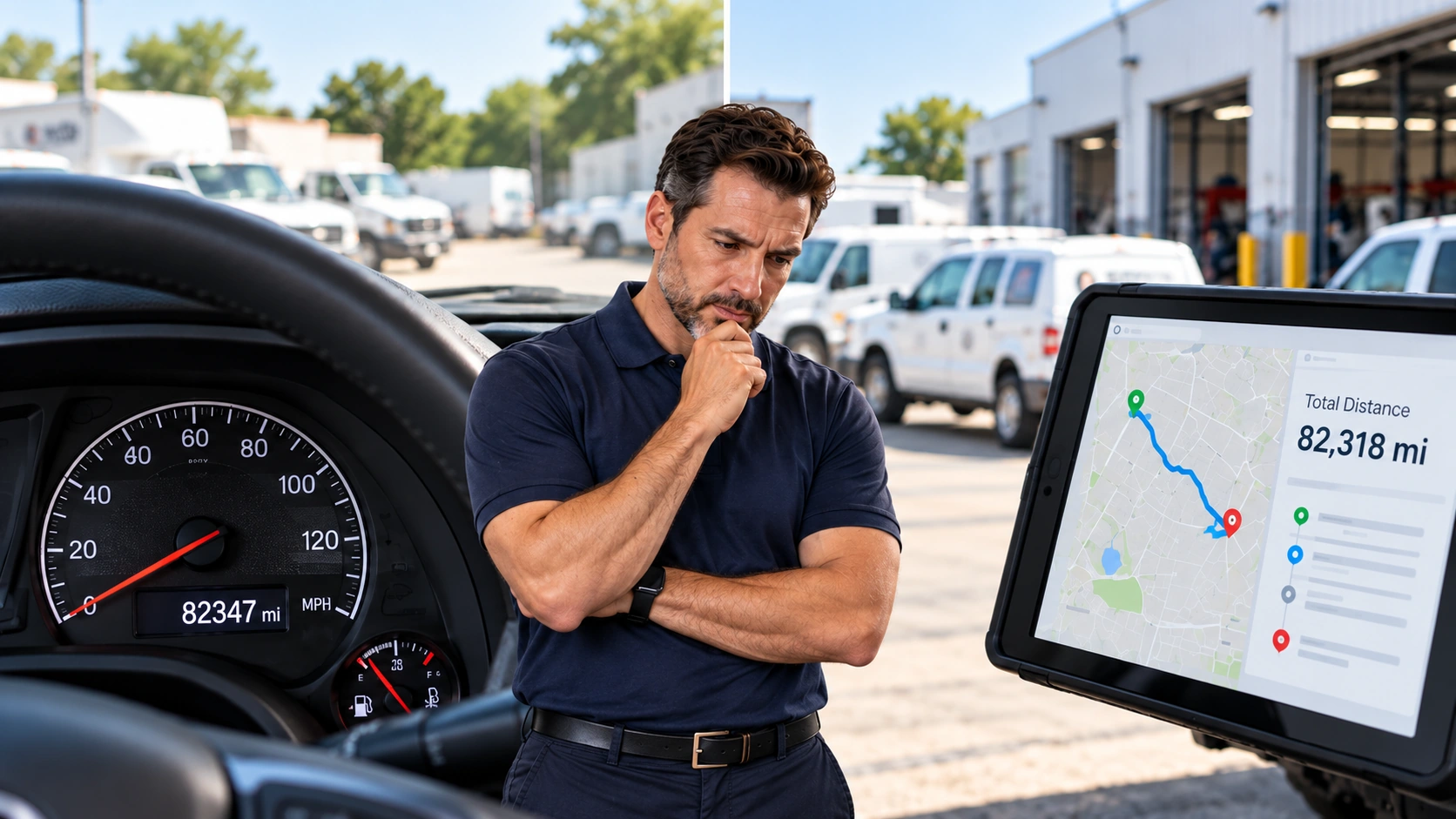
Fleets should trust GPS or telematics mileage for operational tracking when the system is reliable, and the dashboard odometer for vehicle title disclosures and lease returns, subject to applicable rules. Neither source is automatically more accurate in every situation. The best approach is to assign one mileage source to each use, regularly compare readings, and investigate meaningful differences. A reliable fleet GPS tracking and telematics system helps automate mileage collection while keeping it connected to vehicle maintenance records.
Even a small mileage difference can affect preventive maintenance schedules, cost per mile calculations, warranty claims, and resale documentation. Fleet managers need to understand why these readings disagree and how to reconcile them before inaccurate mileage affects decisions.
Key Takeaways
- Odometer and GPS mileage measure distance differently. Small differences are expected because their measurement methods and error sources differ.
- Mileage discrepancies can accumulate. A minor difference across repeated trips can become significant over thousands of miles.
- Neither source wins every comparison. Telematics often supports operational tracking, while odometer readings serve important legal and contractual purposes.
- Dashboard mileage matters for resale. Federal title disclosures generally use the odometer reading and require disclosure when that reading is known to be inaccurate.
- Automated mileage capture reduces manual errors. GPS and telematics reduce reliance on driver entries but still require accurate device configuration.
- Regular reconciliation protects data quality. Set variance thresholds, investigate discrepancies, and document adjustments.
Why Odometer and GPS Mileage Rarely Match
The difference starts with how each system measures distance. An odometer estimates vehicle movement through wheel or drivetrain data, while GPS calculates travel through position changes.
The Federal Highway Administration identifies odometers, onboard diagnostics, and location based systems as separate mileage measurement methods, each with distinct accuracy and reliability characteristics in its evaluation of mileage recording approaches.
What the Dashboard Odometer Measures
A vehicle odometer generally calculates accumulated distance using wheel rotation or vehicle speed signals and a calibrated relationship between rotation and distance. Modern electronic systems can obtain those signals through vehicle sensors and control modules.
Several factors influence that calculation:
- Tire size: Different tire dimensions change distance traveled per wheel rotation.
- Tire wear: Changes in effective rolling circumference can gradually affect readings.
- Tire pressure: Incorrect inflation can change rolling behavior.
- Calibration: Incorrect vehicle configuration or sensor calibration can introduce systematic errors.
Consequently, a dashboard reading may differ from actual road distance even without mechanical failure.
What GPS and Telematics Measure
GPS mileage estimates distance by calculating movement between recorded positions. The result depends on satellite reception, position quality, reporting frequency, and the software's distance calculation method.
However, telematics mileage is not always calculated from satellite positions. Some systems use vehicle speed signals or ECM data, while others combine vehicle information with GPS location.
Understanding how fleet telematics works helps managers identify which measurement method their devices actually use.
Another distinction is accumulated mileage. A new GPS device may begin recording distance from zero when installed, even though the vehicle has already traveled thousands of miles. Systems that import an actual odometer reading can establish the correct starting value.
This makes automatic vehicle mileage tracking useful, provided teams verify the initial reading, vehicle assignment, and subsequent updates.
How Big a Gap Is Normal?
A small difference between odometer and GPS mileage does not automatically indicate a problem. Tire characteristics, positioning errors, and missed trip segments can all create variation.

There is no universal percentage that proves either source is accurate. The appropriate tolerance depends on the vehicle, device, operating environment, and measurement period.
For context, GPS.gov's accuracy information states that GPS enabled smartphones typically achieve positioning accuracy within approximately 4.9 meters under open sky. Accuracy worsens near buildings, bridges, and trees. This describes position accuracy, not a guaranteed mileage error percentage.
Fleet managers should also understand what affects fleet GPS accuracy before treating a distance discrepancy as an odometer problem.
Odometer vs GPS Mileage Comparison
| Factor | Dashboard odometer | GPS mileage |
|---|---|---|
| Measurement | Wheel or vehicle speed signals | Recorded position changes |
| Typical variance | Small drift possible, no universal rate | Small drift possible, no universal rate |
| Main errors | Tires, calibration, sensors | Signal gaps, reporting intervals |
| Tamper resistance | Can be altered | Independent records help detect anomalies |
| Automation | Requires capture or integration | Usually captured automatically |
A difference of 20 miles across a period when the odometer records 1,000 miles represents a 2% variance. That warrants review under a fleet policy using 2% as its investigation threshold, but does not independently identify the faulty source.
Which Source Should Be Your Record of Truth?
Fleet managers should select mileage sources according to the decisions those readings support, rather than forcing one number into every process.
Mileage Source Decision Table
| Use case | Recommended source | Reason |
|---|---|---|
| Preventive maintenance | Verified ECM or telematics mileage | Automated service triggers |
| Utilization and cost per mile | Consistent telematics or ECM data | Repeatable operational calculations |
| IFTA reporting | Compliant GPS or other accepted records | Verifiable jurisdiction mileage |
| Warranty claims | Manufacturer accepted vehicle mileage | Aligns with warranty terms |
| Resale and title disclosure | Dashboard odometer | Required disclosure reference when applicable |
| Lease return | Contract required odometer reading | Supports lease mileage settlement |
Operational Decisions (Maintenance, Utilization, Cost per Mile)
Verified telematics or ECM mileage usually provides a practical advantage for operational decisions because teams can collect readings consistently without depending on manual entry.
For example, mileage based preventive maintenance schedules can use synchronized readings to trigger servicing as vehicles approach scheduled intervals.
However, managers should validate the source before connecting it to automated maintenance reminders. An incorrect starting value can trigger work too early or allow vehicles to miss scheduled servicing.
For vehicles with substantial idling or stationary equipment operation, mileage alone may not reflect usage accurately. Comparing engine hours versus miles helps identify when both measurements belong in maintenance and utilization decisions.
Compliance and Mileage Based Reporting
Compliance requires more than a plausible total mileage figure. Managers must preserve records that explain when, where, and how a vehicle accumulated distance.
For IFTA reporting, vehicle tracking systems can support jurisdiction mileage calculations when they satisfy applicable recordkeeping requirements. The official IFTA manuals establish the relevant documentation and audit requirements.
A reliable compliance process should preserve vehicle identification, source readings, timestamps, jurisdiction distances, and supporting data in the required format.
Digital trip and mileage logging can help organize operational trip records, but managers must verify that their actual reporting system satisfies the applicable requirements.
Resale, Lease Return, and Title Disclosure
The dashboard odometer remains the starting point for legally required mileage disclosures during vehicle ownership transfers.
Federal odometer disclosure rules generally require sellers to report the displayed reading and certify its accuracy. When the reading is known to be incorrect beyond calibration differences, the seller must disclose that discrepancy. Certain vehicles and transactions are exempt from federal disclosure requirements.
Lease returns also commonly rely on the contractually specified odometer reading. Fleet managers should confirm the agreement rather than substitute GPS mileage without approval.
Maintaining accurate vehicle service history records gives managers supporting evidence when buyers, lessors, or auditors question mileage consistency.
The Hidden Trust Risks in Each Source
Neither mileage source is completely immune to error or manipulation.
Odometer risks
Dashboard odometers can drift because of calibration or tire changes, but intentional manipulation creates a more serious concern.
According to the National Highway Traffic Safety Administration's odometer fraud information, more than 450,000 vehicles are sold annually with false odometer readings. NHTSA has also estimated that odometer fraud costs American consumers more than $1 billion annually.
CARFAX estimated that approximately 2.14 million vehicles on US roads had rolled back odometers in 2024. Its research also highlighted significant financial losses for affected buyers.
Mileage discrepancies in maintenance records can help identify unusual changes. Comparing service readings with fuel log and odometer mismatches provides another useful check, particularly when reported fuel consumption conflicts with vehicle usage.
GPS and telematics risks
Automated capture reduces manual reporting problems but introduces different failure points.
- Installation offset: GPS accumulated mileage starts from an incorrect baseline.
- Signal loss: Tunnels, covered areas, or dense buildings interrupt position records.
- Reporting frequency: Long intervals can miss portions of complex travel routes.
- Asset misassignment: A device sends mileage to the wrong vehicle record.
- Integration failure: Delayed or missing updates affect synchronized totals.
Fleet managers should check whether their GPS tracking and telematics integration records actual odometer values, GPS calculated distance, or another measurement before deciding which reading needs correction.
A Step by Step Mileage Reconciliation Workflow
Reconciliation works best when managers compare distance traveled during the same time period, rather than comparing cumulative totals without accounting for installation offsets.
Follow this seven step workflow for each vehicle with a meaningful discrepancy.
Example of a Mileage Reconciliation Record
| Record item | Value | Action |
|---|---|---|
| Odometer distance | 1,000 miles | Reference |
| GPS distance | 980 miles | Investigate |
| Difference | 20 miles | Review cause |
| Variance | 2% | Apply fleet policy |
| Possible issue | Missing GPS trip | Check device records |
This example assumes both measurements cover the same period. It does not prove that the odometer is correct.
Setting a Variance Threshold and Re-Sync Policy
A useful reconciliation policy should distinguish routine monitoring from discrepancies requiring immediate investigation.

The following thresholds are suggested starting points for internal fleet management, not government accuracy standards.
| Period mileage variance | Recommended action |
|---|---|
| Below 1% | Monitor trend |
| 1% to below 2% | Review during routine reconciliation |
| 2% to below 5% | Investigate source and configuration |
| 5% or greater | Escalate and validate before relying on data |
Fleets can begin with monthly reconciliation, then adjust the frequency according to mileage accumulation, operating conditions, and observed discrepancies.
Additional checks should follow tire size changes, device replacements, ECM repairs, and suspected mileage errors.
AUTOsist supports automated odometer synchronization through telematics integrations, helping managers maintain mileage based service reminders. Managers should still verify whether their configuration imports actual odometer values or calculates accumulated distance.
For a broader view of implementation considerations, the complete guide to fleet GPS and telematics tracking explains how tracking data connects with fleet operations.
Ultimately, reliable mileage management does not require choosing GPS over the odometer in every situation. It requires documented measurement sources, consistent reconciliation, and traceable corrections so maintenance, compliance, and resale decisions rely on trustworthy information.
Frequently Asked Questions
-
Is a 2% difference between GPS and odometer mileage normal?
A 2% difference can occur, but no universal acceptable limit exists. Investigate it if your fleet's variance policy sets 2% as the review threshold. -
Why does my GPS show more miles than my odometer?
GPS positioning errors, extra recorded movement, or incorrect odometer calibration can cause higher GPS mileage. Compare trip records and check tire specifications before making corrections. -
Should I reset GPS mileage to match the odometer?
Only after verifying the readings and identifying the discrepancy. Correct the device's mileage offset when appropriate, but preserve original records and document the adjustment. -
Can I use GPS mileage for IFTA reporting if the odometer differs?
Yes, provided the system maintains compliant GPS records, jurisdiction mileage, and supporting odometer or ECM readings. A mileage discrepancy should be investigated and documented before reporting. -
What if GPS and odometer mileage disagree when selling a vehicle?
Use the displayed odometer reading for legally required disclosure and report any known inaccuracy as required. GPS mileage can provide supporting evidence but does not automatically replace the odometer reading.