 Miya Bholat
Jul 20, 2026
Parts Fleets Should Always Stock Before Repairs
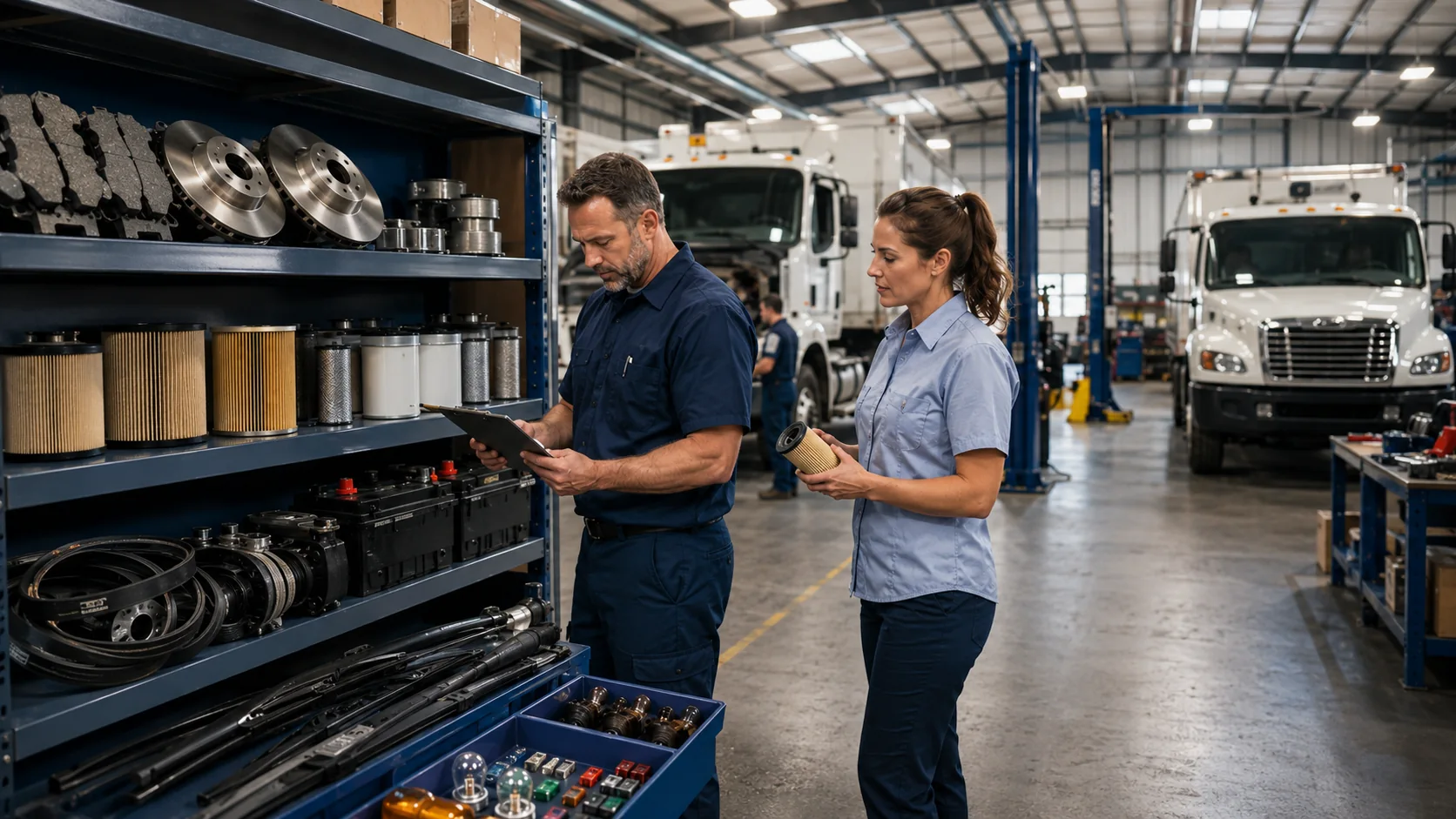
A fleet should always stock brake pads and rotors, engine air filters, oil filters, batteries, belts and hoses, wiper supplies, and common bulbs and fuses. These parts combine frequent use, operational importance, low storage burden, and costly consequences when unavailable. A structured fleet maintenance software system connects upcoming service, inspection findings, work orders, and parts usage so inventory is ready before a vehicle enters the bay.
The goal is not to fill every shelf. It is to keep the parts most likely to stop a repair from running out, then set quantities from actual consumption and supplier lead times.
Key Takeaways
- Seven part groups deserve priority shelf space. Brakes, filters, batteries, belts, hoses, visibility supplies, bulbs, and fuses cover many frequent repairs.
- A missing inexpensive part can create expensive downtime. Average fleet downtime can cost about $448 to $760 per vehicle per day.
- Parts availability is a widespread concern. Fleetio reports that 28.9 percent of surveyed professionals named parts and vehicle availability among their top challenges.
- The right quantity matters. Too little stock delays repairs, while too much traps cash and raises obsolescence risk.
- Par levels should use consumption, lead time, and safety stock. Work order history provides a better basis than memory.
- Upcoming maintenance should trigger parts planning. Scheduled services reveal demand before technicians open the repair.
- Inventory should connect to maintenance records. Linking parts, work orders, service history, and reports creates a controlled process.
Why Missing Parts Cost More Than the Part Itself
A stockout can hold a vehicle in the bay, interrupt a technician, force a driver reassignment, delay customer work, and create rush purchasing. Current fleet inventory research estimates that parts unavailability causes 34 percent of maintenance delays, showing why parts delays disrupt fleet maintenance even when the repair is routine.
| Cost category | What the fleet absorbs |
|---|---|
| Vehicle downtime | Lost routes, jobs, deliveries, or service capacity |
| Emergency purchasing | Rush pricing, freight, and limited supplier choice |
| Technician interruption | Paid time spent waiting, searching, or changing jobs |
| Driver reassignment | Schedule changes and reduced productive hours |
| Bay congestion | One waiting vehicle blocks planned work |
| Administrative effort | Extra calls, approvals, and purchase processing |
This is why fleet downtime management must include parts readiness, not only faster repairs.
The Difference Between a 2 Hour Repair and a 3 Day Wait
A brake service may take about 90 minutes. If the technician finds worn rotors and the correct replacements are on the shelf, the job continues. If they are unavailable, the team must locate stock, approve a rush order, and wait for delivery.

The diagnosis and procedure did not change. One missing component changed a short repair into several days of avoidable downtime.
How to Decide Which Parts Deserve Shelf Space
A part earns permanent shelf space when the operational cost of not having it exceeds the cost and risk of holding it. Evaluate each candidate using the same criteria.
- Usage frequency: How often does the fleet consume it?
- Supplier lead time: How long would the vehicle wait?
- Operational criticality: Can the vehicle operate safely without it?
- Emergency premium: How much more does urgent sourcing cost?
- Compatibility coverage: How many vehicles share the specification?
- Storage risk: Can the part degrade or become obsolete?
An ABC system makes the decision clearer. A items stay available, B items need controlled quantities, and C items can usually be ordered when required. Data from preventive maintenance inspections helps confirm which components repeatedly become repair needs.
The 7 Parts Fleets Should Always Have on the Shelf
These groups regularly appear in routine service, roadside failures, and inspection corrections. Quantities should vary by fleet type, vehicle class, environment, and supplier reliability.
1. Brake Pads and Rotors
Brake pads are frequently inspected and replaced, but fleets should plan pads and rotors together. Worn pads can damage rotors, turning a simple service into a larger repair. Commercial vehicles also depend on functioning brake systems for safe operation and compliance.
Stock by vehicle class and axle configuration. A cargo van, pickup, and medium duty truck may require different parts.
2. Engine Air Filters
Engine air filters are inexpensive, frequently used, and easy to overlook. A clogged filter restricts airflow and can reduce performance, especially in dusty or high use environments.
Fleets operating construction vehicles should expect faster consumption. Managers can compare usage by vehicle type and duty cycle within a construction fleet operation, then increase seasonal stock before demand rises.
3. Oil Filters
Oil filters are tied to one of the most common maintenance events. Delaying an oil change because the matching filter is missing creates an unnecessary backlog.
Build a make and model matrix that maps every active vehicle to the correct filter. Remove stock for disposed vehicles and verify specifications when replacement assets enter service.
4. Batteries
Battery failures can add towing, missed work, and driver reassignment to the replacement cost. Age, load test results, and temperature exposure help identify higher risk vehicle groups.
Keep at least one compatible spare for each major battery category, then adjust quantity using failure history. Record installation dates and inspect shelf stock before use.
5. Belts and Hoses
Serpentine belts and coolant hoses require little storage space but can cause serious roadside failures. A broken belt may affect charging or cooling, while a failed hose can cause overheating.
Technicians should flag cracks, glazing, fraying, soft spots, swelling, and deterioration near clamps. Consistent fleet maintenance records that reduce repair time make these patterns easier to act on.
6. Wiper Blades and Washer Fluid
Wiper blades and washer fluid appear minor until poor visibility prevents safe operation. Federal commercial vehicle rules require drivers to confirm that windshield wipers are in good working order before driving.
Keep common blade sizes and sealed washer fluid near the inspection area so the team can correct a defect immediately.
7. Light Bulbs and Fuses
Headlights, brake lights, turn signals, and required marker lights support safety and compliance. Commercial vehicle lighting requirements make these small components operationally important, while a failed fuse can disable a circuit.
Create a readiness kit for each vehicle category with common bulbs, compatible fuses, a circuit reference, and an issue log for repeat failures.
The Hidden Cost of Stocking the Wrong Quantity
Overstocking ties up capital, consumes space, and may create obsolete stock when vehicles leave the fleet. A controlled fleet parts inventory management process should identify shortages and slow moving items.

Use parts consumption from closed work orders, not purchase history alone. Purchase records show what entered the stockroom. Work order usage shows what vehicles consumed.
How to Set Par Levels Without Guessing
Use this formula:
Par Level = Average Weekly Usage × Supplier Lead Time in Weeks + Safety Stock
A 20 vehicle fleet using eight brake pad sets per month consumes about two sets per week. With a five day lead time, expected replenishment demand is about 1.4 sets. Adding two safety sets produces 3.4, so the fleet should round the minimum par level to four sets.
| Input | Example value |
|---|---|
| Average weekly usage | 2 sets |
| Supplier lead time | 0.71 weeks |
| Lead time demand | 1.42 sets |
| Safety stock | 2 sets |
| Rounded minimum par level | 4 sets |
How Fleet Management Software Turns Parts Into a System, Not a Scramble
Manual inventory fails when parts, vehicles, schedules, and purchasing live in separate places. AUTOsist can connect parts inventory management software with fleet maintenance work orders so installed components update usage history and stock.
Low stock alerts reduce dependence on memory, while usage reports show which categories move faster than expected.
Linking Parts to Preventive Maintenance Schedules
Planned maintenance creates an advance demand signal. If four vehicles are due for service next month, required filters, fluids, belts, and inspection supplies can be reserved before technicians open the jobs.
Connecting parts to fleet preventive maintenance schedules also prevents one repair from consuming stock already needed for upcoming work.
Building a Stocking Strategy That Scales With Your Fleet
Start with the last 90 days of evidence. Review completed and delayed work, identify recurring shortages, and calculate an initial par level for each priority category.
- Pull the last 90 days of work orders.
- List every repair delayed by parts availability.
- Group usage by part number and vehicle category.
- Record normal and urgent supplier lead times.
- Calculate minimum stock and safety stock.
- Remove obsolete items tied to retired vehicles.
- Review results monthly through a fleet reports dashboard.
Proactive stocking does not mean spending more. It means placing limited capital where it protects the most vehicle uptime.
Frequently Asked Questions
-
What parts should every fleet keep in stock?
Most fleets should keep brake pads and rotors, engine air filters, oil filters, batteries, belts and hoses, wiper blades, washer fluid, light bulbs, and fuses in stock. These parts are frequently used, relatively inexpensive to store, and capable of delaying repairs or grounding vehicles when unavailable. -
How do fleets calculate how many spare parts to keep?
Fleets can calculate a par level by multiplying average weekly usage by supplier lead time in weeks, then adding a safety stock buffer. The calculation should be completed separately for each vehicle type because different makes, models, and vehicle classes may require different parts. -
Which missing parts cause the most fleet repair delays?
Brake components, filters, batteries, belts, hoses, and vehicle specific electrical parts commonly delay repairs because they are frequently needed and may not be interchangeable across the fleet. Delays become longer when the correct part must be ordered from a distant supplier or shipped urgently. -
How does fleet management software prevent parts stockouts?
Fleet management software records parts used on work orders, monitors remaining quantities, and sends alerts when inventory reaches a minimum level. It can also connect upcoming preventive maintenance services with the filters, fluids, belts, and other components technicians will need before the vehicles enter the repair bay. -
Should fleets keep wiper blades and washer fluid in inventory?
Yes. Wiper blades and washer fluid cost little, require limited storage space, and can correct visibility problems immediately. Fleets should stock the blade sizes used across their vehicles and increase washer fluid inventory before periods of heavy rain, snow, dust, or road salt.