 Miya Bholat
Aug 28, 2026
What Is a Municipal Fleet?
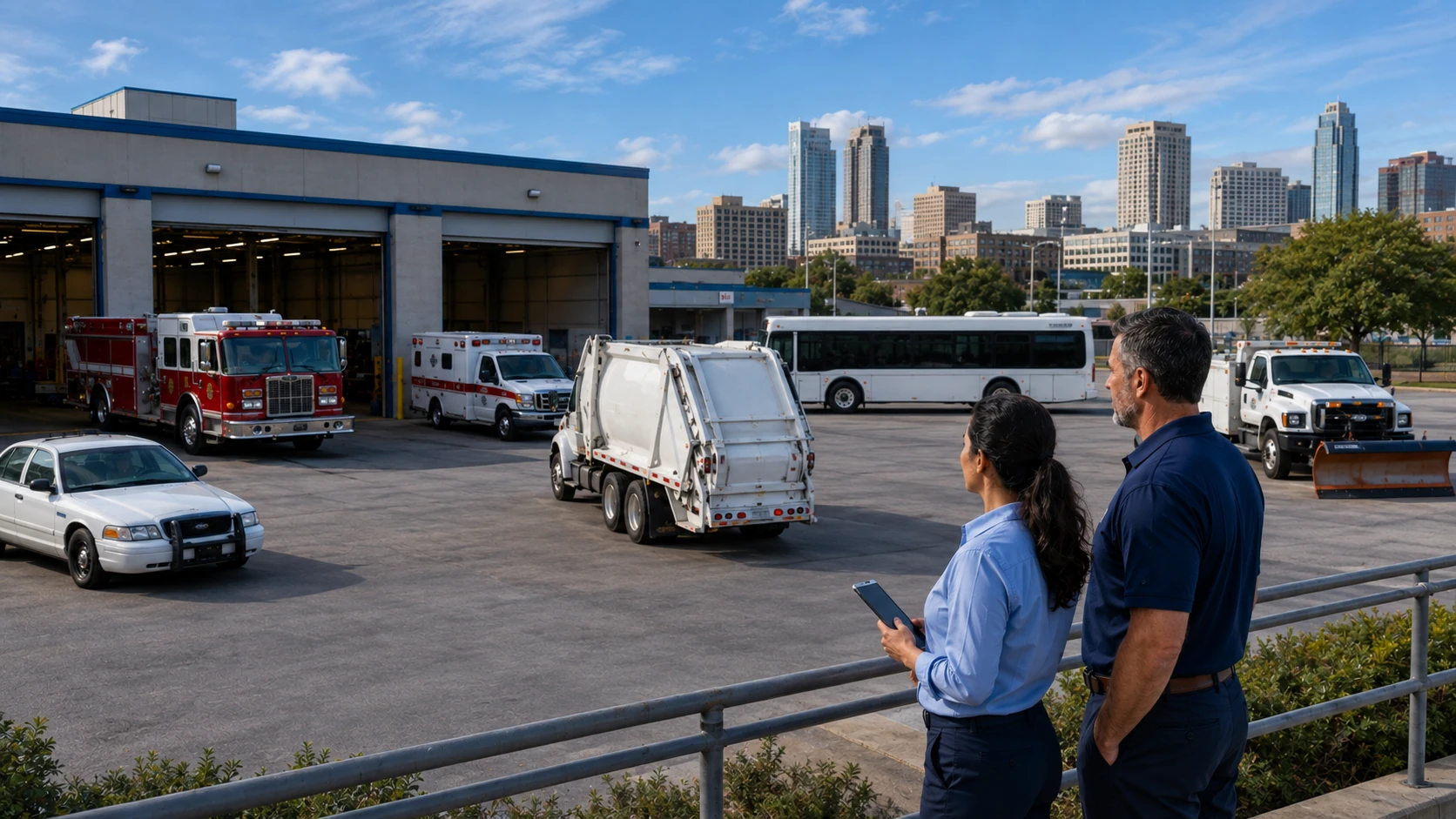
A municipal fleet is the collection of vehicles and equipment that a city, town, or county owns, operates, or leases to deliver public services. It can include police cruisers, fire engines, ambulances, sanitation trucks, buses, snowplows, utility vehicles, and administrative cars. Effective government fleet management keeps these assets available, safe, properly documented, and accountable to the public.
Municipal fleets are one part of a broader fleet management software environment, but their public service responsibilities, funding processes, and reporting requirements distinguish them from most private fleets.
Key Takeaways
- A municipal fleet supports local public services. It includes vehicles and equipment operated by city, town, or county departments.
- Municipal fleets serve many departments. Public works, police, fire, emergency medical services, sanitation, transit, and administration may all depend on the same fleet operation.
- Public accountability affects every fleet decision. Purchases, maintenance expenses, vehicle use, and replacement decisions may face audits, public records requests, and council review.
- Municipal budgeting takes time. Major purchases often require formal approval, which can extend vehicle replacement timelines.
- Centralized records improve control. Shared maintenance, inspection, work order, cost, and utilization records help departments make consistent decisions.
What Is a Municipal Fleet?
A municipal fleet is a group of vehicles and equipment used by a local government to provide services to residents. Unlike a fleet built primarily to earn revenue, a municipal fleet exists to support public safety, sanitation, infrastructure, transportation, administration, and emergency response.
The precise fleet composition depends on the community. A rural county may operate road maintenance trucks and sheriff vehicles across a wide area. A large city may manage thousands of assets across public safety, sanitation, parks, utilities, and transit.
Who Owns and Manages a Municipal Fleet
The municipality normally owns or leases the assets, but management responsibility can follow different structures.
Common management models include:
- A central fleet department controls purchasing, maintenance, fuel, records, and replacement planning for every agency.
- Individual departments manage their own vehicles, budgets, and maintenance.
- A hybrid model centralizes maintenance and procurement while departments control assignments and daily use.
- A contracted model uses outside repair providers while municipal employees retain oversight and recordkeeping responsibility.
Cities with shared garages, technicians, and reporting systems often use a centralized or hybrid structure. The requirements of public works fleet management can still differ from those of police, fire, sanitation, or administrative departments, even when the assets share one central fleet office.
What Vehicles and Equipment Make Up a Municipal Fleet
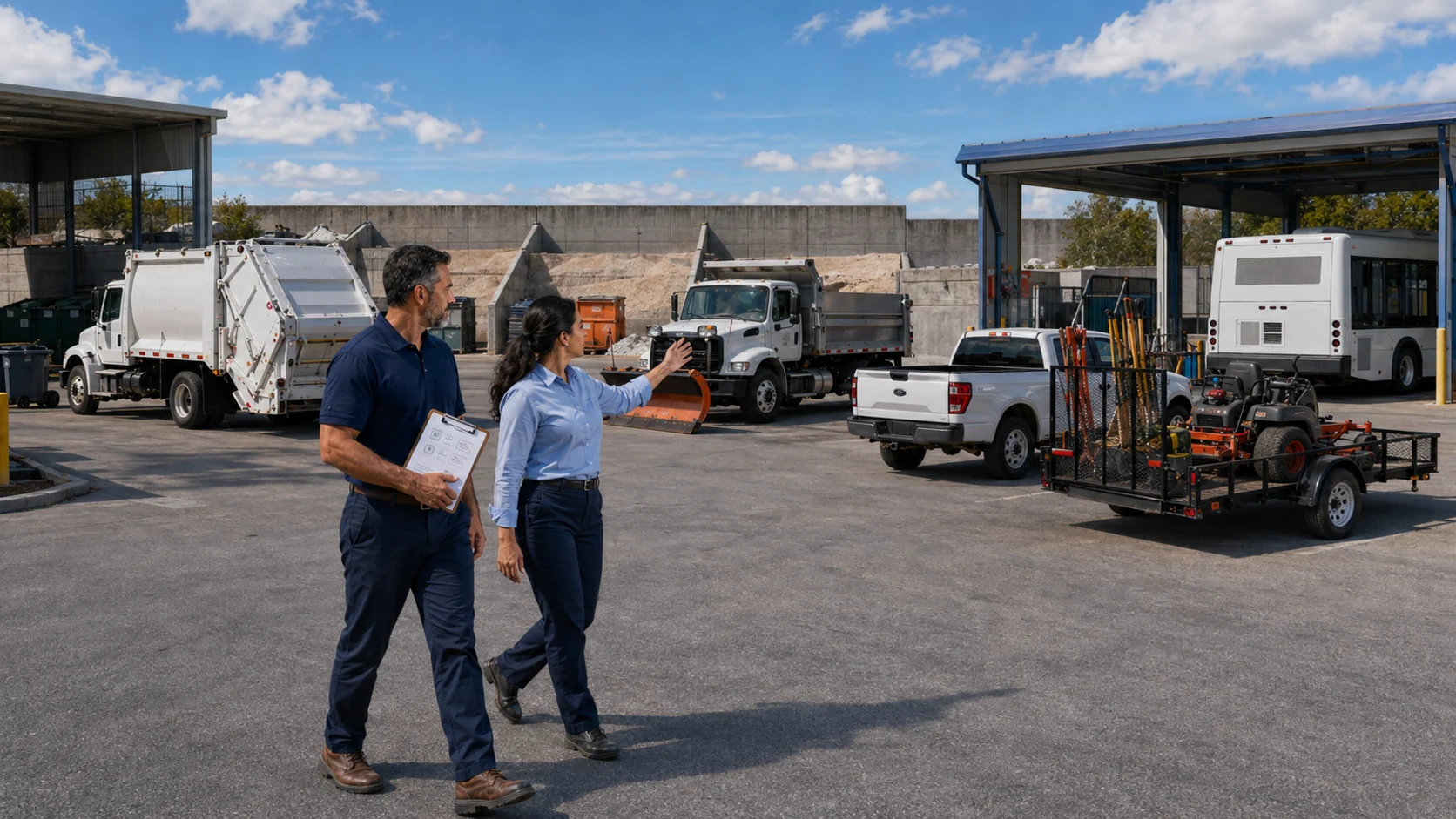
Municipal fleets contain a wider variety of assets than many commercial operations. One garage may support passenger cars, emergency vehicles, heavy trucks, trailers, and powered equipment.
The following table shows common municipal fleet categories and their maintenance needs.
| Vehicle category | Typical use | Common examples | Typical maintenance demands |
|---|---|---|---|
| Public safety | Law enforcement and emergency response | Police cruisers, fire engines, ambulances | Frequent inspections, dependable readiness, specialized equipment checks |
| Public works | Road, drainage, utility, and infrastructure service | Dump trucks, snowplows, sweepers, utility trucks | Hydraulic service, corrosion control, seasonal preparation, heavy component wear |
| Sanitation | Waste and recycling collection | Refuse trucks, recycling trucks, support vehicles | Brake service, hydraulic maintenance, frequent lubrication, stop and start wear |
| Transit | Public passenger transportation | City buses, shuttle buses, accessible vans | Daily inspections, tire and brake monitoring, accessibility equipment service |
| Parks and grounds | Property and recreation maintenance | Pickup trucks, mowers, tractors, trailers | Seasonal maintenance, engine hour tracking, attachment inspections |
| Administration | Staff travel and municipal business | Sedans, sport utility vehicles, light vans | Mileage based service, registration, fuel, and assignment records |
Because utilization varies significantly, maintenance cannot rely on mileage alone. A snowplow may accumulate limited annual mileage but operate for long hours under heavy load. A police cruiser may idle for extended periods. Mowers and generators may require service based on engine hours.
Municipal Fleet vs. Corporate Fleet vs. State and Federal Fleet
Municipal, corporate, state, and federal fleets all manage vehicles, drivers, maintenance, fuel, and costs. Their purpose and accountability differ.
A corporate fleet supports a private organization and usually focuses on revenue, productivity, customer service, or employee transportation. Company leadership can often approve vehicle changes more quickly when the financial case is clear.
A municipal fleet supports local services and uses public funds. Purchases may require council approval, competitive bidding, public documentation, and alignment with an adopted budget.
State fleets support statewide agencies such as transportation departments, public safety agencies, and environmental departments. Federal fleets support national agency missions and operate under federal acquisition, use, and reporting rules.
The main distinctions are:
- Funding source: Municipal fleets use local taxes, service fees, grants, bonds, and approved public budgets.
- Purpose: Their vehicles support essential community services rather than private profit.
- Accountability: Decisions may be reviewed by elected officials, auditors, residents, and public records officers.
- Procurement: Formal purchasing rules can limit vendor selection and extend acquisition timelines.
- Service area: Municipal fleets usually operate within a city, town, county, or regional authority.
How Municipal Fleets Are Funded and Budgeted
Municipal fleet funding normally comes from capital budgets, operating budgets, department allocations, grants, or internal service funds. The chosen model affects when vehicles can be purchased and how departments account for fleet costs.
Common funding methods include:
- Capital budgets for vehicle purchases and major equipment
- Operating budgets for repairs, fuel, tires, labor, and routine services
- Internal service charges allocated to departments based on vehicles or usage
- State or federal grants for eligible safety, transit, or emissions projects
- Bonds or other approved financing for large replacement programs
Councils or governing boards usually approve annual budgets. Departments may need to justify a replacement one or more budget cycles before funds become available. The fleet data needed to defend a government budget can include age, utilization, downtime, maintenance cost, safety history, and the service consequences of keeping an unreliable vehicle.
Replacement timelines often run longer than those of private fleets because public procurement requires documentation, competition, approval, and available funding. Managers also need to identify government fleet procurement triggers early enough to begin the process before an essential asset becomes unreliable.
Compliance and Public Accountability Requirements
Municipal fleets must follow applicable federal, state, and local requirements. The exact rules depend on the vehicle, location, department, funding source, and service performed.
Common compliance responsibilities include:
- Vehicle inspections and documented defect correction
- Registration, licensing, and insurance records
- Driver qualification and training records where required
- Emissions testing and environmental reporting
- Maintenance and repair documentation
- Procurement and disposal records
- Responses to audits and public records requests
Federal rules do not automatically govern every municipal vehicle. However, 41 CFR Part 102 34 provides a useful federal recordkeeping reference. It requires covered federal agencies to maintain accurate inventory, cost, use, maintenance, and lifecycle data through a fleet management information system.
Public fleets should apply the same core principle: every important decision needs a reliable supporting record. Government fleet compliance gaps can increase costs when missed inspections, expired documents, or incomplete service histories remain hidden across departments.
Records must also show what happened, when it happened, who completed the work, and whether reported defects were resolved. Understanding why government fleet records fail audits helps managers identify missing approvals, incomplete work histories, and inconsistent cost entries before a formal review begins.
Common Challenges Municipal Fleets Face Today
Municipal fleet problems often develop as a sequence rather than as isolated events. The following workflow shows how common pressures can affect service delivery.
- Vehicles remain in service beyond their preferred replacement point. Funding constraints and long approval cycles keep aging assets active.
- Maintenance becomes increasingly reactive. Technicians spend more time responding to breakdowns, repeat defects, and emergency repairs.
- Records separate across departments. Paper forms, spreadsheets, email, and independent systems prevent managers from seeing complete histories.
- Costs become harder to explain. Missing labor, parts, downtime, and utilization data weaken budget requests and replacement cases.
- Procurement begins too late. The municipality starts sourcing a replacement only after reliability has already declined.
- Service capacity suffers. Essential vehicles become unavailable, forcing departments to delay work, share assets, or rent temporary replacements.
These pressures are especially visible in public works fleet management challenges, where seasonal demand, varied equipment, limited resources, and public expectations converge.
How Municipal Fleets Use Software to Stay Compliant and Efficient
Fleet software gives municipal departments a shared location for vehicle information, inspections, service activity, costs, documents, and utilization. It can support centralized oversight without preventing each department from managing its own daily responsibilities.
The most relevant capabilities include:
- Preventive maintenance schedules based on mileage, dates, or engine hours
- Digital inspections that send reported defects to responsible staff
- Work orders that record labor, parts, repairs, and completion details
- Document storage for registrations, policies, and supporting records
- GPS telematics for mileage, engine hours, location, and utilization
- Reports that compare expenses, downtime, and service activity
Using preventive maintenance schedules helps departments plan routine service before a vehicle becomes unavailable. This is particularly valuable for assets with seasonal workloads or limited backup capacity.

A digital vehicle inspection process can also create a traceable path from a driver reported defect to review, repair, and closure. AUTOsist can bring these maintenance and accountability records into one system while supporting different vehicle classes and municipal departments.
Frequently Asked Questions
-
What is the difference between a municipal fleet and a government fleet?
A municipal fleet belongs to or serves a city, town, county, or similar local authority. Government fleet is a broader term that can also include state and federal agency vehicles. -
What vehicles are typically part of a municipal fleet?
A municipal fleet may include police cruisers, fire engines, ambulances, buses, dump trucks, snowplows, sanitation trucks, utility vehicles, mowers, trailers, and administrative cars. -
Who is responsible for managing a municipal fleet?
A central fleet department, public works department, individual municipal agencies, or a combination of these groups may manage the fleet. The structure depends on the municipality and its resources. -
How are municipal fleets funded?
Municipal fleets use capital and operating budgets, department allocations, internal service funds, grants, bonds, and other funding approved by the governing authority. -
What software do municipal fleets use for maintenance and compliance?
Municipal fleets use software that tracks assets, preventive maintenance, inspections, work orders, service histories, costs, documents, fuel, and utilization. The system should support consistent records across departments.