 Miya Bholat
Aug 27, 2026
How Much Fuel Does Idling Use in Fleet Vehicles?

Fleet vehicles can consume from 0.16 to 1.5 gallons of fuel per hour while idling. The actual rate depends on the vehicle class, engine size, accessory demand, operating temperature, and whether equipment such as a power takeoff system is running. A fleet fuel management system helps managers compare idle hours with fuel purchases instead of applying one assumed rate to every vehicle.
This variation is especially important for trucking and logistics fleet operations, where overnight climate control and auxiliary power demands can add hundreds of idle hours per truck each year.
Key Takeaways
-
Idle fuel consumption ranges from about 0.16 to 1.5 gallons per hour.
Vehicle class and operating load determine where a vehicle falls within that range. -
Two similar vehicles can record different idle burn rates.
Engine condition, idle speed, accessory demand, temperature, and operating environment all affect consumption. -
Mixed fleets need class specific calculations.
Applying one average rate across sedans, vans, trucks, and powered equipment can produce misleading cost estimates. -
Some idling supports real work.
Power takeoff equipment, refrigeration, safety systems, and climate protection may require the engine to remain running. -
Commercial idling limits are usually local.
Many state and city rules limit idling to three to five minutes, but exemptions and fines vary by location.
How Much Fuel Does Idling Actually Burn? The Real Range by Vehicle Type
The United States Department of Energy reports that vehicles across all classes waste more than 6 billion gallons of fuel annually through idling. The figures below show why managers should not reduce every vehicle to a single gallons per hour estimate.
| Vehicle type | Fuel and engine | Operating condition | Estimated idle fuel use |
|---|---|---|---|
| Compact sedan | Gas, 2.0 liter | No load | 0.16 gal per hr |
| Compact sedan | Diesel, 2.0 liter | No load | 0.17 gal per hr |
| Large sedan | Gas, 4.6 liter | No load | 0.39 gal per hr |
| Medium and heavy truck | Diesel, 6 to 10 liter | No load | 0.44 gal per hr |
| Tow truck | Diesel, 26,000 lb GVW | No load | 0.59 gal per hr |
| Semi truck | Diesel | No load | About 0.64 gal per hr |
| Medium and heavy truck | Gas, 5 to 7 liter | No load | 0.84 gal per hr |
| Delivery truck | Diesel, 19,500 lb GVW | No load | 0.84 gal per hr |
| Transit bus | Not specified | Normal idle | About 1.0 gal per hr |
| Diesel truck with PTO | Diesel | Loaded equipment operating | About 1.5 gal per hr |
The above is taken by United States Department of Energy fleet management research and Argonne National Laboratory idle reduction research.

Light Duty Vehicles: Sedans, Pickups, and Vans
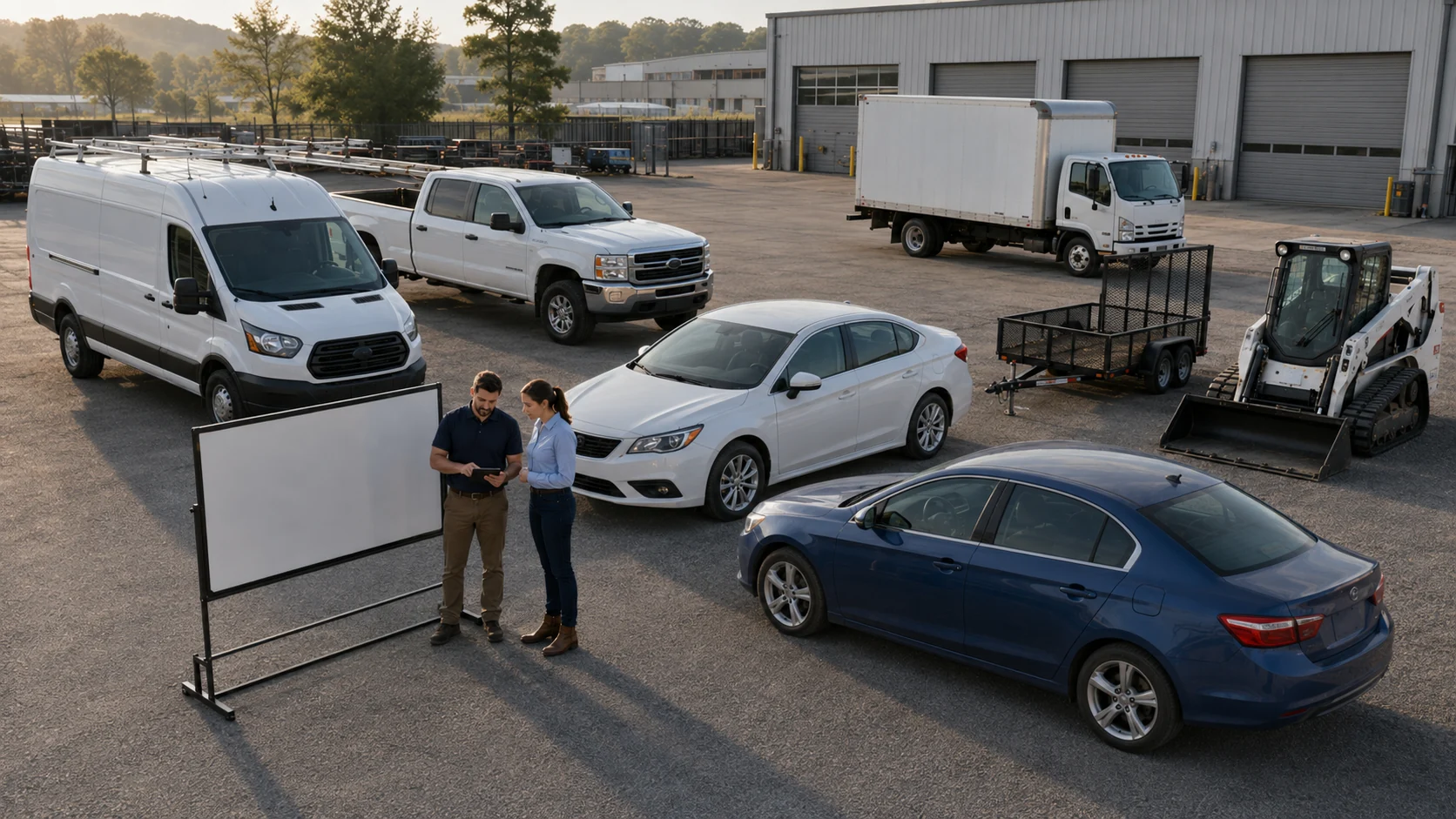
A compact 2.0 liter gasoline sedan uses about 0.16 gallons per hour with no load, while a large 4.6 liter gasoline sedan uses about 0.39 gallons. That is more than twice the fuel consumption even though both vehicles belong to the passenger vehicle category.
This difference reinforces why managers should investigate fuel consumption differences between similar fleet vehicles before treating every variance as driver behavior or fuel misuse.
Medium and Heavy Duty Trucks
Medium and heavy vehicles show an even wider spread. An unloaded diesel truck may consume 0.44 gallons per hour, while a gasoline truck in a comparable weight range can consume 0.84 gallons. A delivery truck in the worksheet also consumes 0.84 gallons per hour, while a tow truck records 0.59 gallons.
Vehicle role matters as much as size. Fleets can set more meaningful benchmarks by assigning fuel efficiency targets by vehicle role rather than comparing every truck against one company average.
Long Haul Trucks and Overnight Idling
A semi truck without an operating load consumes about 0.64 gallons per hour, but overnight use can add up quickly. Argonne National Laboratory reports that long haul trucks typically idle for 1,830 hours per year.
At $4 per gallon, the NACFE Idle Reduction Playbook estimates that one long haul truck can waste $4,000 to $6,000 in fuel annually through overnight idling. The exact total depends on climate, duty cycle, and auxiliary power demand.
What Actually Changes Your Idle Fuel Burn Rate
The table provides useful starting rates, but it cannot predict every vehicle under every operating condition. The following variables explain much of the difference:
- Engine displacement and idle RPM: A larger engine generally requires more fuel to remain running. Elevated idle settings increase consumption further.
- Accessory demand: Air conditioning, heating, lighting, hydraulic systems, refrigeration, and electrical equipment place additional demand on the engine.
- Power takeoff load: A diesel truck operating a bucket, crane, pump, or similar system can consume about 1.5 gallons per hour.
- Ambient temperature: Extreme heat and cold increase climate control demand. Cold engines can also consume more fuel while reaching operating temperature.
- Altitude: Lower air density can change engine performance and increase the work required under certain operating conditions.
Fuel use can also vary across depots because climate, traffic, routes, and work practices differ. Reviewing fuel trends across fleet locations helps separate site conditions from vehicle faults or driver habits.
How to Calculate Your Fleet's Real Idle Fuel Cost
Use separate burn rates for each vehicle group. The core formula is:
Idle cost = burn rate × fuel price × idle hours × vehicle count
A mixed fleet calculation should follow this workflow:
- Group vehicles by type and operating load. Separate light duty vehicles, delivery trucks, semi trucks, and vehicles that operate power takeoff equipment.
- Measure idle hours for each group. Use engine data or telematics for a normal week or month instead of relying on driver estimates.
- Assign an appropriate burn rate. Use 0.16 gallons per hour for the compact gasoline sedans, 0.84 for the delivery trucks, and 1.5 for trucks operating power takeoff equipment in this example.
- Calculate each group separately. At $4 per gallon, ten sedans idling 20 hours cost $128. Five delivery trucks idling 30 hours cost $504. Two power takeoff trucks operating 40 hours cost $480.
- Add the group totals. The mixed fleet spends $1,112 for 430 combined idle hours.
- Compare actual fuel records with the estimate. Large gaps may indicate incorrect idle classifications, fuel card exceptions, maintenance problems, or missing operating data.
A fleet fuel management software feature can centralize fuel entries and vehicle records so managers can compare calculated consumption with actual purchases.
Productive Idle vs. Wasted Idle: How to Tell the Difference
Not every idle event should be treated as waste. Managers need to ask whether the running engine supports a required function or only reflects habit.
Productive idle commonly includes these situations:
- Operating a bucket, crane, pump, or other power takeoff equipment
- Maintaining refrigeration for temperature sensitive cargo
- Supporting emergency lights, medical equipment, or safety systems
- Protecting occupants during extreme temperatures
- Meeting sleeper berth climate and power needs
Wasted idle usually includes unattended warmups, engines running during paperwork, extended loading waits without equipment demand, and vehicles left running during routine stops.
Idle events are easy to miss when managers only review mileage and total fuel purchases. Understanding why equipment idle time goes unnoticed helps teams find gaps between operating hours and productive work.
Detailed idle time reduction strategies cover policies, driver coaching, shutdown settings, and auxiliary power options. The immediate diagnostic priority is identifying which idle events serve a real operating need.
Idling Laws Fleets Need to Know Before They Get Fined
The United States does not have one general commercial vehicle idling limit that applies everywhere. State and local authorities set most limits. Twenty nine states have idling laws, and many commercial rules apply to vehicles above 8,500 to 10,000 pounds GVWR.
| Location | General limit | Representative fine range | Important detail |
|---|---|---|---|
| California | 5 minutes | $300 to $1,000 | Rules and exemptions depend on vehicle activity |
| New York State | 5 minutes | $500 to $18,000 | Applies to many vehicles over 8,500 pounds |
| New York City | 3 minutes | $350 to $2,000 | Limit falls to 1 minute near schools |
| New Jersey | 3 minutes | $100 to $1,500 | Penalties increase for repeat violations |
Common exemptions may cover these operating conditions:
- Extreme temperatures
- Power takeoff or auxiliary equipment use
- Traffic conditions
- Emergency and safety operations
- Approved sleeper berth use under hours of service requirements
The American Transportation Research Institute maintains a free and continuously updated Idling Regulations Compendium covering state and local requirements. Fleets should verify rules for every operating area because a legal exemption in one jurisdiction may not apply in another.
Turning Idle Fuel Data Into Action
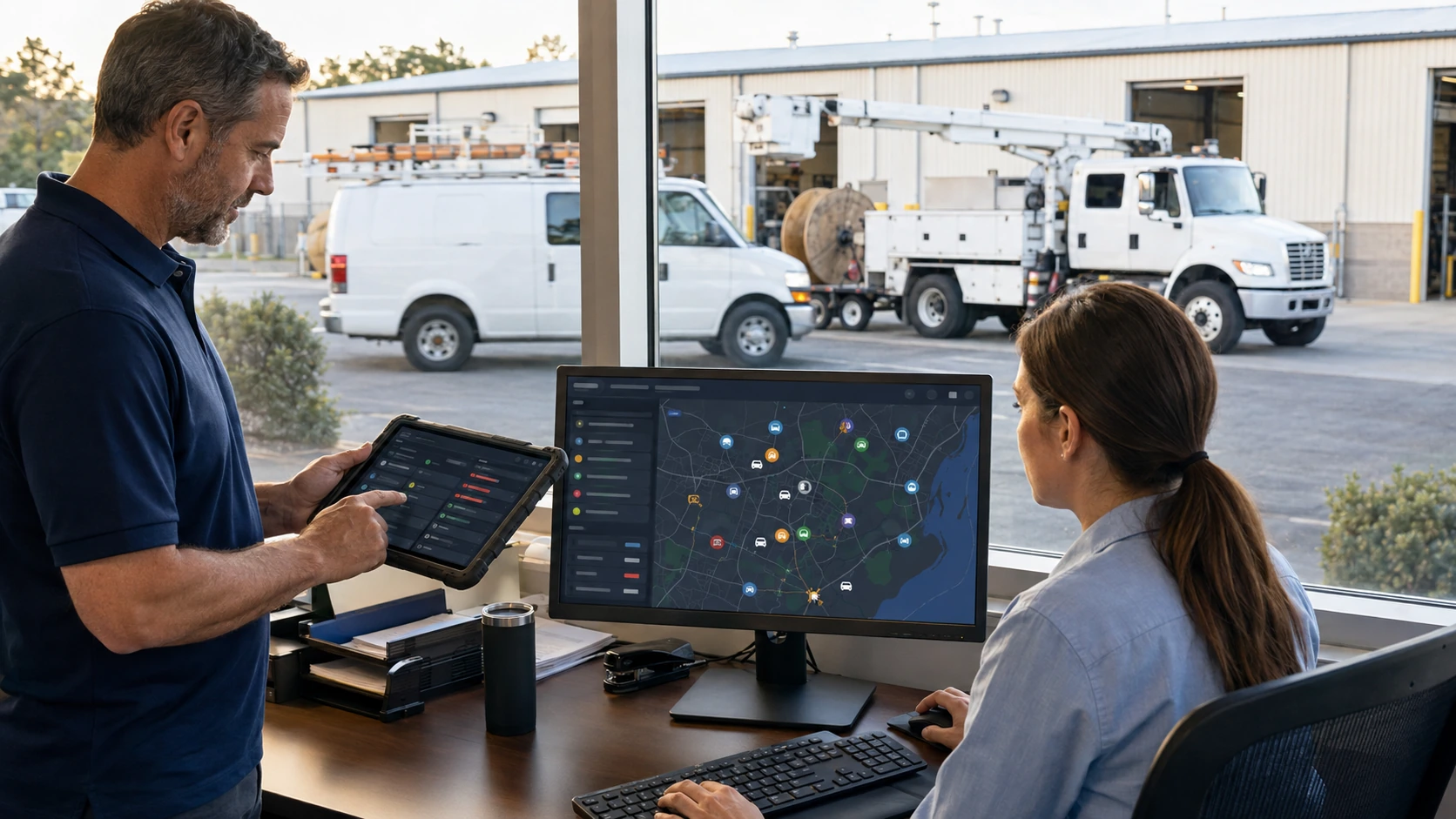
Start by recording idle duration, location, engine hours, fuel use, and equipment status for each vehicle. GPS tracking and telematics can identify when a stationary vehicle remains running and help separate brief traffic stops from extended parked events.
Next, reconcile telematics records with fuel card purchases. If the calculated idle fuel does not explain the recorded increase, review maintenance condition, unauthorized purchases, route changes, and operating load.
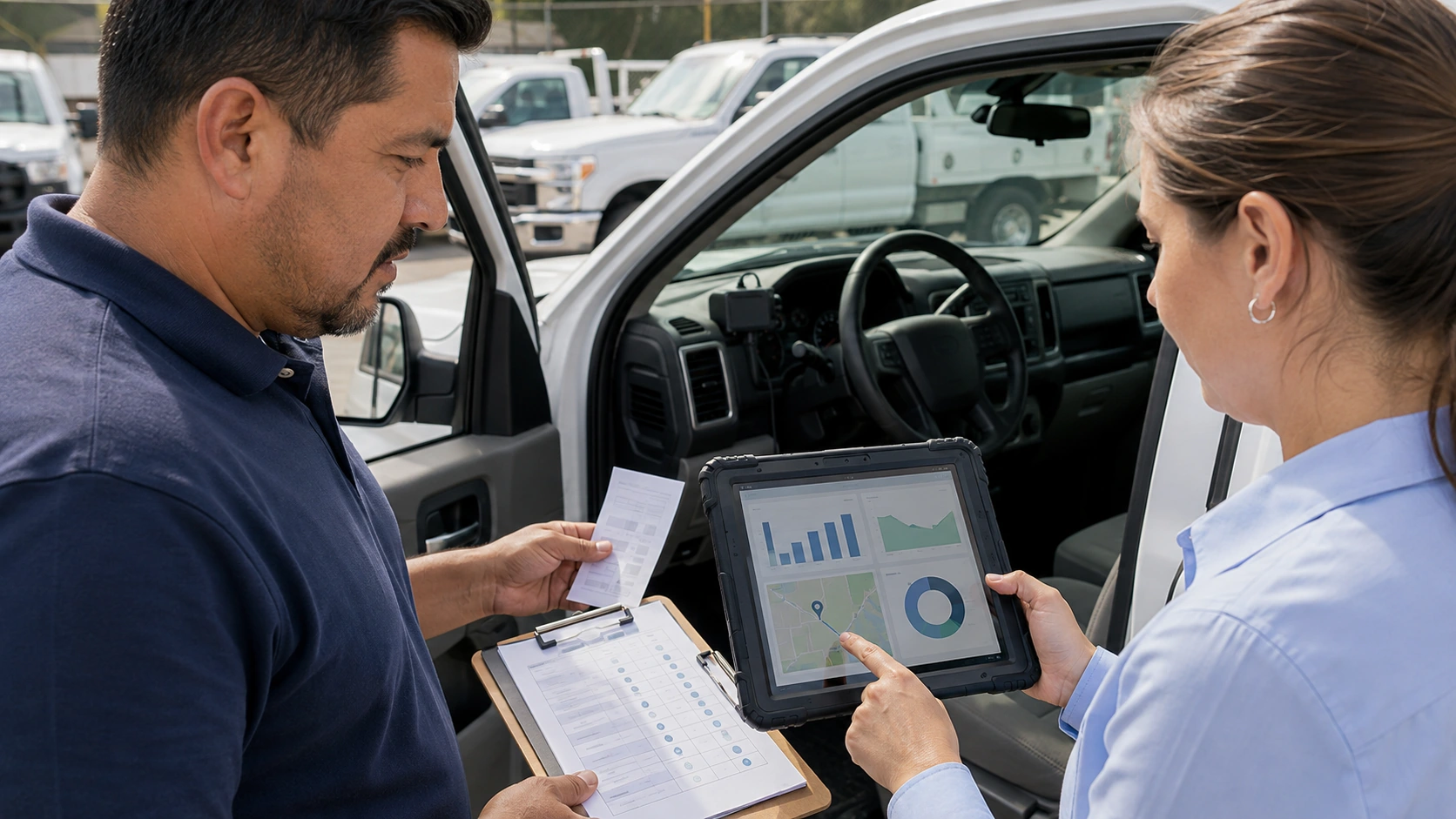
Idle hours also affect maintenance. A truck that travels few miles but powers equipment for hundreds of hours still accumulates engine wear. Preventive maintenance schedules based on engine hours help fleets service these vehicles according to actual engine use rather than mileage alone.
Frequently Asked Questions
-
How much fuel does a truck burn idling for one hour?
A truck may burn from about 0.44 to 1.5 gallons in one hour. An unloaded semi truck uses about 0.64 gallons per hour, while a diesel truck operating power takeoff equipment can use about 1.5 gallons. -
Is it worse to idle or to restart the engine?
For routine parked stops, extended idling generally consumes more fuel than restarting a modern engine. Fleets should still follow manufacturer guidance and preserve idling required for safety, equipment operation, or extreme temperatures. -
How long can a commercial truck legally idle?
Many state and local limits allow three to five minutes, but the legal time depends on the vehicle weight, location, activity, and available exemptions. Managers should check current state and city rules for every operating area. -
Does idling damage an engine over time?
Extended idling adds engine hours, consumes fuel, and can increase wear even when the odometer does not move. It may also shorten service intervals for engine oil and other hour sensitive components. -
How can fleets track idle time automatically?
Fleets can use GPS and telematics data to detect when the engine is running while the vehicle remains stationary. Managers can then compare idle hours with fuel purchases, locations, vehicle roles, and engine hour maintenance records.