 Miya Bholat
Jul 24, 2026
When Should Fleets Use Mobile Repair Instead of a Shop?
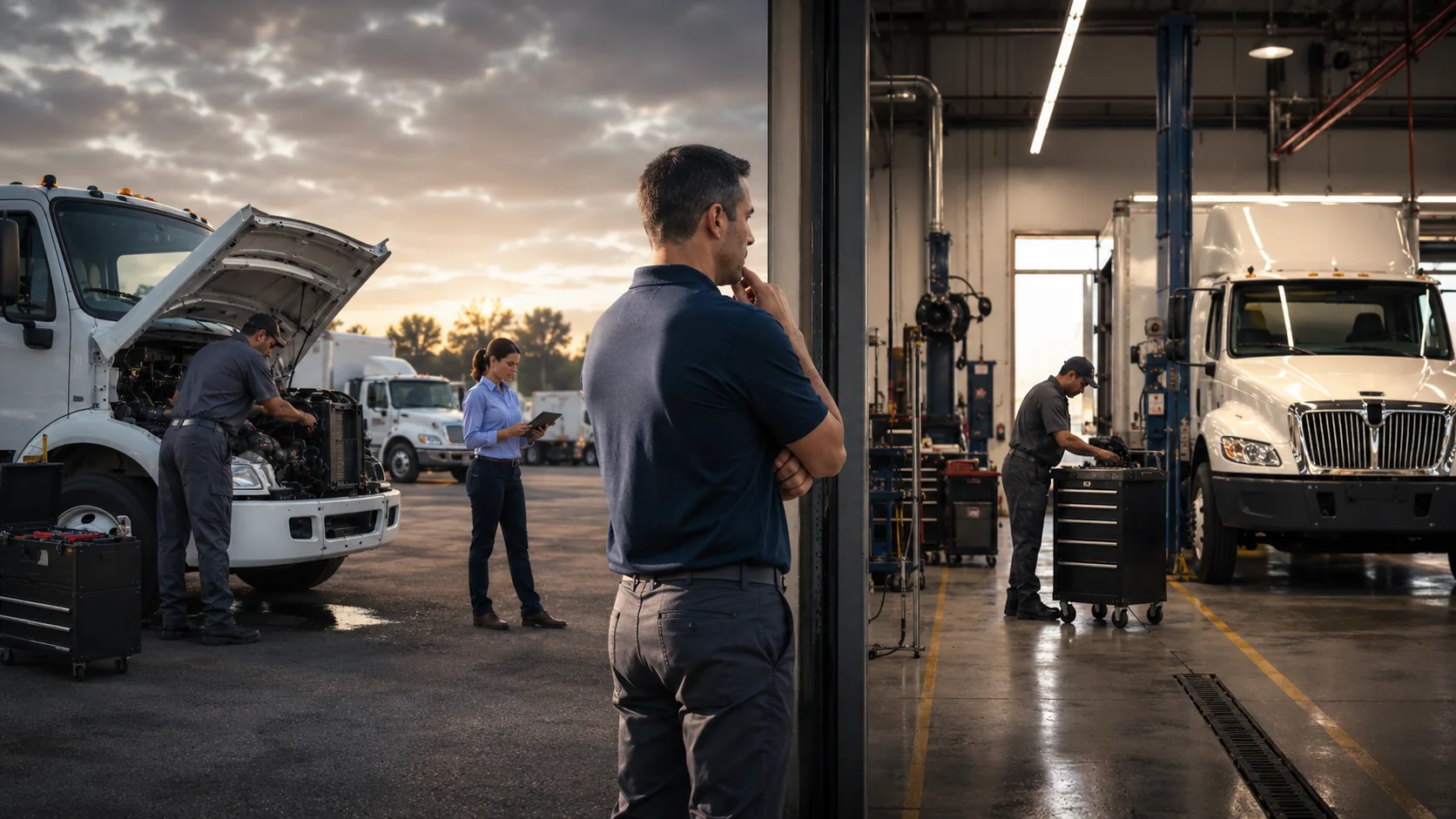
Fleets should use mobile repair when a qualified technician can safely complete the work at the roadside, yard, or job site without a lift, major disassembly, or controlled testing. A repair shop is the better choice when the fault involves major drivetrain work, complex diagnostics, safety critical systems, or equipment that cannot be used reliably in the field.
The decision should be based on safety, repair complexity, vehicle location, downtime exposure, and documentation requirements rather than convenience alone. A centralized fleet maintenance software system helps managers evaluate those factors while keeping every inspection, repair, part, and cost connected to the correct vehicle record.
Key Takeaways
- Use mobile repair for accessible and contained work. Roadside faults, routine maintenance, and minor component replacements are often faster to complete where the vehicle already sits.
- Use a shop when infrastructure affects repair quality. Major engine, transmission, suspension, and aftertreatment work may require lifts, specialized tools, controlled testing, and extended diagnostic time.
- Treat repair routing as an operational decision. The right question is not whether mobile service is cheaper, but which option restores the vehicle safely at the lowest total cost.
- Apply the same documentation standard everywhere. Mobile repairs need complete work orders, technician details, parts records, labor time, inspection results, and service history entries.
- Compare results across both repair channels. Cost per repair, repeat failures, completion time, and downtime reveal whether mobile service or shop service performs better for each repair category.
Why the Mobile vs. Shop Decision Costs More Than You Think
A poorly routed repair can create several expenses at once. Sending a simple battery or lighting repair to a distant shop may add towing, driver time, administrative coordination, and an extra day of vehicle downtime. Calling a mobile technician for work that requires heavy disassembly can be equally expensive if the repair remains incomplete and the vehicle must later be moved to a shop.
Heavy commercial towing charges vary by vehicle size, distance, location, recovery complexity, and urgency. Reported cases show that even relatively straightforward heavy truck towing can reach several hundred dollars, while complex recoveries can cost thousands. Downtime can cost considerably more than the repair itself once lost work, replacement vehicles, delayed deliveries, and paid driver time are included.
Mercedes Benz Vans uptime research found that UK businesses reported average losses of £1,172.20 for each day a van remained unavailable. The amount will differ by fleet and market, but the finding illustrates why fleets should calculate their own cost per unavailable vehicle rather than looking only at the repair invoice.
The financial exposure commonly includes:
- Towing and roadside recovery charges
- Lost revenue or missed service work
- Driver wages during unavailable time
- Rental or replacement vehicle costs
- Dispatch and route disruption
- Repeat repair costs when the first response does not correct the cause
This is why fleet downtime management begins with routing each defect to the repair environment most likely to resolve it correctly the first time.
Commercial mobile repair industry estimate that 80 to 85 percent of commercial repair work may be possible on site, but that estimate depends on technician capability, vehicle condition, available tools, weather, access, and safety. It should not be treated as a target requiring every fleet to move most repairs into the field.
When Mobile Repair Is the Right Call
Mobile repair works best when the fault is clearly defined, safely accessible, and unlikely to require extensive testing after the technician completes the work.
Roadside Breakdowns and Stranded Vehicles
A mobile technician may be the fastest option when a vehicle is stranded far from the fleet yard or repair shop. Common examples include dead batteries, damaged tires, air leaks, failed lights, loose electrical connections, and certain starter or charging system problems.
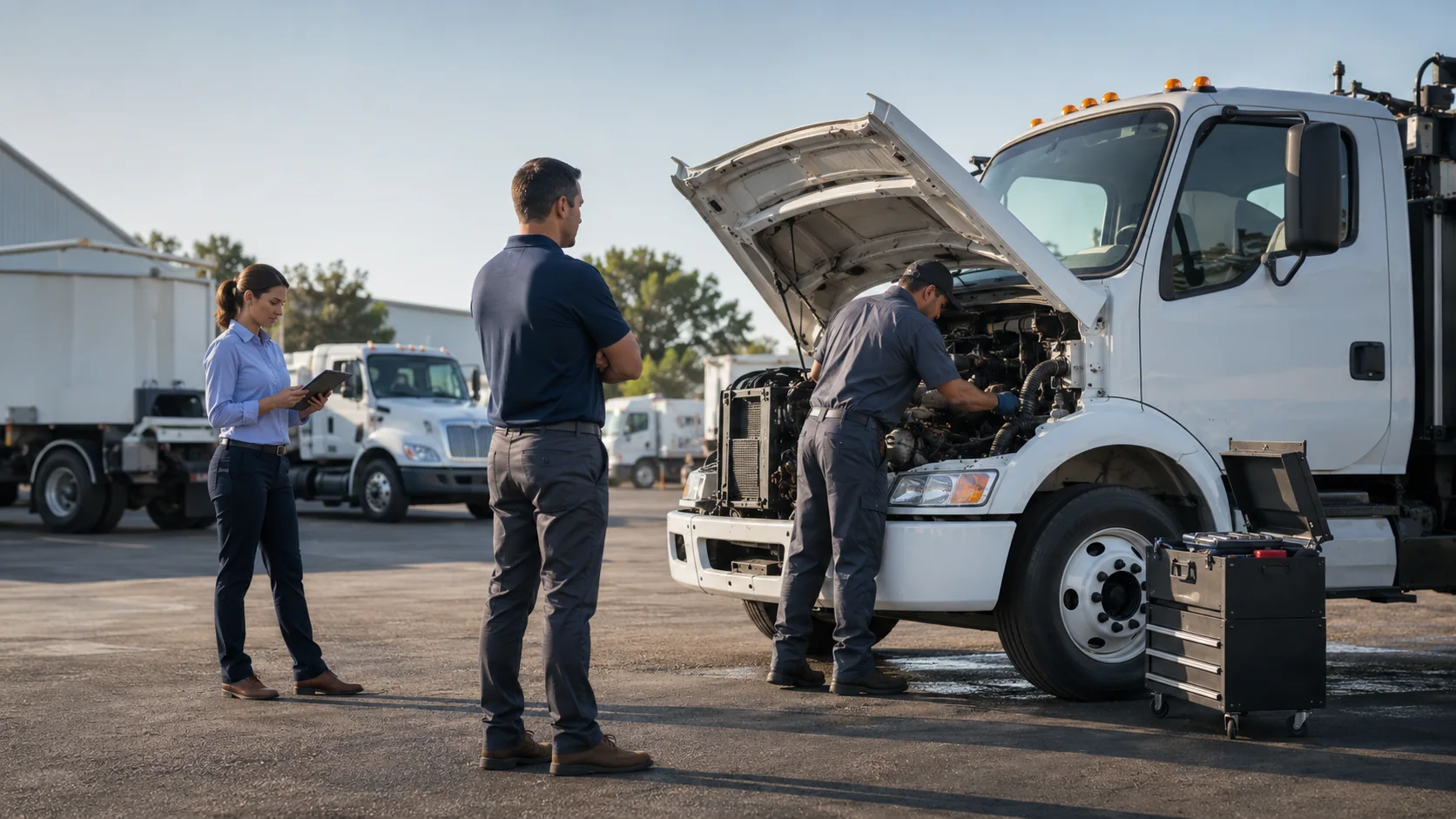
Consider a truck stopped at a job site 40 miles from the nearest qualified shop. If a technician can replace a battery cable or repair an air line safely at the site, dispatching mobile service may avoid a heavy tow and several additional hours of downtime.
The dispatcher should still confirm:
- The vehicle is in a safe working area
- The technician can legally and safely access the fault
- The probable repair does not require a lift
- Parts and diagnostic equipment are available
- The vehicle can be tested safely before returning to service
Scheduled Preventive Maintenance at Your Yard
Mobile service can be particularly effective for planned maintenance because the fleet controls the location, timing, and vehicle availability. Oil changes, filter replacements, lubrication, fluid checks, belt inspections, battery testing, and basic adjustments can often be completed during shift changes or overnight parking periods.
For example, three trucks due for the same PM service can be parked together at the yard. A mobile technician can complete all three during one visit instead of having three drivers make separate shop trips.
A consistent preventive maintenance checklist and schedule helps the technician follow the same requirements for every unit. Fleets can also use preventive maintenance scheduling tools to group work by due date, location, mileage, or engine hours.
Minor Repairs That Don't Need a Lift or Bay
Many contained component repairs can be completed safely on level ground. Examples may include starter replacement, alternator replacement, coolant hose replacement, sensor testing, lamp replacement, battery service, and certain brake adjustments.
The presence of a portable scan tool does not automatically make every diagnostic task suitable for the field. Managers should distinguish between retrieving a fault code and completing the testing required to confirm the root cause.
When a defect is uncertain, the decision process described in repair now or monitor fleet issues can help the team decide whether the unit can continue operating, needs immediate field attention, or must be removed from service.
Remote or Multi Site Fleets
Mobile repair can reduce logistical complexity for construction, utility, landscaping, delivery, and service fleets whose vehicles rarely return to one central location.
A construction fleet operating across multiple job sites may lose several productive hours simply moving equipment to and from a shop. Mobile service allows suitable inspections, maintenance, and minor repairs to occur where the assets are already assigned.
The same logic applies to distributed delivery or trucking and logistics fleets that need to protect route availability without sending every manageable defect through a central facility.
When the Shop Is Still the Better Option
A shop becomes the better choice when its infrastructure improves technician safety, diagnostic accuracy, repair quality, or post repair verification.
Major Engine, Transmission, and Drivetrain Work
Internal engine repairs, transmission overhauls, clutch replacements, differential work, axle housing replacements, and major driveline repairs usually require equipment that cannot be reproduced safely beside a vehicle.
These repairs may involve:
- Vehicle lifts or heavy support equipment
- Controlled fluid handling
- Large component removal
- Precision measurement tools
- Clean work areas
- Several technicians working together
- Long testing and reassembly periods
Attempting major work in the field can increase labor time, contamination exposure, parts handling problems, and technician risk.
Complex Diagnostics and Aftertreatment Repairs
DPF failures, DEF system faults, intermittent electrical problems, ECM concerns, and communication network issues may require extended testing. A technician may need stable power, manufacturer level software, smoke testing, wiring diagrams, controlled regeneration procedures, or access to known good components.
A mobile technician can often perform an initial assessment. However, when the cause remains uncertain, moving the vehicle to a properly equipped shop may prevent repeated parts replacement and recurring breakdowns.
This is especially important when a fleet is already experiencing repeated failures despite scheduled maintenance. The causes described in why vehicles break down even with preventive maintenance often require deeper diagnosis rather than another temporary correction.
Repairs Requiring Safety Critical Testing
Extensive brake work, suspension repairs, steering concerns, frame damage, wheel end repairs, and other safety critical conditions should be routed to a facility that can support the complete repair and verification process.
The shop may provide access to brake testing, alignment equipment, controlled road testing, torque procedures, inspection pits, and lifting equipment. When safe verification cannot be completed at the field location, convenience should never override the need for proper testing.
A Simple Decision Framework for Routing Repairs
Fleet managers should establish the routing process before the next breakdown occurs. The following workflow can be used by dispatchers, technicians, supervisors, and maintenance coordinators.
Repair routing workflow
This process can also be converted into a concise routing table.
| Decision factor | Mobile repair is usually suitable when | A shop is usually better when |
|---|---|---|
| Vehicle location | The vehicle is stranded, remote, or already parked at the yard | The vehicle can reach a capable facility safely |
| Repair access | The component is accessible on level ground | The repair requires lifting or major disassembly |
| Diagnostic scope | The fault is known and can be confirmed with portable tools | The fault is intermittent, complex, or system wide |
| Safety verification | Functional checks can be completed safely at the site | Load, brake, alignment, or controlled road testing is required |
| Time impact | Waiting for a tow would extend downtime | Mobile service would delay a repair that the shop can begin sooner |
| Repair history | The issue is isolated and has not repeated | The same repair has already returned or failed again |
The Documentation Gap Most Fleets Miss with Mobile Repairs
Mobile service changes where maintenance occurs, but it does not reduce the fleet's recordkeeping responsibility. A roadside repair still needs the same defect details, technician identification, labor time, parts used, repair notes, inspection result, and return to service confirmation as work completed inside a shop.
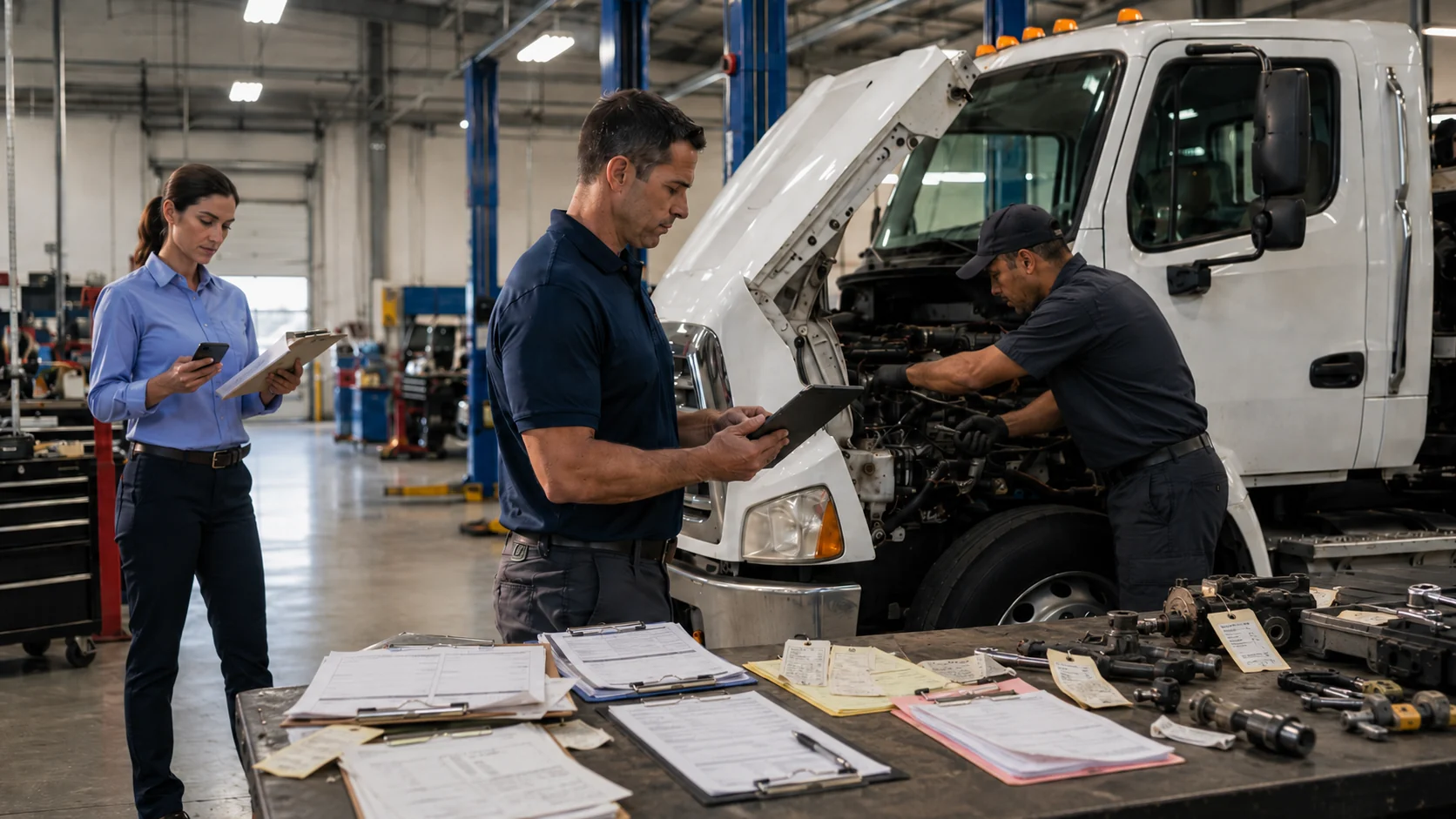
Field repairs often create gaps because information arrives through phone calls, text messages, paper invoices, driver notes, and vendor emails. Without a standard process, the repair may never reach the vehicle's permanent record.
A complete mobile repair record should include:
- Vehicle and asset identification
- Date, time, and repair location
- Original driver or inspection complaint
- Technician diagnosis
- Labor hours and parts used
- Photos or supporting documents
- Final safety verification
- Repair cost and vendor invoice
- Follow up inspection requirements
AUTOsist can connect fleet maintenance work orders, inspection findings, parts, costs, and vehicle service history to the same asset record. Mobile access also allows technicians and drivers to submit information while the vehicle and repair details are still in front of them.
A digital vehicle inspection process is especially valuable when the original defect came from a driver inspection. The fleet can trace the issue from defect report to work order, completed repair, and return to service approval.
How to Track Repair Outcomes Across Both Channels
Fleets should not assume that mobile repair or shop repair is always more cost effective. They should compare results by repair category, vehicle type, vendor, location, and operating environment.
Useful measures include:
| Metric | What it reveals |
|---|---|
| Total cost per repair | Whether travel, towing, labor, parts, and vendor fees make one channel more expensive |
| Vehicle downtime hours | Which option returns the asset to service faster |
| Repeat repair rate | Whether the original work corrected the underlying cause |
| First visit completion rate | How often mobile technicians finish the work without a second visit or shop transfer |
| Cost per unavailable hour | The operational cost created while the vehicle cannot work |
| Repair cycle time | The time from defect report through verified completion |
| Vendor response time | How quickly the selected provider begins work |
Centralized records make these comparisons possible. For example, repeated mobile brake adjustments on the same vehicle may indicate that the fleet is treating symptoms while postponing a shop level repair. Similar patterns may appear in recurring sensor replacements, cooling system leaks, electrical faults, or aftertreatment alerts.
A fleet reports dashboard can help managers compare downtime, repair frequency, labor, parts, and cost across both channels. Over time, those results create fleet specific routing rules that are more reliable than assumptions or vendor preferences.
Frequently Asked Questions
-
What types of fleet repairs can be done on site by a mobile mechanic?
Mobile mechanics can often handle batteries, tires, air leaks, lights, starters, alternators, hoses, basic diagnostics, routine inspections, and scheduled preventive maintenance. Suitability depends on technician capability, site safety, weather, component access, and the testing required after repair. -
Is mobile fleet repair cheaper than taking vehicles to a shop?
Mobile repair can be cheaper when it avoids towing, driver travel, and unnecessary downtime. It may become more expensive when the technician cannot finish the work, must return with additional parts, or eventually sends the vehicle to a shop. -
How do I keep accurate maintenance records for mobile repairs?
Require every mobile repair to generate a complete work order containing the defect, diagnosis, technician, labor, parts, cost, location, and verification result. Attach the vendor invoice and supporting photos to the vehicle's permanent service history. -
What percentage of fleet repairs can be handled by mobile service?
Some commercial repair professionals estimate that 80 to 85 percent of work may be possible on site. Fleets should treat this as an industry estimate rather than a universal benchmark because repair mix, vehicle class, technician capability, tooling, and site conditions vary considerably. -
How do I decide whether to send a truck to the shop or call a mobile tech?
Start with safety and repair access. Then determine whether the work requires a lift, major disassembly, specialist tooling, controlled diagnostics, or safety critical testing. Compare mobile response time, towing distance, shop availability, downtime cost, and the risk of needing a second repair.