 Miya Bholat
Sep 11, 2026
After-Hours Readiness Checklist for Public Works Fleets
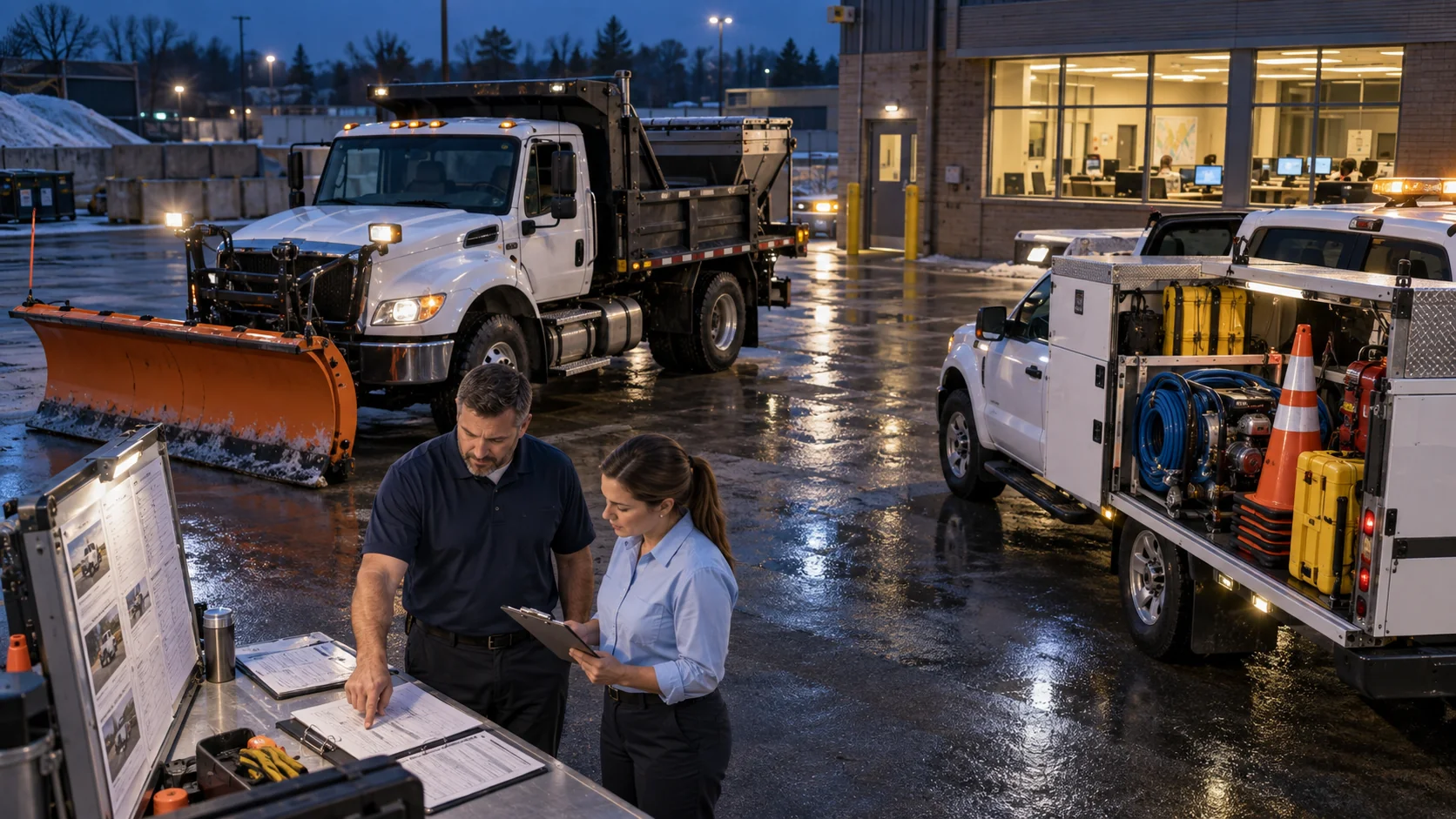
After hours readiness means an on call vehicle, its operator, equipment, and release records can respond without the shop, office, or fleet manager open. It is a practical requirement of fleet management software: readiness must be proven at 2 a.m., not assumed from a daytime inspection.
Daytime fleet management has a staffed shop, supervisors, parts access, and time to sort out a problem. Public works teams operate differently once the normal shift ends. The public works fleet management program must let a crew locate, release, and deploy the right unit with little support at the facility.
That standard covers people, vehicles, equipment, and records. One unavailable part can stall response.
Key Takeaways
- A passed morning inspection is not an overnight readiness check. Fuel, battery charge, defects, access, and equipment can change before the next callout.
- Mission ready is more specific than available. A truck in the yard is not ready for snow, flooding, or a utility emergency until its required attachment and response supplies are in place.
- Access needs redundancy. Spare keys, gate credentials, and release authority cannot sit with one unavailable person.
- Off hours documentation protects the next shift. A short digital record captures the defect, work performed, and vehicle condition before details disappear.
- Callout metrics show where readiness actually breaks. Review failures and response time by vehicle, crew, and event type after every event.
Why After Hours Callouts Test a Public Works Fleet Differently
After hours response compresses every decision. A crew may need to leave within minutes, while the mechanic who knows a truck's history is home and the person who approves a replacement key is unavailable. This is why a municipal fleet needs a separate readiness process. For a baseline on municipal fleet roles, see what makes up a municipal fleet.
The pressure is also financial. Local labor agreements vary, but callout work can carry premiums of 50 to 75 percent above standard labor between 6 p.m. and 6 a.m. A preventable no start can create premium labor, delayed public service, and an emergency repair that may cost two to three times scheduled maintenance labor.
The Calls That Pull Crews Out After Hours
The call roster should reflect the events your jurisdiction actually receives, not only its winter plan. Common triggers include:
- Snow, freezing rain, ice control, and blocked priority routes
- Storm debris, downed trees, traffic signal hazards, and flooded intersections
- Water main breaks, sewer backups, pump failures, and utility excavation support
- Barricade placement, generator deployment, and urgent facility access
APWA's 2022 Public Works Benchmarks: Winter Maintenance pilot surveyed 150 agencies, a reminder that winter operations need a deliberate planning model. Readiness must also work for the overnight utility event without a forecast.
After hours testing is one of the broader public works fleet management challenges public agencies need to solve.
The Readiness Gap: Why a Vehicle That Passed This Morning's Inspection Still Fails at 2 A.M.
A driver vehicle inspection report records a point in time. It does not confirm what happened after a vehicle idled with warning lights on, returned from a route with a half full tank, or received a defect note that was deferred for the next shop opening. Urgent conditions can make those small gaps visible quickly, especially during the events that make government fleet projects urgent.
Consider a dump truck that passed inspection at 8 a.m. An accessory left connected creates a parasitic battery drain. At 1 a.m., the on call driver has a plow route but no start, no charger, and no status note. The morning inspection was accurate. It was not the final readiness confirmation.
Common Failure Points Unique to Off Hours Response
Before each on call rotation, ask the crew to check the failure points that daytime systems often miss:
- Battery and electrical drain from lights, accessories, liftgates, or radios
- Fuel assumptions after route changes, idling, or a vehicle swap
- Deferred defects that were logged but have not been repaired or cleared
- Plow blades, spreaders, pumps, or generators stored nearby but not mounted
- Missing keys, access cards, chargers, hose fittings, or barricade supplies
Repeat issues need more than another note in a defect log. A corrective action plan for repeat fleet defects should assign an owner, due date, and verification step before that vehicle returns to an on call pool.
Who Has Access and Authority When the Shop Is Closed
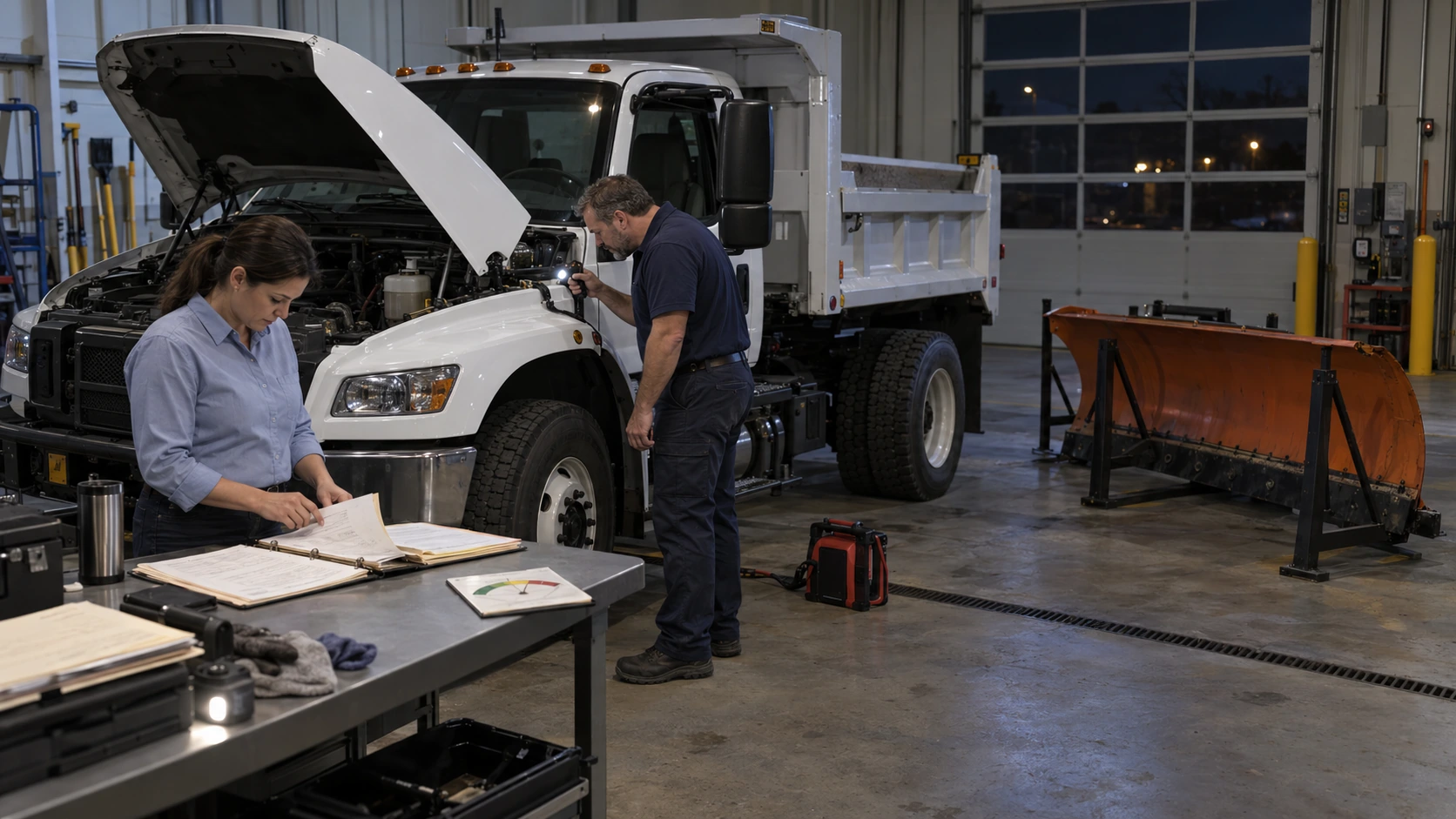
The most prepared unit is still useless if the driver cannot enter the yard or release it. Identify every dependency in the after hours chain: gate access, building keys, vehicle keys, fuel authorization, dispatch contact, and authority to substitute a unit. GPS tracking and telematics can help dispatch locate the closest equipped vehicle, but they do not solve a locked gate or unclear release rule.
Building a Redundant On Call and Access Plan
Use an access plan that works even when the primary supervisor does not answer. It should include:
- Two authorized key holders for each response pool, with sealed spare key control
- Rotating gate and badge credentials tested before the on call period
- A current contact roster with primary and backup escalation roles
- Written substitution authority for mission critical units
- A short record of who released the vehicle and why
Clear rosters work best when fleet user and driver management assigns the correct access by role rather than relying on informal group messages. Check the roster at the start of the rotation and after staffing changes.
Equipment, Attachments, and Pre Staging Readiness
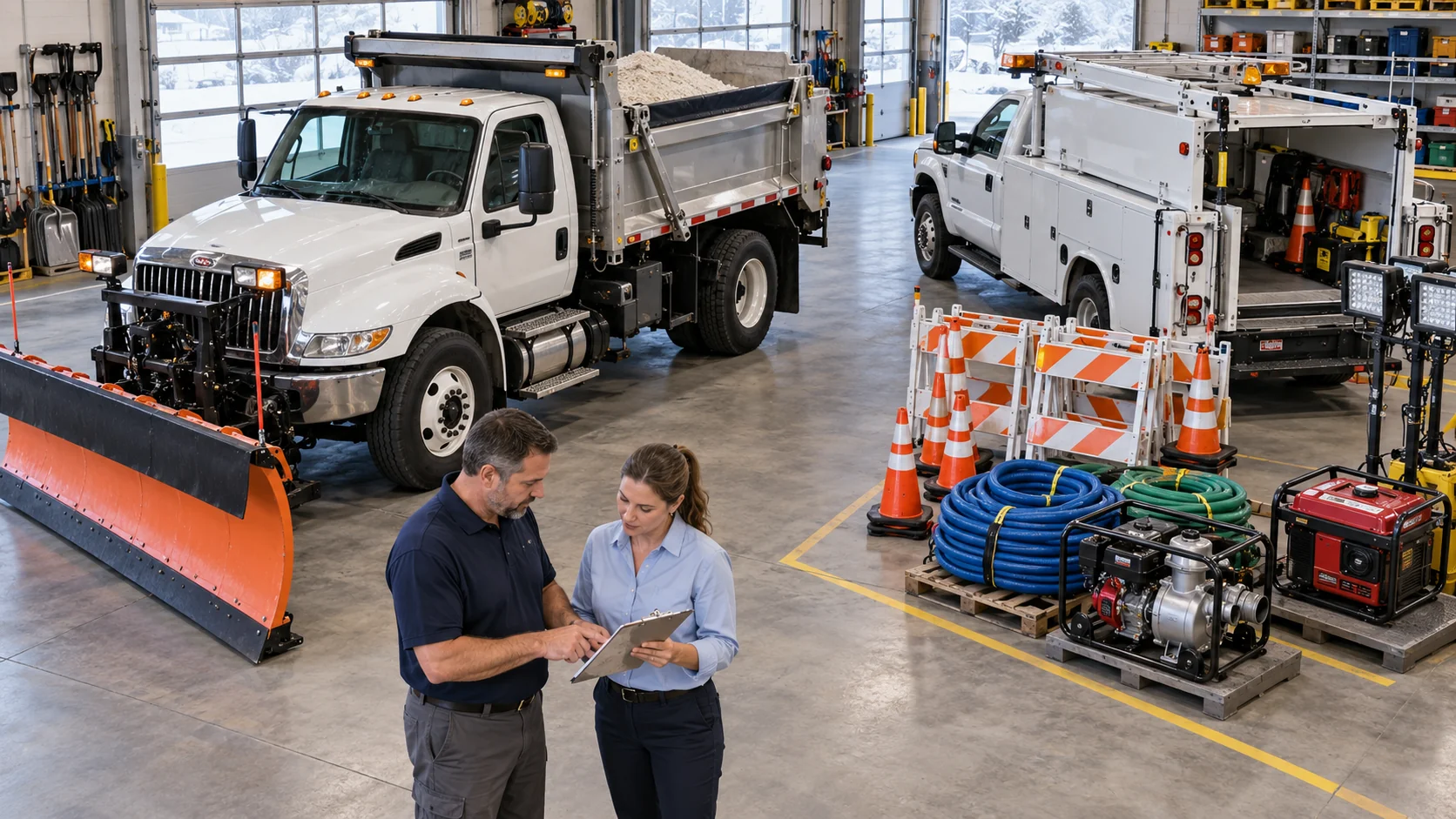
Available describes ownership and location. Mission ready describes whether a unit can perform the job right now. A truck may be available in the back lot while its plow is unmounted, its spreader is empty, or its pump fittings are in a locked cabinet. That difference decides whether the first callout becomes a response or a scramble.
Pre Staging Checklist by Event Type
Pre stage supplies according to an event plan, then verify the configuration before the forecast window or on call rotation begins:
- Winter events: mounted plow or spreader, material load confirmed, tire chains where used, route materials, charged communications equipment
- Storm and flood events: pump, hoses, fittings, barricades, cones, lights, and generator fuel
- Utility emergencies: traffic control kit, excavation support supplies, portable lighting, basic spill response items, and contact information
End of shift fuel confirmation matters here because a response cannot rely on a daytime fill assumption. A documented fleet fuel card policy should also tell drivers how to purchase fuel when the normal site is closed and which receipt details must be captured.
Closing the Documentation and Communication Gap During Off Hours Response
When paper inspection sheets remain in the cab or an issue is only relayed by phone, the next shift loses facts. That causes compliance gaps, weak repair prioritization, and difficulty defending why overtime or emergency work occurred. A digital vehicle inspection app lets the on call driver capture condition photos, defect status, and a time stamped handoff while the event is still fresh.
Some findings should never be left for an informal morning discussion. Set a clearly defined manager review path for safety defects that require manager sign off, especially when a vehicle was released under an emergency exception. The record should state the condition, interim control, approving role, and next action.
That same record gives the maintenance team a clean starting point when the shop opens, instead of forcing it to reconstruct the callout from memory.
Building an After Hours Readiness Checklist Crews Will Actually Use
The checklist must expose a gap and be short enough to complete before a rotation. Build it into the system that holds vehicle history and work orders, such as a digital vehicle inspection app, then require an exception note rather than allowing a blank response.
- Confirm the response pool. List the assigned vehicle, backup vehicle, operator, and event role.
- Check fuel and battery condition. Verify the actual fuel level, battery health indicator, charger availability, and accessory shutdown.
- Verify mounted equipment. Confirm the attachment, load, fittings, tools, and response supplies needed for the likely event.
- Review open defects. Remove any unit with a mission critical defect or document the approved substitute.
- Test access. Confirm keys, gate credentials, fuel access, and the spare key location.
- Confirm the contact chain. Validate primary and backup contacts, dispatch instructions, and release authority.
- Record the final status. Capture the checklist, exception, and time of verification before the shift ends.
Metrics to Review After Every After Hours Callout
Review the event while details are available. A fleet reports dashboard can group results by vehicle, crew, and event type rather than leaving managers to reconstruct texts and paper logs.
| Metric | How to calculate it | What it signals |
|---|---|---|
| Callout response time | Dispatch time to unit arrival | Whether access, staging, or routing slowed the response |
| Equipment failure rate | Failed units divided by units deployed | Whether the on call pool is truly reliable |
| Callouts per vehicle or crew | Total callouts divided by each assigned unit or crew | Uneven workload and backup capacity gaps |
| Deferred defect resurfacing rate | Callouts affected by an earlier deferred defect divided by deferred defects | Whether follow up repairs are closing the loop |
| Documentation completion rate | Complete callout records divided by total callouts | Whether the organization can defend work and costs later |
Turning After Hours Response Into a Repeatable Process
After hours readiness improves when it becomes a defined handoff, not a supervisor's memory. Use each event to adjust the response pool, access plan, equipment staging, and defect rules. The same discipline supports fire department fleet readiness: the unit must be ready before the next urgent call, not merely by the next business day.
The same operating principle applies to ambulance daily tracking, where information needs to be reliable before the next crew takes the unit.
It also strengthens the police post shift fleet review process by making vehicle condition and exceptions visible before the next dispatch.
Frequently Asked Questions
-
How often should on call public works vehicles be inspected?
Inspect each assigned on call vehicle before the rotation begins, then recheck it after a major event, vehicle swap, extended idling period, or equipment change. The purpose is to verify current response readiness, not only daytime roadworthiness. -
What should an after hours public works readiness checklist include?
Include the assigned vehicle and backup, actual fuel level, battery condition, open defect status, mounted equipment, required supplies, key and gate access, fuel purchasing access, and the primary and backup contact roster. Record any exception before the crew goes on call. -
Who should be authorized to access and release an emergency vehicle after hours?
At least two trained people should have controlled access to each response pool, including spare key access and gate credentials. The written plan should also state who can approve a substitute vehicle if the assigned unit has a mission critical defect. -
When should plows, spreaders, pumps, and other response equipment be pre staged?
Pre stage equipment before the forecast window or before an on call rotation begins. A vehicle is mission ready only when its required attachment, supplies, and operator are available for the specific event, not when the equipment is still stored elsewhere in the facility. -
What should be documented after an after hours public works callout?
Record the dispatch time, vehicle and crew used, event type, response and arrival time, defects found, equipment or supplies used, work completed, and any vehicle condition that requires follow up. This creates a reliable handoff for the shop, protects budget documentation, and makes repeat readiness gaps easier to find.