 Miya Bholat
Oct 22, 2026
Oil & Gas Fleet Telematics: What to Track?

Oil and gas fleets should prioritize engine hours, idle time, fuel consumption, driver behavior, and Hours of Service (HOS) data before expanding into advanced tracking metrics. Unlike ordinary vehicle tracking, oil and gas fleet telematics must account for equipment that operates without moving, vehicles traveling between remote well sites, and drivers working under specialized regulations. A connected fleet tracking and telematics system helps managers turn these different data points into decisions about equipment utilization, maintenance, fuel waste, and safety.
Remote drilling locations, hazardous materials, specialized machinery, and long distances between facilities make oil and gas fleet management unusually demanding. A tanker traveling hundreds of miles needs different oversight than a stationary drilling support unit. Tracking everything equally creates unnecessary alerts while important operational problems remain unnoticed.
Key Takeaways
- Track engine hours before mileage for stationary equipment. Pumps, compressors, and service equipment accumulate operating hours even when they travel very little.
- Measure idle time and fuel consumption together. Separating productive engine operation from unnecessary idling reveals avoidable fuel costs.
- Make driver safety a tracking priority. Speeding, harsh braking, fatigue exposure, and seatbelt use deserve attention across field vehicles and transportation fleets.
- Change tracking priorities by operation and asset type. Upstream equipment, midstream haulers, and downstream delivery vehicles face different operational risks.
- Verify oilfield HOS exceptions before using them. The 24 hour restart and well site waiting time provisions have different eligibility requirements.
Why Oil and Gas Fleets Need More Than Basic GPS
GPS tells managers where equipment is located. It does not necessarily explain whether that equipment is operating efficiently, developing mechanical problems, or exposing workers to unnecessary risk.
Oil and gas fleets operate across highways, unpaved access roads, drilling locations, and storage facilities. Some vehicles transport people or materials, while others spend hours operating machinery without moving.
Consequently, the right tracking priorities depend on the work each asset performs. A fleet manager should classify equipment by operation type and duty cycle before selecting performance metrics.
What Telematics Actually Captures
Telematics combines GPS location with vehicle and equipment information. Depending on the hardware and available integrations, it can capture:
- GPS position and movement history
- Engine hours, mileage, and diagnostic fault codes
- Fuel consumption and engine idle time
- Speeding, harsh braking, and other driving events
- Duty status and HOS information through compatible systems
- Sensor readings from connected specialized equipment
Understanding how fleet telematics collects and processes vehicle data helps managers identify which signals their existing equipment can provide and where additional sensors are necessary.
Not every device captures every metric. Managers should confirm equipment compatibility, data accuracy, and connectivity before relying on information for maintenance or compliance decisions.
What to Track First: The 5 Highest Value Data Points
The highest value data points are those that help managers prevent downtime, reduce waste, and protect workers.
The safety stakes are substantial. A 2023 NIOSH report on oil and gas extraction fatalities identified 470 worker deaths from 2014 through 2019. Vehicle incidents accounted for 26.8%, making them the leading fatal event category in that dataset.
Start with these five priorities, then adjust their order for your operations.
1. Engine Hours and Utilization
Engine hours reveal how long equipment operates, regardless of distance traveled.
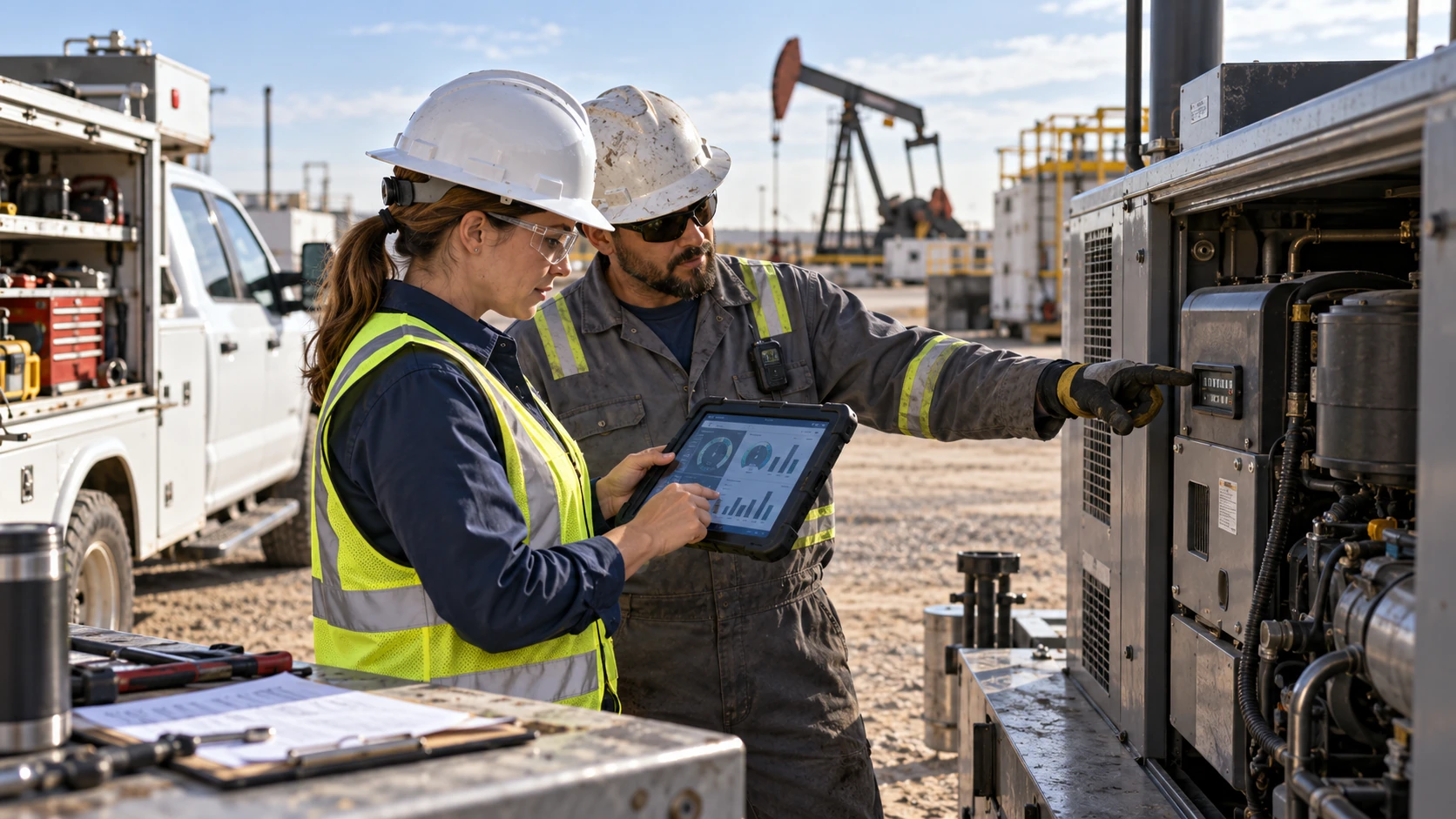
For stationary pumps, drilling support equipment, and compressors, compare operating hours with productive working hours. An asset logging substantial engine time without corresponding output may indicate excessive standby operation, inefficient assignment, or unnecessary running.
Primary metric: Productive engine hours divided by total engine hours.
2. Idle Time
Idle monitoring reveals fuel consumption that does not contribute directly to productive work.
The U.S. Department of Energy's idle fuel consumption reference data estimates approximately 0.8 gallon per hour for heavy diesel trucks, 0.6 for medium diesel vehicles, and 0.23 for light gasoline vehicles. Engine load and auxiliary equipment can increase consumption.
For example, ten heavy diesel trucks idling unnecessarily for two hours daily could consume approximately 16 gallons.
Managers should separate operationally necessary idling from waste. The causes and costs become clearer when reviewing how much fuel fleet vehicles use while idling.
3. Fuel Consumption and Fuel Level Anomalies
Track gallons consumed, fuel purchases, operating hours, and unexpected changes in tank levels.
A sudden fuel level drop while equipment remains parked deserves investigation. However, sensor inaccuracies, legitimate transfers, and maintenance activity can also explain unusual readings.
Primary metric: Gallons per operating hour for stationary assets and miles per gallon for transportation vehicles.
4. Driver Behavior and Fatigue Signals
Monitor speeding, harsh braking, excessive driving exposure, and available seatbelt indicators.
NIOSH developed an In Vehicle Monitoring System guide specifically for the oil and gas extraction industry, emphasizing behavioral monitoring and driver coaching.
Rather than treating every speeding alert equally, use a fleet driver risk score to evaluate repeated patterns against driving exposure.
Telematics can flag fatigue risk factors, such as extended driving periods, but cannot independently confirm that a driver feels fatigued.
5. Duty Status and Hours of Service
Track driving time, on duty activity, qualifying waiting periods, and available driving hours for drivers subject to HOS rules.
A driver waiting at a well site is not automatically off duty. Incorrect duty classification can create violations even when GPS location records look accurate.
Primary metric: Accurate duty status records matched to the driver's applicable HOS rules and actual activities.
Engine Hours vs. Mileage: Why Hours Win in the Field
Mileage works well for highway vehicles because distance represents much of their activity. Stationary equipment needs another measurement.
Consider a service unit that travels only 20 miles but operates a pump for eight hours. Mileage captures the trip, while engine hours capture the equipment's operating exposure.
Comparing both measurements, as explained in engine hours versus miles for fleet fuel reviews, helps managers distinguish low utilization, productive equipment operation, and excessive idling.
For maintenance, follow the applicable manufacturer schedule, including engine hours, mileage, calendar time, and severe service conditions.
What Changes by Operation Type
Upstream, midstream, and downstream fleets should not use identical telematics scorecards. Their equipment, operating conditions, and highest risks differ.
| Operation and Representative Asset | Primary Tracking Priority | Key Risk Addressed |
|---|---|---|
| Upstream: Drilling, well servicing, pumps and field equipment | Engine hours, idle time, fault codes, utilization | Unexpected equipment downtime and wasted operating hours |
| Midstream: Gathering, bulk haul, produced water tankers | HOS, driver behavior, route adherence, fuel use | Road accidents, fatigue, and transportation compliance |
| Downstream: Fuel distribution and delivery tankers | Location, delivery arrival, route efficiency, driver safety | Delayed deliveries, unnecessary mileage, and delivery risk |
Upstream operations depend heavily on equipment availability. Engine hours and diagnostic alerts help maintenance teams identify changing equipment conditions. Location still matters, particularly when equipment frequently moves between remote sites. Fleet geofencing can document arrival, departure, and unauthorized movement around designated locations.
Midstream operations depend more heavily on transportation activity. Tanker movement, driving hours, route conditions, and fuel consumption become central priorities. A truck delivering produced water or sand may spend hours waiting at a site, making accurate duty status classification essential.
Downstream operations need reliable dispatch, delivery confirmation, and efficient routing. Managers should connect GPS events with actual assignments and delivery records rather than reviewing vehicle movement alone. This reflects why GPS fleet reports need more than vehicle location to support useful operational decisions.
What Changes by Asset Type
Operation type provides the first layer of prioritization. Asset type determines which individual measurements deserve the most attention.
- Heavy equipment and off road units: Prioritize engine hours, fault codes, productive utilization, and idle time inside worksite geofences. Monitor power takeoff activity where sensors support it.
- Tankers and specialized haulers: Prioritize HOS, route adherence, driving behavior, and fuel information. Verify applicable hazardous materials requirements and PHMSA rules separately from ordinary telematics monitoring.
- Light duty pickups: Prioritize speeding, seatbelt indicators, harsh braking, and fatigue exposure. In NIOSH's Texas crash record analysis covering 2017 through 2019, pickups accounted for 28 of 56 additional oil and gas worker fatalities identified, the largest vehicle category in that sample.
- Nonpowered assets: Use compatible asset tags to monitor location, movement, and utilization. Trailers, portable equipment, and storage assets cannot provide engine diagnostics without appropriate additional instrumentation.
One important distinction is that asset tags generally provide location or movement information, not the detailed mechanical data available from connected engines.
The Compliance Data Most Oil and Gas Fleets Get Wrong
Oilfield HOS regulations create confusion because the federal rules contain two separate provisions under 49 CFR 395.1(d).
The 24 Hour Restart Exception
Under section 395.1(d)(1), qualifying drivers supporting oilfield operations can restart their 70 hour, 8 day calculation after 24 consecutive hours off duty instead of using the ordinary 34 hour restart.
This provision can cover a broader range of drivers directly supporting oil and gas well site operations, including qualifying transportation of equipment, supplies, water, and waste.

The Well Site Waiting Time Exception
Section 395.1(d)(2) applies much more narrowly.
It covers specially trained drivers operating specially constructed commercial vehicles that service oil or gas wells. Qualifying waiting time at a well site can count as off duty and does not count toward the 14 hour driving window.
Routine transportation drivers carrying crude oil, produced water, sand, or supplies generally do not qualify for this waiting time provision merely because they are waiting at a well site.
FMCSA's 2012 regulatory guidance on oilfield exceptions explicitly distinguishes transportation activities from specialized well servicing equipment.
How to Verify Which HOS Rule Applies
Use this workflow before configuring duty status exceptions:
- Identify the operation. Confirm whether the vehicle directly supports well site operations or performs ordinary transportation.
- Review the vehicle. Determine whether it is specially constructed for well servicing.
- Verify driver training. Confirm whether the operator has the extensive equipment training required for the waiting time exception.
- Classify waiting periods. Record actual duties and distinguish eligible waiting time from work activities.
- Audit the records. Check duty status annotations, applicable restart calculations, and supporting records against the relevant FMCSA requirements.
A vehicle may qualify for the 24 hour restart without qualifying for the waiting time exception. Fleet managers should verify eligibility individually and follow the current federal oilfield HOS regulation.
Compliance also extends beyond driver logs. Connecting equipment defects to digital vehicle inspections helps teams document unsafe conditions and corrective actions, although inspection records do not replace required HOS documentation.
Turning Telematics Data Into Decisions
Collecting more information does not automatically improve fleet performance. Each important metric needs an action threshold and someone responsible for responding.
Start by centralizing GPS information, engine data, fuel records, maintenance history, and driver safety events. Keep asset identifiers consistent so reports do not attribute activity to the wrong vehicle.
Fuel anomalies illustrate the value of combining records. Comparing unusual tank readings with location history and fuel transactions supports fleet fuel theft detection and prevention without treating every sensor alert as proof of theft.
A practical monitoring process should include these actions:
- Daily: Review critical fault alerts, route deviations, unusual fuel changes, and driver safety exceptions.
- Weekly: Compare idle percentages, engine utilization, and fuel consumption within similar asset classes.
- Monthly: Evaluate driver risk trends, maintenance performance, and recurring operational losses.
- After major events: Investigate breakdowns, incidents, and compliance exceptions using the underlying records.
Maintenance teams can use engine hour readings and fault trends to plan service before unexpected equipment failures. AUTOsist supports this process through fleet preventive maintenance schedules alongside fuel management and inspection workflows.
Do not apply the same alert threshold to every vehicle. A pump operating continuously during a job and a pickup idling outside an office have very different operating expectations.
Finally, consolidate performance measures into fleet reports and dashboards that show exceptions by asset class, site, and operational responsibility. Managers need to see what changed, why it matters, and who should investigate.
Final Takeaways For Fleet Managers
Effective oil and gas telematics starts with the five measurements that reveal equipment use, fuel waste, driver safety, and compliance exposure. Segment those measurements by operation and asset type, then connect meaningful exceptions to maintenance, dispatch, and safety decisions.
The objective is not to track every available signal. It is to collect the information that changes what the fleet manager does next.
Frequently Asked Questions
-
Can oilfield water and crude oil haulers use the 24 hour HOS restart?
Yes, if their work directly supports oil or gas well site operations and they meet FMCSA eligibility requirements. Ordinary distribution work does not automatically qualify. -
Does waiting at an oil well site count as off duty time?
Not for most drivers. The waiting time exception generally applies only to specially trained operators of specially constructed well servicing vehicles. -
Does oilfield telematics work without cellular coverage?
Yes, some devices store location and equipment data offline and upload it when connectivity returns. Live tracking and alerts may remain unavailable until reconnection. -
How can fleet managers distinguish productive engine hours from idle time?
Compare engine hours with equipment activity, power takeoff data, and job records. This helps separate productive stationary operation from unnecessary idling. -
Can GPS telematics replace an ELD for oilfield trucks?
Only if the system includes an FMCSA registered, compliant ELD. Basic GPS tracking alone does not meet electronic Hours of Service logging requirements.