 Miya Bholat
Aug 25, 2026
What Construction Site Managers Should Track Before Moving Equipment?
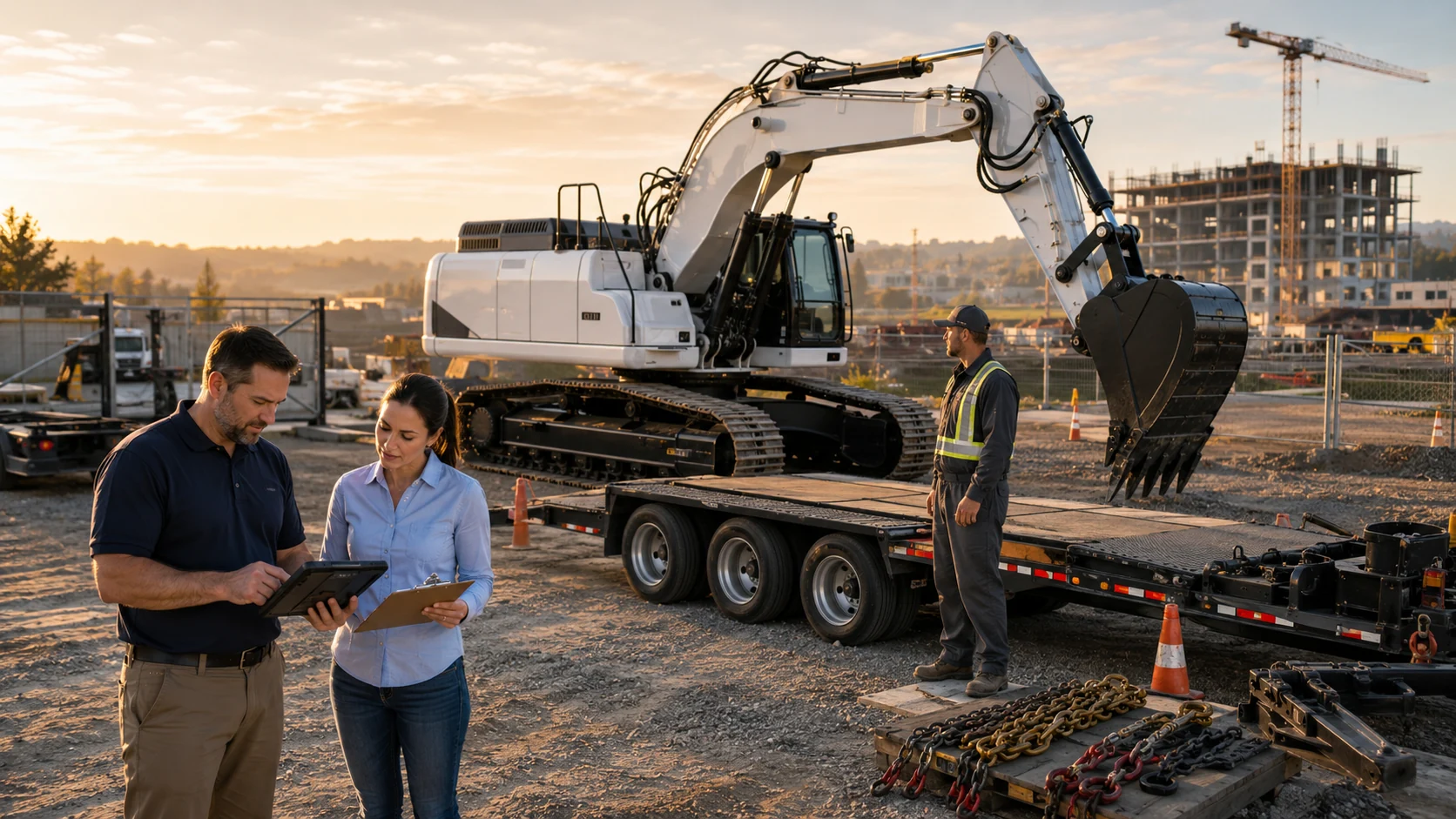
Before authorizing an equipment move, a construction site manager should record the machine identity, meter hours, fuel and fluid levels, existing damage, open defects, assigned operator, destination, receiving contact, transport requirements, and expected return date. Keeping these details in one fleet management software system creates a clear record of the machine at departure and establishes who becomes responsible for it at arrival.
This process applies whether equipment is moving across the property or going to another project. For teams managing mixed machines across active locations, a structured construction fleet management process makes the move visible to operations, maintenance, and receiving crews before the asset leaves its current location.
Key Takeaways
- Record the machine before releasing it. Capture identity, hours, fuel, fluids, condition, open defects, and photographs while the equipment is still at its current location.
- Confirm that the equipment is safe to move and operate. An urgent request from another project should never override an unresolved safety defect or transport requirement.
- Assign responsibility for every stage. Name the releasing supervisor, transporter, operator, and receiving contact so custody never becomes unclear.
- Protect maintenance timing with accurate meter readings. Departure and arrival readings help teams determine which site added hours and when service becomes due.
- Require confirmation at the destination. The move is not complete until the receiving person confirms the equipment, condition, hours, attachments, and arrival time.
- Use one consistent move record. A standard workflow reduces disputes, missed maintenance, unexpected rentals, and time spent reconstructing events.
Why Equipment Moves Are the Riskiest Moment in a Machine's Day
Equipment becomes especially vulnerable when it leaves its normal operating area. Loading can damage attachments or access panels. Transit can introduce securement problems. Unloading can expose existing defects. A hurried handoff can also leave both sites unsure about who has the machine.
The financial exposure is substantial. The National Equipment Register reports that an estimated $300 million to $1 billion in heavy equipment is stolen annually. Industry reporting based on National Equipment Register data places the average loss from one theft at about $30,000, while only about 21 percent of stolen construction equipment is recovered.
Several details make moves particularly risky:
- Equipment is temporarily outside its normal custody.
- Operators may change without a recorded handoff.
- Attachments can become separated from the main machine.
- Damage may occur during loading or unloading.
- Destination crews may expect equipment that is not ready.
- Maintenance teams may not know that the machine changed sites.
When managers move equipment without a reliable departure record, they must later rely on phone calls, memory, and incomplete photographs. This is one reason scattered construction fleet data weakens decisions, especially when several teams hold different versions of the same event.
What Counts as "Moving Equipment" on a Construction Site
A move is any transfer that changes the equipment location, working crew, operating responsibility, or storage point. It includes delivery from a yard to a project, transfer between projects, rental return, movement to a service facility, and repositioning between phases of one large project.
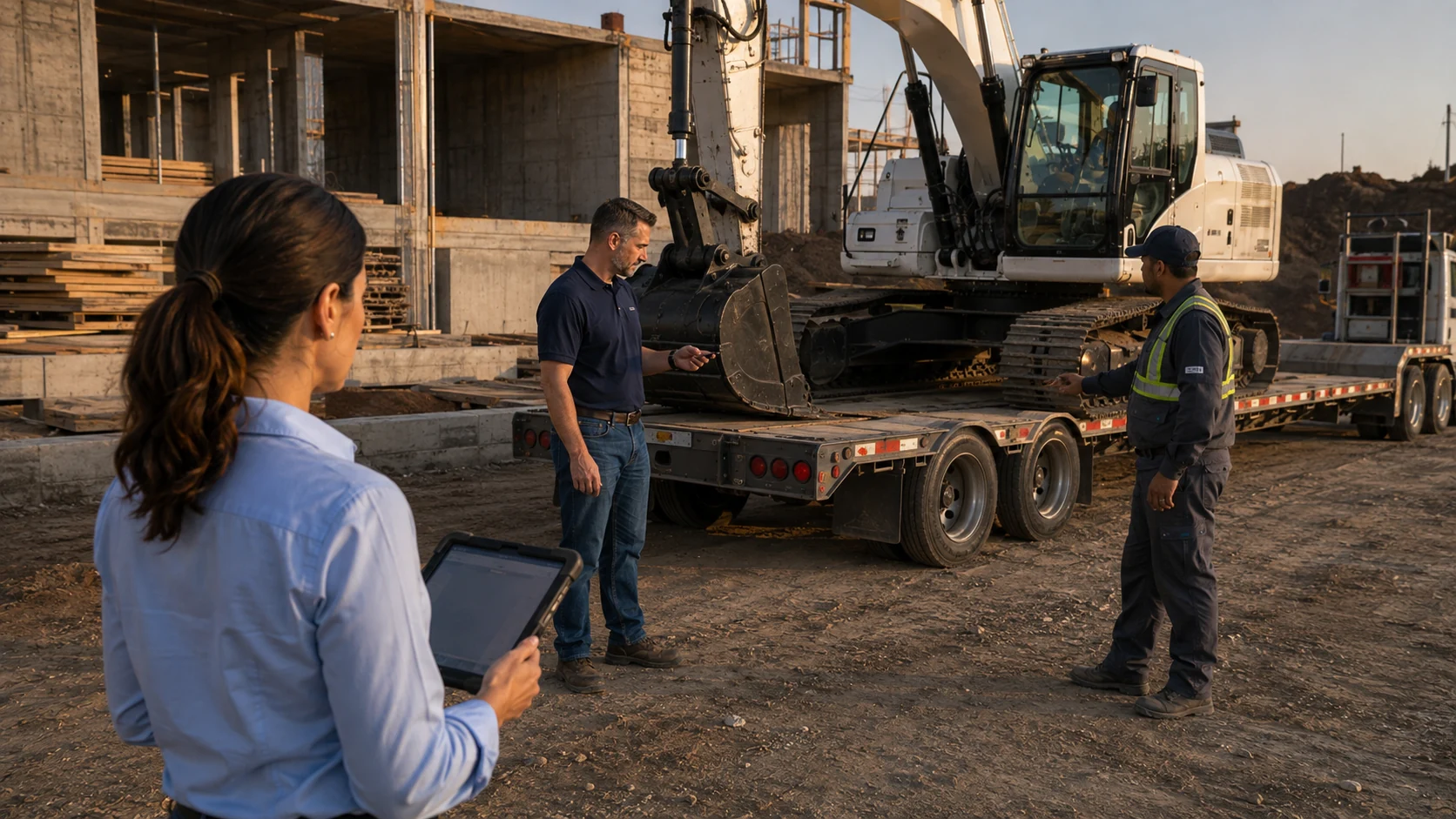
Small attachments, generators, compactors, and similar mobile assets also need a handoff record. These items often disappear from visibility because construction fleets lose control of small assets when responsibility changes without documentation.
Planned Moves vs. Emergency Reassignments
A planned transfer allows time to review transport, maintenance, and receiving arrangements. An emergency reassignment happens when another site has a breakdown, schedule change, or unexpected capacity problem.
Both moves require the same essential information. For an emergency move, managers can shorten the approval path, but they should not remove the condition check, defect review, custody assignment, or receiving confirmation.
The Core Data Points to Track Before Every Equipment Move
Record the following information before the machine leaves its current location:
| Data point | What to record | Why it matters |
|---|---|---|
| Equipment identity | Unit number, serial number, type, and attachments | Confirms that the correct machine and components are moving |
| Meter information | Engine hours, operating hours, and mileage when applicable | Protects service timing and separates usage by site |
| Fuel and fluids | Fuel level and visible oil, coolant, or hydraulic concerns | Establishes departure condition and supports cost allocation |
| Condition evidence | Photographs, visible damage, leaks, tire or track condition | Prevents disputes about when damage occurred |
| Open maintenance | Active work orders, reported defects, restrictions, and due service | Prevents an unsafe or unavailable machine from being reassigned |
| Current custody | Assigned operator, crew, and releasing supervisor | Identifies who released the equipment |
| Destination details | Site, delivery point, receiving supervisor, and contact information | Prevents misdelivery and unclear ownership |
| Move timing | Departure window, expected arrival, use date, and return date | Supports scheduling and availability planning |
| Transport details | Hauler, trailer, permit status, and securement confirmation | Creates accountability during transit |
| Receiving record | Arrival time, meter reading, condition check, and acceptance | Closes the transfer with documented confirmation |
Engine Hours, Meter Readings, and Fluid Levels
Capture meter readings as close to departure as practical. Do not copy a reading from an earlier inspection or estimate it from the last service record. A current reading preserves the maintenance timeline and establishes which project accumulated the next block of usage.
This also matters when a machine spends time running without productive work. Geotab reports that an idling construction vehicle can use up to one gallon of fuel per hour. Recording fuel and hours at both ends of a transfer can reveal unexpected idling, transport delays, or use that occurred before the receiving crew accepted the machine.
A centralized vehicle service history helps maintenance teams compare the departure reading with completed service, upcoming intervals, and previous repairs without chasing paper records.
Documented Condition and Existing Damage
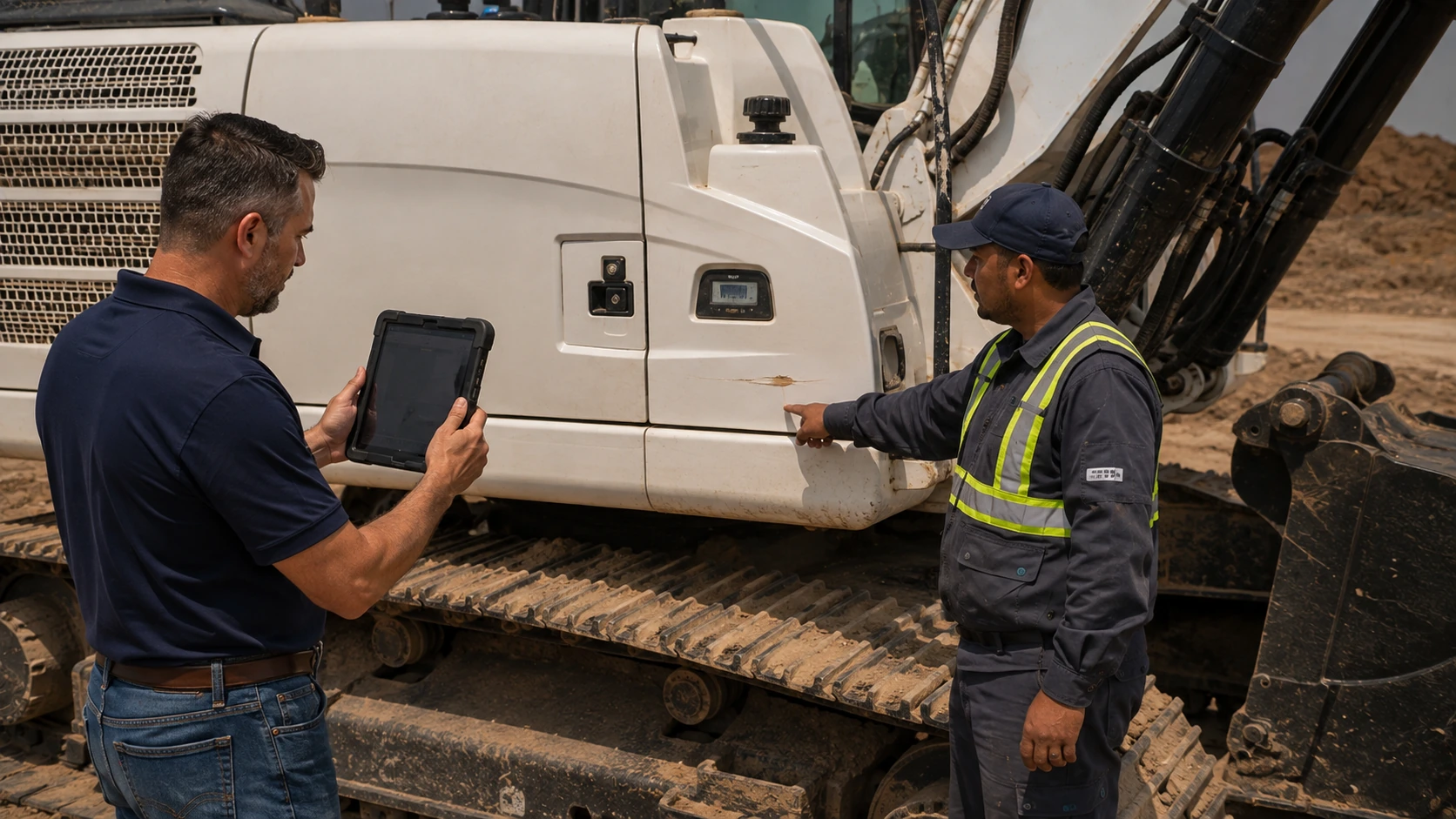
Take photographs from consistent angles before loading or releasing the equipment. Capture each side, the operator area, tires or tracks, attachments, and any existing damage. Add a short condition note that identifies where the damage is located and whether it affects safe operation.
A practical photo set should include:
- Front and rear views
- Both sides of the machine
- Hour meter or operating display
- Tires, tracks, forks, buckets, or other attachments
- Existing dents, cracks, leaks, or broken components
- Trailer condition and securement points when hauling
This condition capture is limited to the transfer decision. It does not replace the crew's daily construction equipment inspection or a qualified maintenance assessment when a defect needs diagnosis.
Compliance and Safety Checks Before a Move
Confirm both operating clearance and transport readiness before release. A machine that can move under its own power is not automatically safe for productive use or legal to haul on a public road.
The authorization record should confirm:
- Required inspection status is current.
- Safety defects have been reviewed and signed off.
- Open defects do not prohibit operation or transport.
- The operator has the required authorization.
- Weight, width, height, and route restrictions have been checked.
- Required permits and escorts are confirmed.
- Trailer capacity and load securement are suitable.
- Attachments and loose components are restrained.
Managers should stop the move when a safety critical defect remains unresolved. OSHA lists a maximum penalty of $165,514 per willful or repeated violation in 2026. A documented digital inspection process can give the approving manager current condition evidence before release.
Assigning Custody and Ownership During the Move
Every transfer needs named responsibility at departure, during transit, and at arrival. The move record should identify who approved the release, who accepted custody for transport, and who must confirm receipt.
The custody record should answer four questions:
- Who released the equipment?
- Who controls it during transport?
- Who is authorized to receive it?
- When does responsibility officially change?
If a third party hauler is involved, record the driver, vehicle, trailer, pickup time, and delivery destination. For an internal move, assign the same details even when everyone works for the same company.
Location visibility also matters during longer transfers. A mobile asset management system can help field teams confirm where a mobile asset is assigned and who currently holds responsibility for it.
A Step by Step Workflow for Documenting an Equipment Move
Use the following workflow for planned transfers and emergency reassignments:
- Submit the move request. Record the equipment, reason for moving it, requested destination, required date, and expected duration.
- Review availability and maintenance status. Confirm that the machine is not reserved, restricted, awaiting repair, or due for service during the expected assignment.
- Capture departure data. Record meter hours, fuel and fluid levels, attachments, condition notes, and photographs.
- Confirm compliance and transport needs. Review inspection status, operator authorization, trailer capacity, permits, route limits, and securement requirements.
- Assign custody. Name the releasing supervisor, transporter or operator, and receiving contact. Record the planned departure and arrival times.
- Monitor the transfer. Confirm departure, investigate major delays, and update the destination if the route or delivery time changes.
- Complete receiving confirmation. The receiving contact records arrival time, meter reading, condition, attachments, and acceptance. Any difference from the departure record is reported immediately.
Common Mistakes That Turn a Simple Move Into a Costly Problem
Most transfer failures begin with a missing detail rather than a complicated technical problem. Watch for these common mistakes:
- Moving equipment through a phone request with no written record
- Recording hours only after the machine reaches the new site
- Sending a machine with an unresolved work order
- Failing to photograph existing damage before loading
- Naming a destination but not a receiving person
- Assuming another employee completed the transfer record
Consider a skid steer rushed to another project after a loader fails. The sending supervisor approves the move verbally, but nobody records a hydraulic leak or the hour meter. The receiving crew uses the machine, notices the leak, and stops work. Maintenance cannot determine whether the defect worsened during transport, while both projects dispute responsibility. The receiving project then rents another machine to protect its schedule.
The problem was not simply the defect. It was the undocumented transfer. Managers can reduce this type of gap by following a consistent process for maintaining equipment across an active construction site.
How Better Move Tracking Protects Your Budget and Your Schedule
A complete move record reduces the time spent determining where equipment went, who used it, and when damage appeared. It also keeps service intervals attached to actual meter readings instead of assumptions.
Better transfer records protect operations in several ways:
- They reduce theft and loss exposure.
- They preserve evidence for damage responsibility.
- They prevent equipment with open defects from reaching another crew.
- They keep maintenance schedules aligned with actual use.
- They reduce emergency rentals caused by missing or unavailable machines.
- They improve utilization and project planning.
Consistent location records are especially useful when machines and tools move independently. A documented tool tracking process across multiple job sites helps managers apply the same custody discipline to attachments and supporting assets without turning this equipment transfer record into a general inventory exercise.
Tracking equipment before it moves is cheaper and faster than reconstructing events after it arrives damaged, misses service, or disappears between locations. Capture condition, hours, defects, compliance status, custody, destination, and receiving confirmation while the facts are still clear.
The best move record is simple enough for an emergency transfer but complete enough to settle questions later. If the destination, condition, and responsible people are not documented, the equipment should not leave.
Frequently Asked Questions
-
What should a site manager record before moving equipment?
Record the equipment identity, meter hours, fuel and fluid levels, existing damage, open defects, assigned operator, destination, receiving contact, transport requirements, departure time, and expected return date. -
Who is responsible for equipment while it is being transported?
The move record should name the person or company holding custody during transport. Responsibility transfers only when the receiving contact confirms delivery and accepts the equipment. -
Should equipment condition be photographed before every move?
Yes. Photographs establish the equipment and attachment condition at departure, reduce disputes between sites, and help identify damage that may have occurred during loading, transit, or unloading. -
Can equipment with an open defect be moved to another site?
It depends on the defect and the purpose of the move. A qualified person must determine whether the machine is safe to transport and operate. Any restriction must be documented and communicated before release. -
When is an equipment move considered complete?
A move is complete when the receiving contact verifies the equipment identity, arrival time, meter reading, condition, attachments, and acceptance. Delivery without confirmation leaves custody unresolved.